

WATCH NOW
Watch on the app





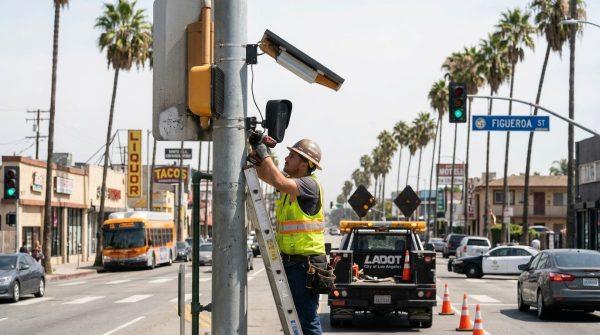









Los Angeles blocks 18 cameras meant to combat sex trafficking
-
Combat sex trafficking initiatives across Southern California remain at the center of intensive community debates as municipal leaders evaluate alternative urban safety protocols following the suspension of automated surveillance hardware.
-
City officials reject a private corporate donation meant to fund monitoring devices, sparking intense institutional friction over municipal spending and transparency, while Los Angeles blocks 18 cameras.
-
Civil rights coalitions express deep concerns regarding automated tracking systems, arguing that increased monitoring disproportionately targets vulnerable populations without resolving root social issues to combat sex trafficking.
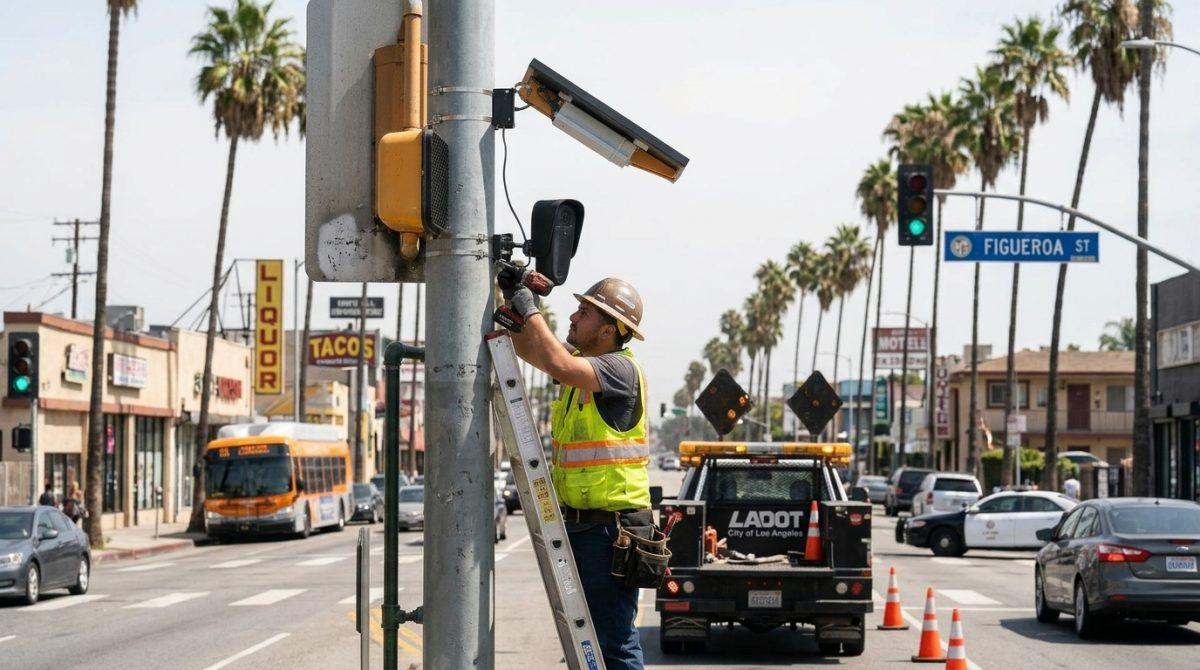
Local authorities in southern California are halting the rollout of automated surveillance infrastructure as Los Angeles blocks 18 cameras along Western Avenue, slowing down a controversial police initiative that’s sparking intense public debate; as a result, city officials confirm that the temporary pause affects automatic license plate readers that were scheduled to be installed between Olympic and Santa Monica Boulevards, while community organizations and council members assess the broader implications of city monitoring during public safety preparations for the upcoming 2026 World Cup and 2028 Olympics.
Furthermore, this suspended project highlights growing institutional friction between law enforcement objectives and neighborhood advocacy groups over privacy rights, as local representatives navigate alternative strategies to address illicit activities across the metropolitan area; thus, local stakeholders maintain an active dialogue regarding the future balance between technological security measures and individual civil liberties.
Los Angeles blocks 18 cameras to secure local privacy
Law enforcement representatives originally design the monitoring network to identify individuals involved in illegal commercial exploitation, positioning the hardware strategically to support ongoing investigative operations ahead of major international sporting events; meanwhile, police commanders maintain that the technological rollout serves as a crucial preemptive measure against illicit networks, but the decision by District 13 representatives to decline hardware contributions from corporate tech provider Axon Enterprise effectively halts the installation timeline indefinitely to combat sex trafficking.
Additionally, municipal spokespersons clarify conflicting financial claims regarding the initiative, noting that council representatives firmly reject assertions that local districts ever commit public funds to the hardware; moreover, officials emphasize that the corporate provider intends the 18 devices as a full donation to the Olympic police division, though disagreements among district leadership prevent the hardware deployment from moving forward.
Legislative votes and municipal lighting alternatives
City stakeholders continue examining alternative monitoring frameworks, since community organizers strongly oppose automated tracking tools that could inadvertently increase surveillance on marginalized populations without reducing demand for illegal services; furthermore, civil rights advocates argue that traditional observation equipment carries similar privacy risks, prompting local representatives to explore non-automated public lighting solutions managed directly through municipal departments rather than police units, while law enforcement agencies evaluate alternative strategies to combat sex trafficking.
Moreover, recent legislative votes within the city council demonstrate deep divisions regarding automated tracking technology on public streetlights, leaving the future of urban monitoring strategies uncertain as municipal leaders prepare legislative alternatives before the end of the year; consequently, recent council sessions reveal close votes regarding municipal jurisdiction over pilot programs, while community coalitions actively challenge the expansion of optical tracking equipment across residential neighborhoods, culminating in the final administrative decision where Los Angeles blocks 18 cameras.