

WATCH NOW
Watch on the app













El Niño could turn America’s winter upside down with some states facing the biggest weather surprises
-
Biggest weather surprises loom across the United States as El Niño gains unprecedented strength, threatening vulnerable communities with severe meteorological shifts.
-
Federal weather agencies track anomalous ocean warming patterns in the Pacific, setting the stage for extreme winter precipitation anomalies.
-
Coastal populations and mountain residents must prepare for erratic climate conditions before severe winter storms strike regional infrastructure.
Meteorologists from the National Oceanic and Atmospheric Administration (NOAA Home Portal) documented an alarming atmospheric transition, proving that the El Niño winter forecast exposes how tropical ocean warming patterns disrupt traditional seasonal norms across the United States; in fact, NOAA officials warned that an 83% probability exists for this event to reach strong or very strong intensity between January and March 2027, alongside a 75% chance of hitting historical levels between October and December of this year. Consequently, specialized researchers from The Weather Channel note that NOAA plans to release its official seasonal outlook on Thursday, October 15, providing critical updates regarding oceanic anomalies that complicate continental weather predictions.
Subsequently, investigators examined the evolution of sea surface temperatures over recent months, revealing a significant strengthening that surged past baseline historical averages, while recent climate reports detail that millions of residents face severe atmospheric irregularities, evidencing the sheer magnitude of this meteorological alert. Therefore, emergency management specialists recommend clearing drainage systems and reinforcing residential structures immediately, ensuring that local communities mitigate potential environmental hazards.
Atmospheric dynamics and the El Niño winter forecast
Warm equatorial Pacific waters drive aggressive atmospheric modifications, demonstrating a profound capacity to alter continental jet streams, while weather experts recall that moisture laden storms frequently originate along coastal corridors, transforming traditional seasonal expectations into complex climate challenges documented extensively by the NOAA Climate Prediction Center.
Accordingly, atmospheric scientists identified three key factors regarding how the El Niño winter forecast transforms regional precipitation patterns and temperature baselines:
1. El Niño winter forecast driving multi-regional moisture transport
Pacific storm systems neutralize standard high pressure barriers, driving heavy precipitation plumes directly into western coastal territories according to official meteorological models, which systematically increases atmospheric moisture delivery across vulnerable lowland basins while simultaneously loading high altitude corridors with heavy moisture reserves that reshape regional water resource management strategies throughout the entire winter season.
2. Biggest weather surprises triggering regional snowfall shifts
The erratic atmospheric behavior triggers unprecedented temperature contrasts, requiring constant monitoring by civil defense agencies due to sudden freezing rain risks, as rapid oscillations between warm maritime air and arctic boundary layer intrusions create hazardous thermal inversions across major metropolitan transportation networks and rural agricultural districts alike.
3. El Niño winter forecast exacerbating flood risks across lowlands
Coastal municipal authorities recommend clearing storm drains and securing property, demanding proactive preparation before atmospheric rivers make landfall, since back to back rainfall events on saturated soil dramatically amplify flash flooding potential, coastal erosion rates and municipal stormwater system overflows in vulnerable population centers.
California coastal assessments, snow levels and biggest weather surprises
An in-depth analysis published by The Washington Post Weather Center examined atmospheric rivers threatening California with heavy rain, urban flooding and beach erosion starting in December, while Marty Ralph, director of the Center for Western Weather and Water Extremes at the Scripps Institution of Oceanography, recalled that warmer coastal waters amplified thunderstorm energy around Santa Barbara during the powerful 1997-1998 event. Furthermore, Colin McCarthy from Atmo AI Research projected that mountain elevations above 2.1K to 2.4K meters (7K to 8K feet) will receive massive snowfall accumulations.
Concurrently, reports highlight critical risks at ski resort bases near 1.8K meters (6K feet), where higher temperatures will cause rainfall that accelerates melting across deep snowpacks; hence, emergency response agencies demand priority investments in public safety infrastructure, seeking to protect vulnerable neighborhoods from destructive mudslides.
Independent forecasts for the South, Mid-Atlantic and North: El Niño winter forecast insights
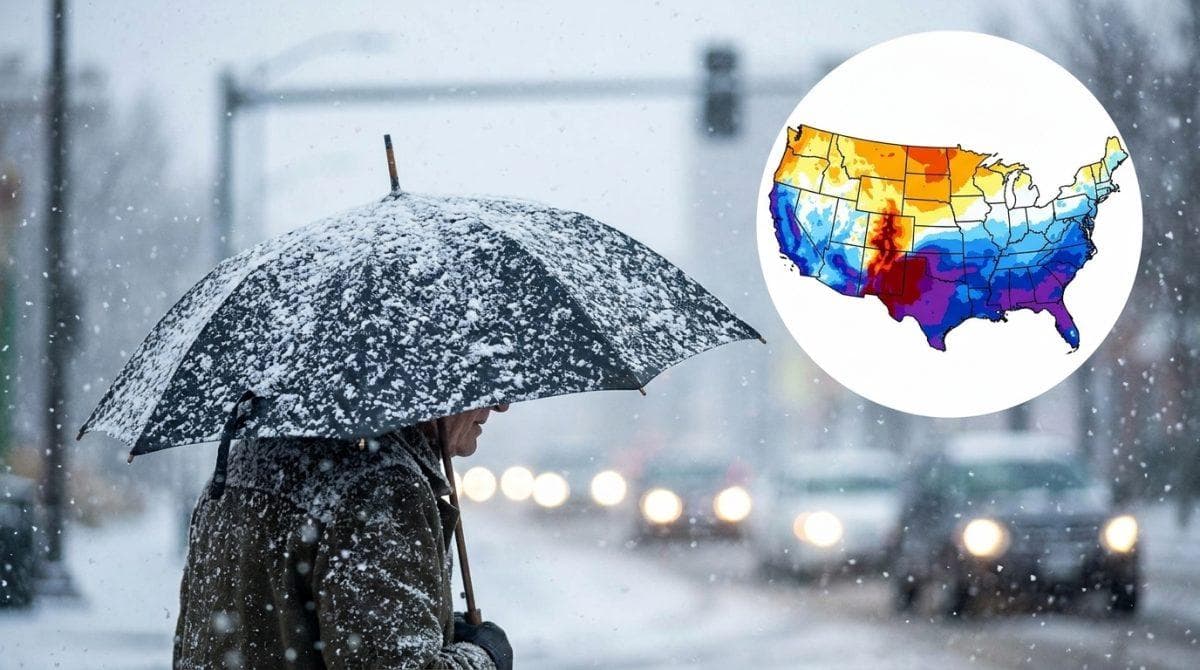
Shifting focus eastward, independent meteorologists cited by the Daily Mail News Network identified a high-risk winter corridor spanning Oklahoma, Arkansas, Tennessee, Kentucky, the Appalachians, the Carolinas and Virginia, while meteorologist Ryan Hall and forecasting firm Direct Weather noted that confidence increased regarding potential snowstorms, ice events and frequent nor’easters hitting the East Coast. Meanwhile, The Weather Channel projects warmer, drier early conditions across the Pacific Northwest, Northern Rockies, Northern Plains, Midwest, New England and New York.
Equally important, the Central and Southern Rockies in Utah and Colorado, alongside Sierra Nevada, show highly favorable outlooks for abundant snowfall due to an active storm track; consequently, utilizing accurate meteorological guidance independently prevents dangerous transit accidents and contributes directly to community safety across every region.
Population strategies to mitigate winter risks
As communities prepare for the biggest weather surprises, civil protection agencies prioritize public education regarding storm preparedness, promoting structural inspections and emergency kit assembly before severe weather strikes. Beyond that, municipal authorities recommend establishing communication protocols with local emergency services during major weather events.
Looking ahead, scientific institutions strengthen continuous meteorological surveillance through collaborative forecasting networks, ensuring a coordinated response against future climate threats that jeopardize regional stability and define the current El Niño winter forecast.
