

WATCH NOW
Watch on the app















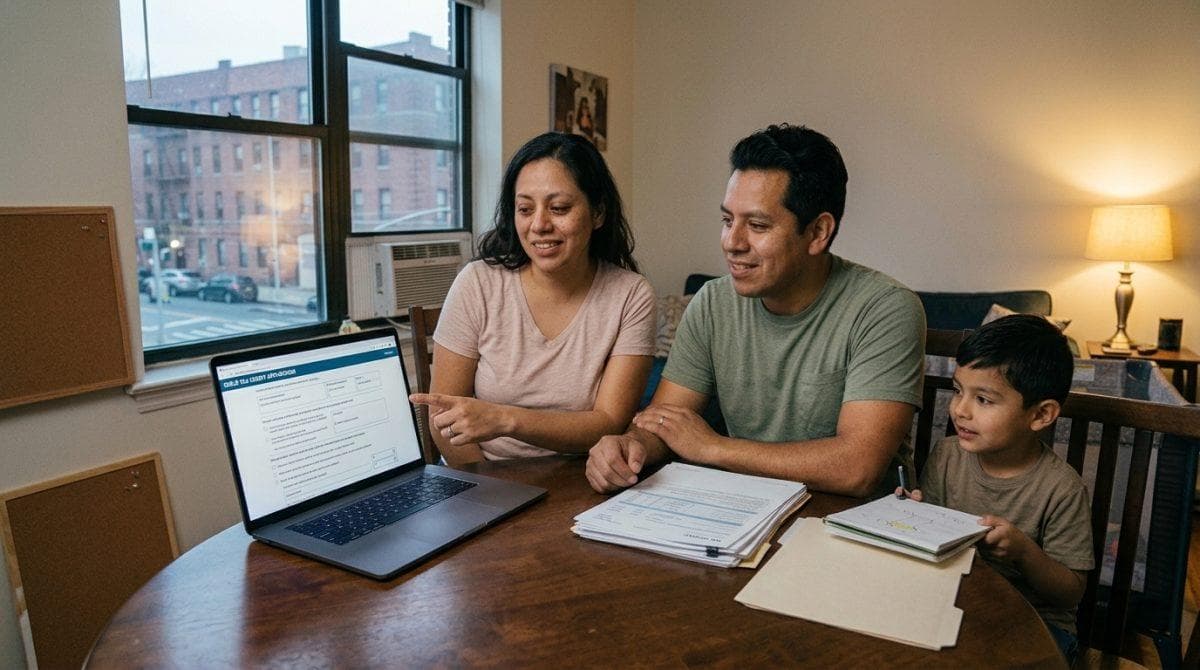
New York parents may qualify for an extra $1,000 per child but there’s a catch
-
NY child tax relief options grant substantial financial support through state tax refunds for qualified New York households, though hidden age filters create unexpected barriers.
-
Local families navigate strict income limits and continuous residency mandates to secure maximum benefits for their young dependent children.
-
The New York Department of Taxation and Finance requires the complete filing of Form IT-213 to process every dependent application accurately.
New York parents navigating current financial challenges welcome state initiatives offering an extra $1000 per child, although the main catch involves strict age restrictions. Furthermore, state leaders structured the financial aid program under the Empire State Child Credit to provide immediate relief for working households, yet complex administrative steps could delay approvals. Consequently, tax authorities designed this benefit as a fully refundable payment that delivers cash even when filers owe zero state income tax, prompting financial advisors to urge prompt reviews.
The true catch behind age restrictions and the extra $1000 per child limit
Behind the attractive title promising maximum aid, the core catch reserves the full allowance solely for toddlers, while children between 4 and 16 years old experience an automatic 50% cut that drops their credit to just $500 per minor. In addition, administrative complexity deepens when evaluating eligibility deadlines, as tax authorities determine age precisely on December 31, meaning a youngster turning 4 right before year-end loses the top tier to land in the lower $500 bracket instead.
-
NY child tax relief for toddlers: Qualified households receive the maximum extra $1000 per child allowance for each eligible child under 4 years old.
-
Children between 4 and 16 years old: State guidelines apply an automatic reduction and issue only $500 for each registered minor.
-
Cutoff date rule: Official eligibility ages correspond strictly to the child’s recorded age on December 31 of the declared tax year.
-
Fiscal tax years: Approved credit amounts cover 2026 tax expenses filed in 2027 alongside 2027 expenses filed in 2028.
-
Practical household example: A family raising a 2-year-old and an 8-year-old collects $1.5k total instead of the $2k they might mistakenly expect.
Residency criteria and expanded family qualification rules
To claim NY child tax relief, primary taxpayers must maintain continuous full-year residency, guaranteeing proper dependent registration on official tax returns. Meanwhile, administrative rules mandate that dependents live with the primary claimant for over 6 months without providing more than half of their own financial support, extending valid coverage to stepchildren and foster youth. Likewise, the submission process mandates that both filing adults and qualifying dependents hold valid Social Security Numbers or active Individual Taxpayer Identification Numbers, ensuring seamless verification across revenue databases.
NY child tax relief income thresholds and progressive deduction rules
The second major catch within the system emerges through federal adjusted gross income caps, setting initial phaseout thresholds at $110k for joint filers, alongside $75k for single filers or heads of household. On the other hand, for married individuals filing separate tax returns the income ceiling drops to $55k, reducing credit amounts by $16.50 per $1k earned, whenever earnings exceed the designated boundary. For instance, a married couple earning an adjusted gross income of $120k exceeds their limit by $10k, triggering an automatic $165 deduction that diminishes their final payout.
Submitting Form IT-213 and securing direct tax refunds
Taxpayers seeking NY child tax relief must attach Form IT-213 to their state income tax returns submitted to the New York Department of Taxation and Finance, allowing authorities to verify dependent details efficiently. As a result, the program offsets outstanding state tax liabilities first before issuing any remaining credit as a direct cash refund, meaning a filer owing $200 receives $800 cash. Proper technical preparation guarantees that eligible working parents secure their full available aid, enabling successful delivery of the extra $1000 per child.
