

WATCH NOW
Watch on the app













Coachella redefines modern marketing by becoming the favorite cultural destination for major brands
-
Coachella 2026 consolidates its position not just as a music event, but as the most important marketing stage for global brands.
-
Activations from firms like e.l.f. Cosmetics and Pinterest demonstrate a paradigm shift toward immersive, tactile and “analog” experiences.
-
The festival sets the consumption pulse for Generation Z, becoming an indispensable cultural destination for the commercial success of major companies.
The Coachella Valley Music and Arts Festival has ceased to be a simple weekend event for rock and pop lovers. What began in 1999 as a countercultural gathering has mutated in 2026 into a true “gold mine” for the marketing industry. With more than 250,000 attendees roaming the Empire Polo Club, brands understand that in the California desert, they don’t sell a product; they sell an identity.
The brands’ amusement park
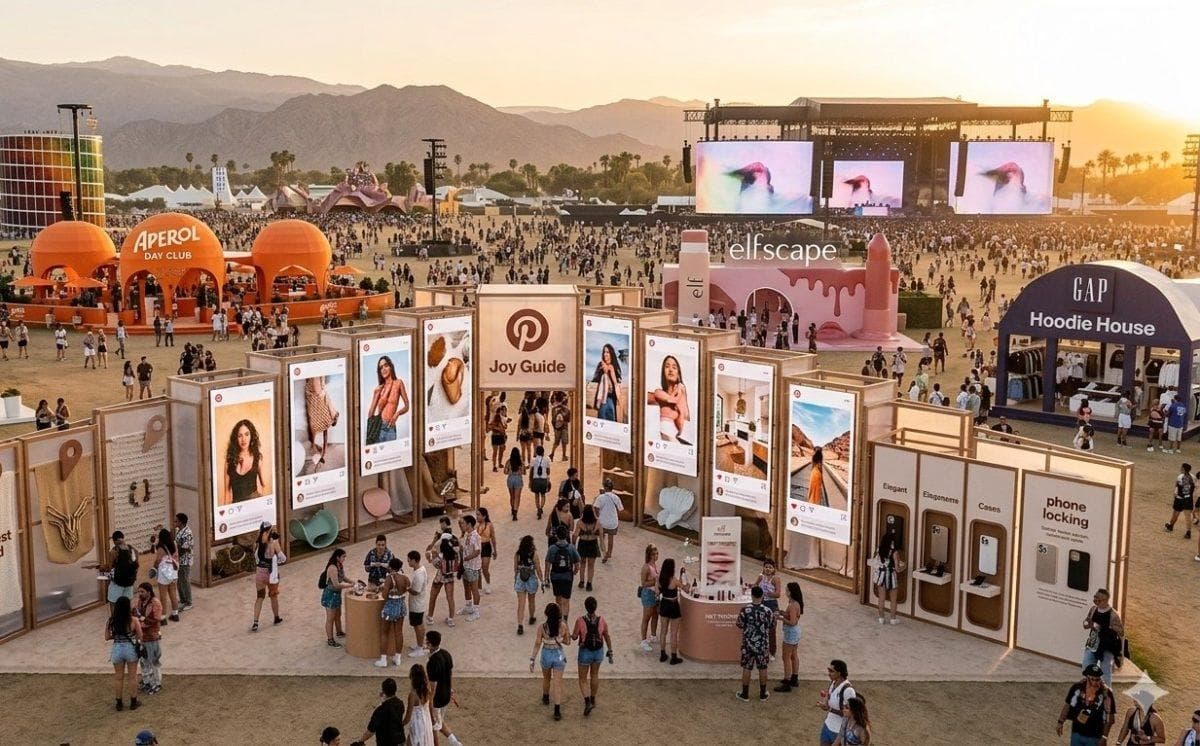
Walking through Coachella’s nine stages today means navigating an ecosystem where “brand activations” hold as much prominence as the headlining artists. Fashion, beauty and beverage companies designed spaces that go far beyond traditional advertising.
A masterful example of this evolution is e.l.f. Cosmetics. Its “e.l.f.scape to the Desert Balm” campaign didn’t just offer lip products; it solved a real problem, extreme heat. Between slushies, makeup touch-up stations and donut-shaped seats designed for the perfect photo, the brand didn’t just generate engagement; it became an ally to the attendee. As its executives point out, 92% of makeup users integrate lip products into their daily routine, and Coachella served as the ideal stage to capitalize on that reality.
The paradox of the analog in the digital age
In a festival dubbed “the influencer Olympics,” where the competition for the perfect photo remains fierce, Pinterest delivered a surprising shift. The inspiration platform opted to install a “phone-free” zone.
Amidst the debate over digital fatigue, this “analog experience” allowed attendees to disconnect from the screen to rediscover human interaction. This strategy doesn’t seek immediate virality but aims to build long-term loyalty with Generation Z, which already represents half of its audience. It proves that, sometimes, the best way to stand out involves inviting the user to set the device aside.
A cultural destination, more than a festival
The success of this model lies in Coachella positioning itself as a “cultural destination.” For brands like Absolut, with their Absolut Heat Haus, the festival serves as an energetic social occasion where music acts merely as the vehicle. By recreating private clubs with renowned DJs, brands offer the oasis that attendees need after hours under temperatures exceeding 30ºC.
For today’s audience, the value of Coachella resides not just in the concerts, but in belonging to this “tribe” that lives and consumes culture in real-time. Brands have stopped being distant sponsors to become the architects of the attendees’ memories. By integrating marketing with basic user needs, like shade, air conditioning, hydration and social validation, the festival has redefined what it means to be a relevant brand in the 21st century.
