

WATCH NOW
Watch on the app





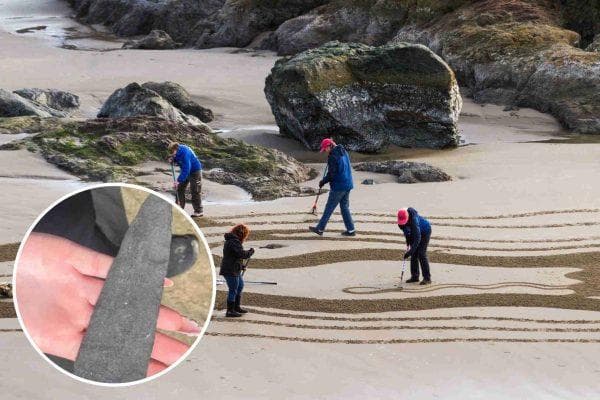







A college field trip took an extraordinary turn when a student spotted something hidden in the sand
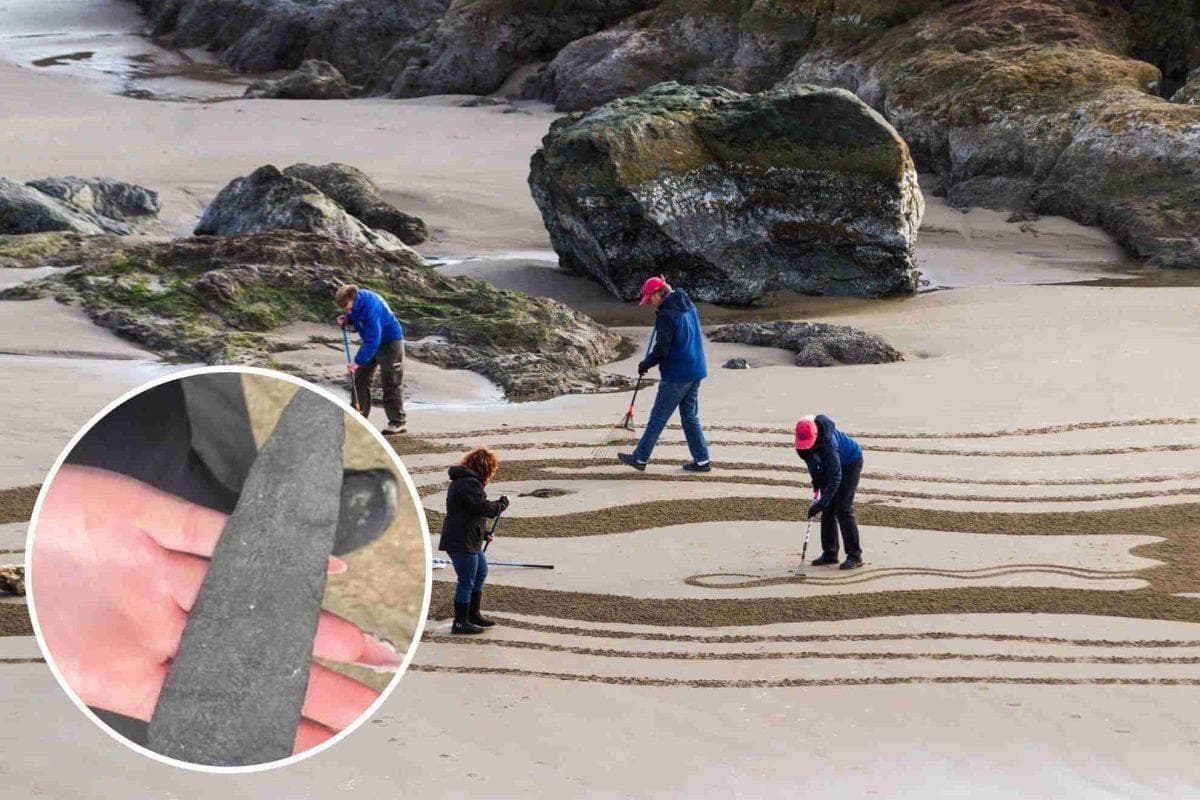
- University student Brooklyn Rolph from Mary Baldwin University found a valuable ancient indigenous tool half-buried in the coastal sand while searching for shark teeth.
- The brief academic ecology excursion across the barrier islands allowed barely forty minutes before high tide completely covered the area.
- State archaeologists confirmed the authenticity of this prehistoric relic and immediately integrated the artifact into the public cultural heritage.
A chance discovery that completely transformed an academic field routine
During a brief coastal ecology exploration intended to study marine vegetation on the barrier islands of Virginia, young student Brooklyn Rolph stumbled entirely by surprise upon an extraordinary ancient indigenous tool measuring about fifteen centimeters long; thus, what began as a casual search for shark teeth among seashells ended up turning into an unforgettable scientific event, especially considering that the university group from Mary Baldwin University had barely forty minutes to tour the site due to delays caused by the wind and the imminent rising tide. Had they arrived slightly later at the shore, the waves would have covered this valuable archaeological artifact forever, preventing researchers from classifying the piece carved thousands of years ago by ancient native North American populations.
The historical value of a prehistoric piece preserved in exceptional conditions
Likewise, upon noticing the unusual carving in the rock, the student ran to show the supposed stone to her professors, triggering immediate surprise among the faculty as they suspected it was an authentic, intact ancient indigenous tool. Following the collection of the artifact, archaeology experts identified the relic as a Lehigh/Koens-Crispin point with an estimated age between 3,000 and 4,500 years, further noting that finding such an object in such impeccable condition in an area where constant wave action erodes everything in its path is truly atypical. Furthermore, academic authorities from Mary Baldwin University expressed astonishment at the possibility that Brooklyn Rolph was the first person to touch the carved tool since it was left forgotten on the sand in remote times far from Virginia.
The handover of the archaeological heritage to authorities for study and protection
Because the discovery occurred within a state nature reserve protected by the Department of Conservation and Recreation, the valuable ancient indigenous tool had to be handed over to official agencies the very same day for safekeeping. Despite the initial surprise of her classmates at Mary Baldwin University, young Brooklyn Rolph accepted without hesitation the legal regulations protecting historical assets, allowing the piece to be immediately transferred to the Virginia Department of Historic Resources for deep analysis and long-term conservation. In this way, a routine biological study day searching for shark teeth will be registered in the institution’s history as the afternoon when coastal chance rescued an invaluable cultural treasure from oblivion, an artifact with great history worthy of study.
