

WATCH NOW
Watch on the app














California approves rare beachfront hotel leaving tiny town 323 residents on the brink of radical change
-
Coastal resort greenlight in Sand City allows private developers to transform a degraded beach environment into a prime destination.
-
Environmental agreements require private developers to remove tons of industrial mining debris and restore native dune habitats.
-
Municipal leaders and state officials leverage private investments to fund $10M+ public infrastructure improvements.
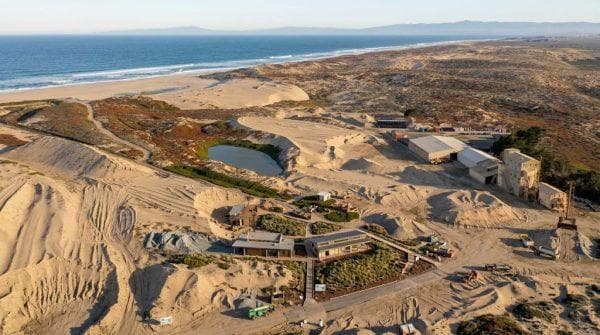
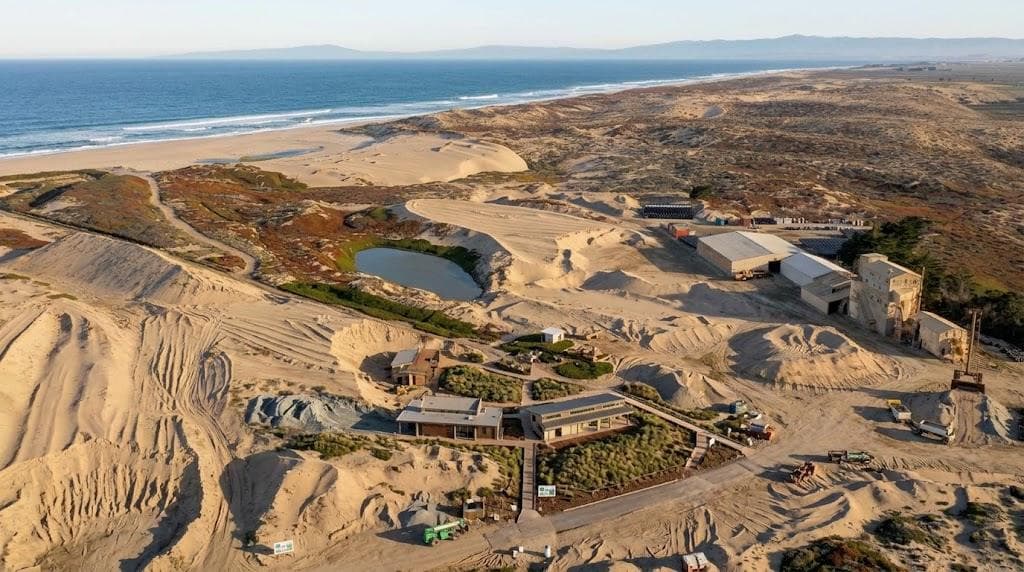
Environmental officials frequently regulate coastal preservation, while regional news reports confirm that California approves rare beachfront hotel development in Sand City; consequently, state commissioners approved the permit for the 100 room Collections Resort on 8 acres, allowing private developers King Ventures, headquartered in San Luis Obispo with 40 years of experience operating Central Coast hospitality properties, to construct a luxury hotel alongside a 25 unit tent cabin campground while financing a multi million dollar cleanup of surrounding public dunes along Highway 1.
Municipal administrators emphasize that the small 3 sq mi enclave of 323 residents lacks public funds for shoreline remediation, relying heavily on sales tax from big box stores like Costco and Target; moreover, official site records reveal that developers will remove an 800 ft concrete berm, shift Tioga Avenue back hundreds of feet from the shoreline to prevent erosion, restore 22 acres of coastal habitat, create a 1 mi segment of the California Coastal Trail, and install public boardwalks, restrooms and beach access parking facilities near Monterey Bay.
Key environmental agreements and stakeholder support
A local coastal resort greenlight ensures ecological restoration efforts will clear fallen pavement resembling a fallen Jenga tower, reversing the legacy of industrial sand mining, an extractive process involving dredging, washing, mixing and sifting gravel and sediment, and protect native species like snowy plovers alongside California American Water and Monterey-Salinas Transit; additionally, developers will extend the California Coastal Trail while avoiding Environmentally Sensitive Habitat Area restrictions under the Coastal Act of 1972 due to the site’s industrial mining history, despite ongoing civil litigation involving developer John King over alleged financial debt obligations reported by the San Luis Obispo Tribune, as project manager David Watson called it a project you may never see again and Surfrider Foundation policy expert Jennifer Savage reluctantly supported the protective package while coastal commission manager Kevin Kahn praised the dune space potential.
California approved a 100-room resort on the dunes in Sand City, California. If the ocean reaches it, the resort must come out and public trails and beach access move inland.
— Hoodline (@Hoodline) November 1, 2026
California approves rare beachfront resort development and coastal restoration
Following the recent coastal resort greenlight, historical archives indexed by the California Coastal Commission indicate that sand mining operations shaped the shoreline for decades through extensive dredging, washing, mixing and sediment sifting until commercial activity ceased in the early 1990s; for this reason, abandoned concrete slabs created long standing physical barriers across 80% of the municipal coast that city leaders like mayor Mary Ann Carbone and city manager Vibeke Norgaard fought to remediate throughout their 35 year tenure.
Regional planners continue advancing commercial accommodations across Monterey County, with municipal records and council chamber display boards detailing key real estate developments:
-
California approves rare beachfront scaling after developers replaced an ambitious 340 room resort proposal rejected over 10 years ago with a significantly reduced footprint prioritizing public dune access.
-
A coastal resort greenlight expanded local infrastructure options during the current fiscal year following the opening of a 215 room Marriott Courtyard, located 1 block from the primary shoreline site, while city council approved converting a commercial building into a boutique hotel.
-
Legal disputes over land ownership currently delay construction on another previously approved seashell shaped eco resort situated directly north of the Collections Resort parcel.
Broader impact of coastal tourism expansion across Monterey Peninsula
Regarding the wider economic landscape, high profile hospitality investments signal changing economic strategies for small coastal towns managing shifting revenue models; therefore, urban planners monitor public private partnerships across waterfront areas where a coastal resort greenlight promises to maximize community benefits.
Sustainable real estate projects continue driving regional tourism interest despite complex regulatory hurdles; as a result, luxury real estate holdings remain highly lucrative investments where California approves rare beachfront developments to spur long term economic revitalizations.
