












Scientists will send invisible particles 800 miles through Earth to an abandoned South Dakota gold mine
-
Experiment in a South Dakota mine advances as scientists send invisible particles 800 mi through Earth.
-
Fermilab announced on Nov 10, 2026 that work is underway nearly 4,921 ft underground near Lead.
-
Two giant cryostats will hold liquid argon to track neutrinos sent roughly 808 mi from Illinois.
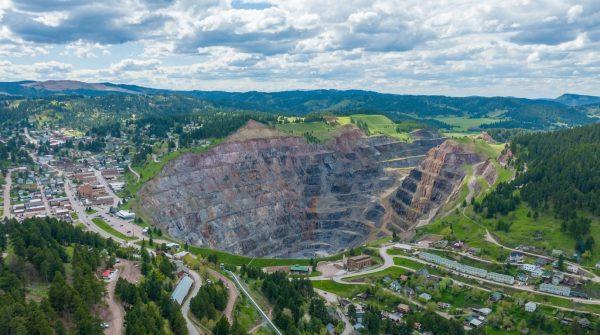
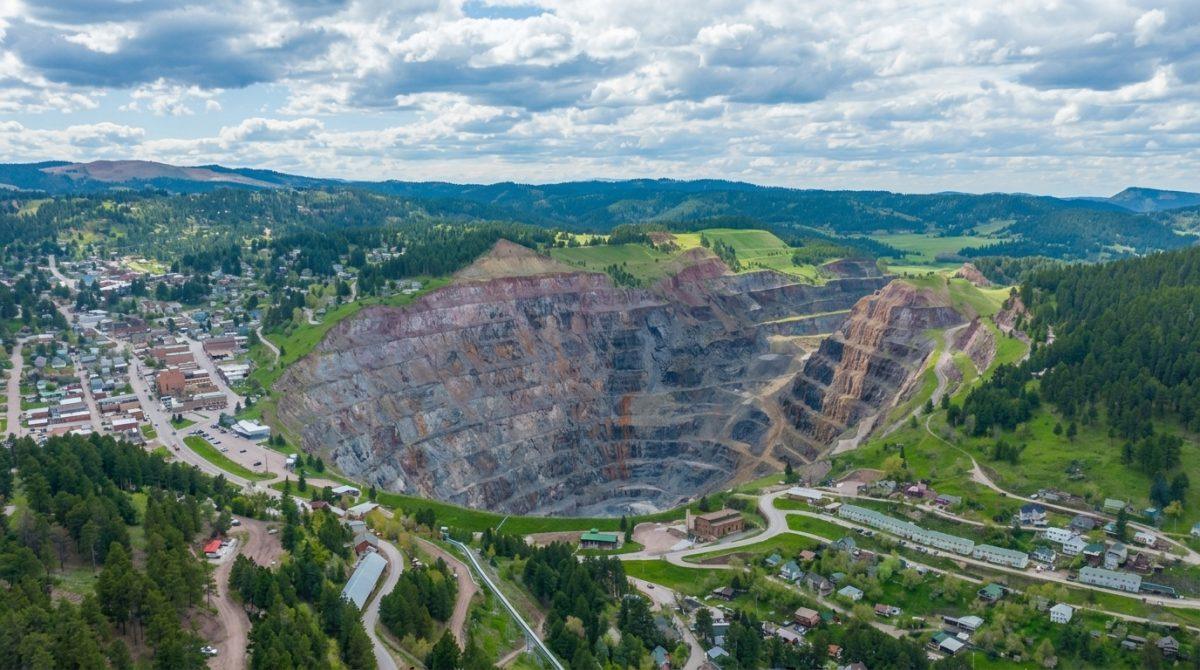
An experiment in a South Dakota mine gained momentum as scientists send invisible particles roughly 800 mi through Earth to a South Dakota former gold mine near Lead, where US and European researchers began building one of modern physics’ most ambitious experimental facilities nearly 4,921 ft underground while workers install massive metal structures that will house detectors to study neutrinos, explore cosmic origins, and explain why today’s universe holds far more matter than antimatter; in addition, the South Dakota former gold mine anchors a landmark effort in underground physics.
Additionally, the Nov 10, 2026 announcement from the Fermi National Accelerator Laboratory details how scientists send invisible particles roughly 800 mi through Earth to a South Dakota former gold mine with support from the Sanford Underground Research Facility and the European Organization for Nuclear Research, uniting more than 1.5K researchers while deep caverns shield sensitive gear from constant surface cosmic radiation; on the other hand, the experiment in a South Dakota mine marks a major push in modern physics.
Underground operations for the experiment in a South Dakota mine
In the Deep Underground Neutrino Experiment (DUNE) layout, Fermilab produces an intense beam of invisible particles in Illinois that travels roughly 808 mi through Earth to reach South Dakota detectors without needing a tunnel, since these elusive neutrinos interact very weakly with matter and cross vast amounts of material without leaving obvious traces while a fraction trigger detectable signals; moreover, the experiment in a South Dakota mine relies on deep isolation to separate clean signals from background noise.
Balancing those beam mechanics, each insulated cryostat holds roughly 17K tons of liquid argon near -299.2 °F, where a neutrino collision releases charged particles that generate electrical signals so researchers reconstruct interaction characteristics and compare neutrinos sent from Illinois with those arriving in South Dakota, inside vessels measuring roughly 216.5 ft long, 62.3 ft wide, and 59.1 ft high that require about 2.6K metal beams and more than 6.2K tons of steel from CERN.
Cosmic mysteries and timeline at the South Dakota former gold mine
In core research, physicists examine why matter dominates overwhelmingly today, testing whether differences between neutrinos and antiparticles alongside shifts among electron, muon, and tau states explain that imbalance, while also capturing neutrinos from the sun and potential supernova blasts across vast cosmic distances; furthermore, an experiment in a South Dakota mine gives researchers a quiet underground setting to track rare events.
Building on those scientific goals, project leaders plan to finish underground caverns in 2029, complete detector gear in 2030, launch the neutrino beam from Fermilab in 2031 and run operations through the late 2040s, anchoring the role of the South Dakota former gold mine in probing how the universe formed and testing fundamental laws of physics.
Key takeaways for the South Dakota science project
-
Fermilab announced on Nov 10, 2026 that work is underway on one of modern physics’ most ambitious experimental facilities with more than 1.5K researchers, CERN and Sanford Underground Research Facility, advancing an experiment in a South Dakota mine.
-
Workers install massive metal structures nearly 4,921 ft underground near Lead, protecting detectors from steady cosmic radiation on the surface.
-
Scientists send invisible particles roughly 808 mi from Illinois through Earth to two cryostats holding about 17K tons of liquid argon each near -299.2 °F, built with about 2.6K metal beams and more than 6.2K tons of steel from CERN to reconstruct interaction characteristics and compare Illinois and South Dakota neutrinos.
-
Schedules target underground spaces in 2029, detectors in 2030, the Fermilab beam in 2031 and operations through the late 2040s across the South Dakota former gold mine.
Long-term reach for particle physics
Across astrophysics and experimental physics, pairing cross-state infrastructure with deep cryogenic detection opens a sharp window into elusive particles that pass through huge volumes of matter without leaving signals, delivering data on distant stellar explosions and how matter outlasted antimatter after early cosmic stages; at the same time, an experiment in a South Dakota mine links global labs toward shared discoveries.
Looking ahead as multi-decade research unfolds, international teamwork turns a former gold mine into a frontline hub that investigates deep cosmic questions and shows how the universe took shape in a South Dakota former gold mine.