

WATCH NOW
Watch on the app














Running or Tinder? How Strava became Gen Z’s favorite dating app
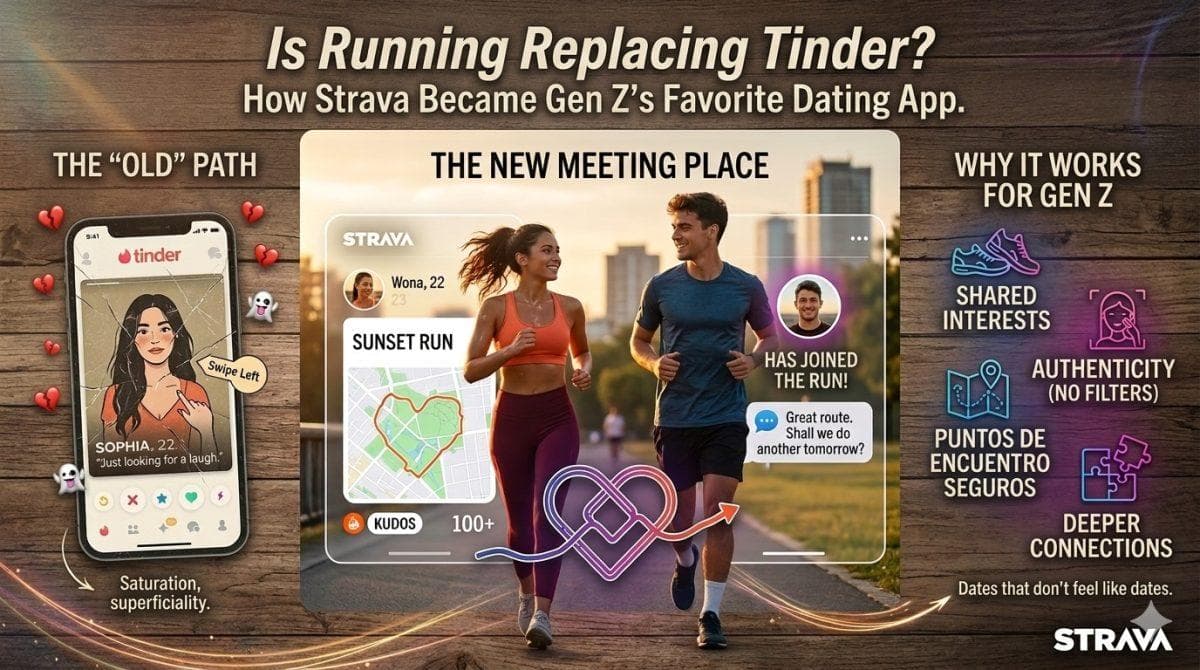
- Generation Z is trading the compulsive “swipe” of Tinder for the asphalt. One in five young people admits to having dated someone from their running club, seeking an authenticity that screens no longer provide.
-
Strava has transformed into a behavioral seduction tool. Seeing someone’s discipline at 6 a.m. says more about compatibility than any bio, turning athletic performance into the ultimate business card.
-
Trading nightclubs for “coffee raves” and group workouts marks an era where self-care serves as the new courtship stage, prioritizing physical and mental health over traditional nightlife.
Dawn breaks in the city, and while some swipe through profiles in bed, thousands of young people are already lacing up their sneakers. Upon finishing the route, the ritual has changed, the goal is no longer just to log miles, but to upload the workout to Strava. Those who do so know someone on the other side is paying attention. What began as a social network for athletes has organically become the new epicenter of romance for a generation exhausted by the coldness of algorithms.
Goodbye Tinder, hello Strava. The phenomenon is not just a perception; the data backs it up. According to the 2025 Year in Sport: Trend Report, the creation of sports clubs on the platform increased 3.5 times in one year. In a world where love seemed trapped behind paywalls, Gen Z decided to head back to the streets.
From asphalt to romance: The new mechanics of seduction
Unlike the visual catalog of conventional dating apps, seduction on Strava is behavioral. As specialized media outlets note, giving a “Kudo” has become the new super-like. The introduction of direct messaging on the platform in late 2023 facilitated flirting with icebreakers like, “Your pace or mine?”
Knowing that someone runs four times a week reveals discipline, consistency and values that a 150-character bio cannot capture. In these spaces, people observe before they speak; the facade of filters disappears when you are catching your breath after a speed interval. It represents the triumph of authenticity over digital posturing.
The collapse of the traditional model and the rise of the “Hobby App”
This exodus toward running or Tinder cannot be understood without the burnout produced by traditional dating apps. With over 75% of Gen Z suffering from burnout due to these platforms, Hobby Apps like Strava or Letterboxd are absorbing those fleeing “hyper-connected loneliness.”
While shares of Match Group (Tinder’s parent company) suffer declines, Strava flourishes with a valuation exceeding $2.2 billion. Pragmatism is winning the game, and today, users prefer “choremancing”, dates based on tasks or sports, over staged romantic dinners. Seeing how someone manages physical effort serves as the ultimate filter for a future partner.
Wellness as the new social stage
For the younger gaze, rebellion is no longer about destroying oneself over the weekend, but about staying lucid; 64% of Gen Z prefers spending on sports gear over a conventional date. This transition toward a healthy lifestyle has turned running clubs into the natural ecosystem for socializing without the “job interview” pressure that dating apps emulate.
Ultimately, young people have discovered that the best way to know if someone is compatible for the marathon of life is not an algorithm, but literally getting out there to sweat by their side.
