

WATCH NOW
Watch on the app













86-year-old sailor vanished in the Pacific with his dog until one emergency signal changed everything
-
An efficient Pacific ocean rescue executed by the United States Coast Guard saved an 86-year-old sailor and his dog after two months adrift in open waters.
-
Federal authorities coordinated the complex operation alongside commercial cargo ships situated miles away from the coastline to bring both survivors ashore safely.
-
The experienced mariner departed from Oregon heading toward American Samoa, facing weeks of total isolation before an emergency beacon signaled his coordinates.
An 86-year-old sailor and his dog survived 2 months lost in the Pacific before a dramatic rescue off California, capping a high-stakes journey where the man originally departed from Astoria, Oregon, aboard his sailboat Willow Wind toward Pago Pago in American Samoa and his last official contact with land occurred on Aug. 20, prompting family members and federal agencies to launch urgent tracking protocols. Subsequently, Pacific Area Coast Guard operators received the missing vessel report on Oct. 24, while the Alameda Rescue Coordination Center detected the emergency signal from the boat; consequently, authorities deployed aircraft and specialized vessels to search a vast oceanic zone, establishing all necessary protocols for this type of maritime emergency as detailed by the United States Coast Guard.
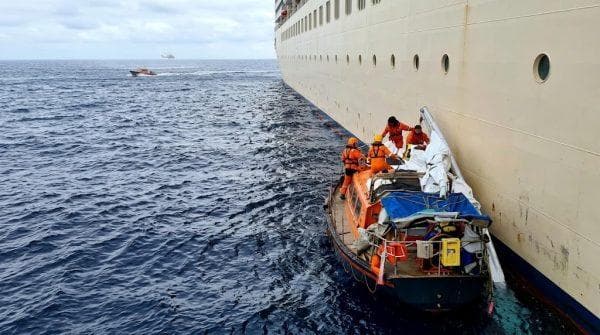
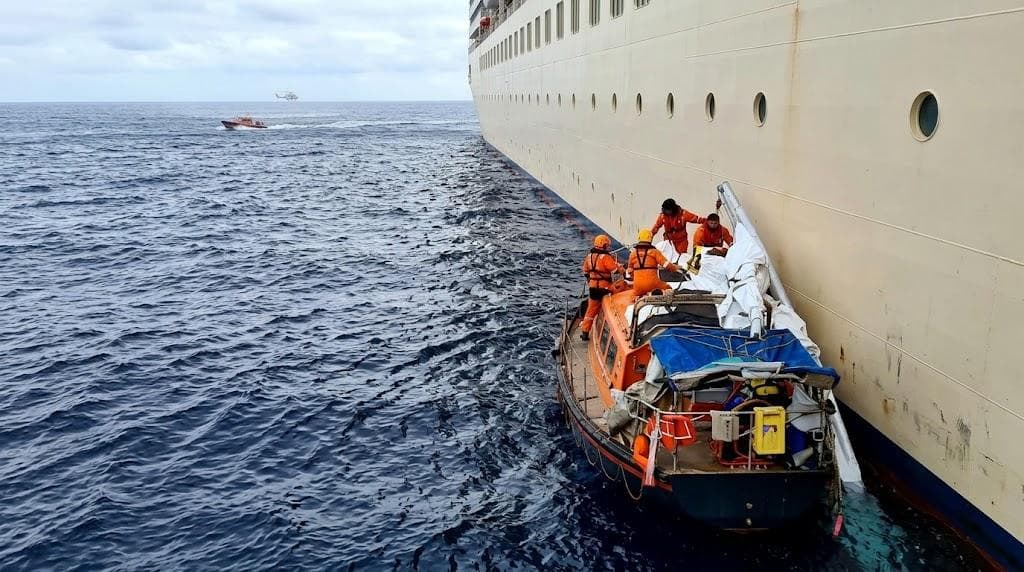
Similarly, an aircrew aboard a C-27 Spartan airplane located the sailboat during the night of Oct. 27, whereas additional teams mobilized an HC-130 Hercules aircraft and diverted the cutter Robert Ward toward the affected region; meanwhile, adverse weather conditions delayed direct boarding operations for over 14 hours. The commercial cargo ship Grand Orion arrived first at the geographic coordinates in the early hours of Oct. 28 and its crew successfully hoisted the captain aboard at 5:36 p.m.; therefore, the damaged sailboat remained drifting at sea with severe sail destruction, marking a milestone within maritime assistance operations across the North Pacific region according to reports from Associated Press.
Technical specifications of the vessel and transoceanic route during a Pacific ocean rescue
The grueling voyage undertaken by the solitary navigator spanned thousands of nautical miles across highly demanding routes:
-
Departure point: The journey began at the Port of Astoria located in Oregon, intending to cross deep waters toward the southern hemisphere.
-
Original destination: The maritime route established Pago Pago in American Samoa as the final stop of the 5k-mile transoceanic trip.
-
Vital equipment: Timely activation of the EPIRB beacon provided exact coordinates allowing a successful rescue off California by dedicated search teams.
-
Merchant assistance: The commercial cargo vessel Grand Orion made initial physical contact after braving fierce wind gusts and dangerous open sea waves.
-
Aerial evacuation: A military MH-60 Jayhawk helicopter subsequently hoisted the survivors from the merchant ship to transport them securely to land.
An 86-year-old sailor, silent since 20 Aug on a voyage from Oregon to American Samoa, was rescued with his dog ~460 miles off San Diego after his EPIRB alerted the US Coast Guard. Merchant vessel Grand Orion’s crew took them off on 28 Oct (USCG). #Seafarers #Maritime https://t.co/0WrIDAlm8V
— Eagle Intelligence Maritime (@EagleIntelMari) November 1, 2026
Medical assistance and hospital care following an ultimate Pacific ocean rescue
The military helicopter transported both survivors to Coast Guard Sector San Diego the following morning and paramedics immediately transferred the navigator to Scripps Health (https://www.scripps.org) for specialized medical evaluation; furthermore, the man exhibited visible physical weakness and walking difficulties after weeks of confinement, although doctors confirmed he sustained no severe traumatic injuries. Conversely, his loyal dog also completed the mainland evacuation journey without authorities reporting any animal health issues; meanwhile, military commanders emphasized the critical importance of planning nautical trips and keeping active satellite communication systems on board at all times.
Particularly, Cmdr. Jason Nguyen emphasized that close collaboration between merchant mariners and state aircrews guaranteed the success of this humanitarian mission; indeed, this milestone achievement highlights the ultimate effectiveness of maritime emergency protocols when tracking technology merges with fleet solidarity during a rescue off California across international waters.
