

WATCH NOW
Watch on the app














Peso Pluma and Kanye West paralyze social media with a tribute to Mexican Lucha Libre and El Chapulín Colorado in their new release
- The union between Peso Pluma and Kanye West redefines transnational collaboration by utilizing Mexican popular iconography as its aesthetic and narrative axis.
-
The use of iconic masks, such as those of El Santo and Blue Panther, in the promotion of Bully elevates Lucha Libre to a global art category, integrating national folklore into the avant-garde of contemporary hip-hop.
-
The inclusion of Chespirito elements in the “Last Breath” music video demonstrates a profound understanding of the symbols that unite Latin American generations.
The entertainment world woke up to a visual impact that few anticipated. Peso Pluma and Kanye West formalized one of the most disruptive alliances of the decade with the premiere of “Last Breath,” a single that does more than fuse genres; it acts as a love letter to Mexican popular culture. As part of the release of Bully, Ye’s new album, both artists decided that the wrestling ring and the heroic comedy of Roberto Gómez Bolaños would headline their visual concept.
This collaboration transcends music to become an aesthetic phenomenon where luxury streetwear blends with the sequins and mystery of the masks of ring idols.
Ye’s Ring: A tribute to the “Pancracio”
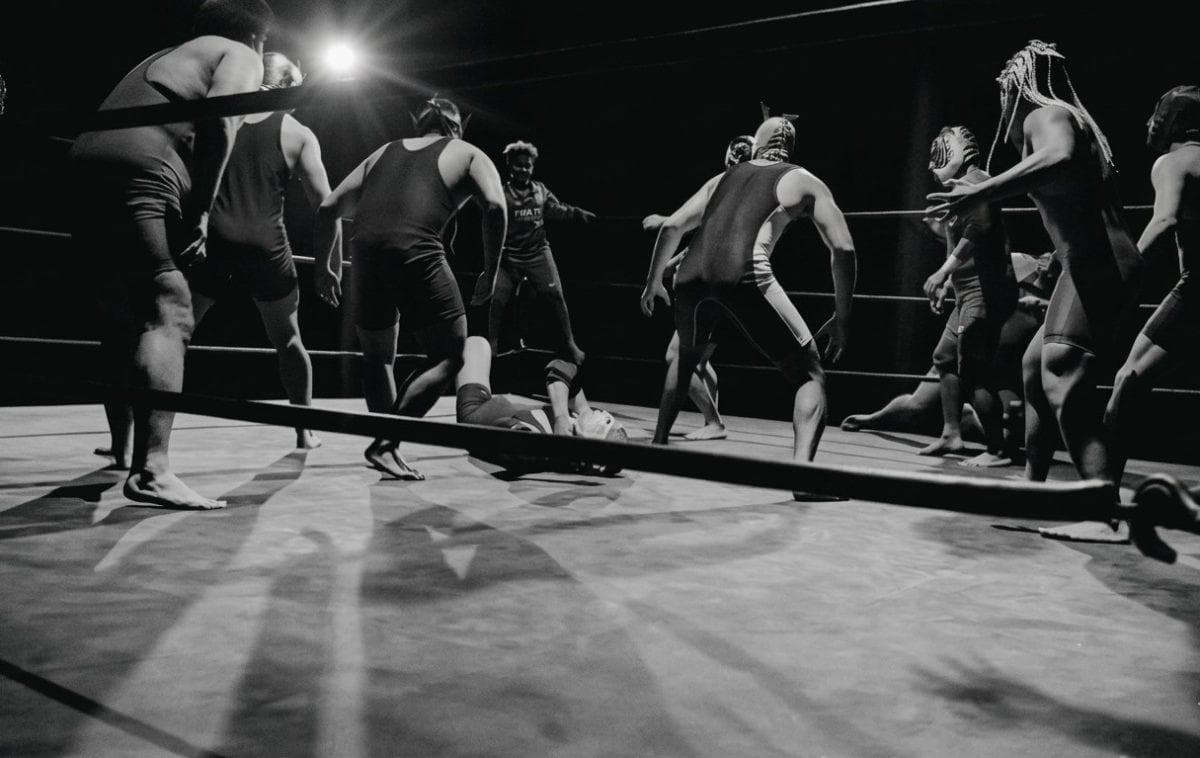
The Bully campaign has served as a statement of intent since its first teaser. Kanye West, known for his radical staging, swapped his minimalist aesthetic for an explosion of color linked to Mexican Lucha Libre. During the album’s listening party, the stage transformed into an arena where wrestlers sporting legendary masks like El Santo, El Matemático, and El Rayo de Jalisco guarded the sound equipment.
For Latinos in the United States, seeing these figures at such a global event represents a validation of their heritage. Ye cleared his social media to dedicate every pixel to this iconography, proving that his fascination with Mexico remains far from superficial, it is a deep exploration of its symbols of resistance and spectacle.
“Last Breath”: When Corrido meets Salsa samples
On a strictly musical level, Peso Pluma’s participation in “Last Breath” brings the rawness of corridos tumbados to a production that utilizes a sophisticated salsa sample from Poncho Sánchez. The song functions as a bilingual exercise where the vulnerability of heartbreak unfolds between Spanish and English verses, achieving a sonic texture that feels as organic on the streets of Guadalajara as it does in Los Angeles studios. This marks their second joint effort following “Gimme A Second 2,” but here their artistic chemistry reaches its peak.
El Chapulín Colorado in the Bully universe
Perhaps the detail generating the most buzz involves the appearance of the iconic “Chipote Chillón.” In one of the most discussed sequences of the music video, a child wields the famous red hammer of El Chapulín Colorado to face the wrestlers. This reference to the Chespirito universe serves as a direct nod to the heart of Mexican nostalgia, elevating an object of childhood comedy to a symbol of power within Ye’s narrative.
The inclusion of Tiger Mask, the Japanese wrestler, closes the circle of a multicultural proposal that holds Mexico as its creative base of operations. With Peso Pluma and Kanye West leading streaming charts, it remains clear that the future of global music involves understanding and embracing the “collective imaginary” of the nations currently setting the pace for style and identity.
