

WATCH NOW
Watch on the app













Massive hole that appeared in Antarctica raises alarming predictions among scientists
-
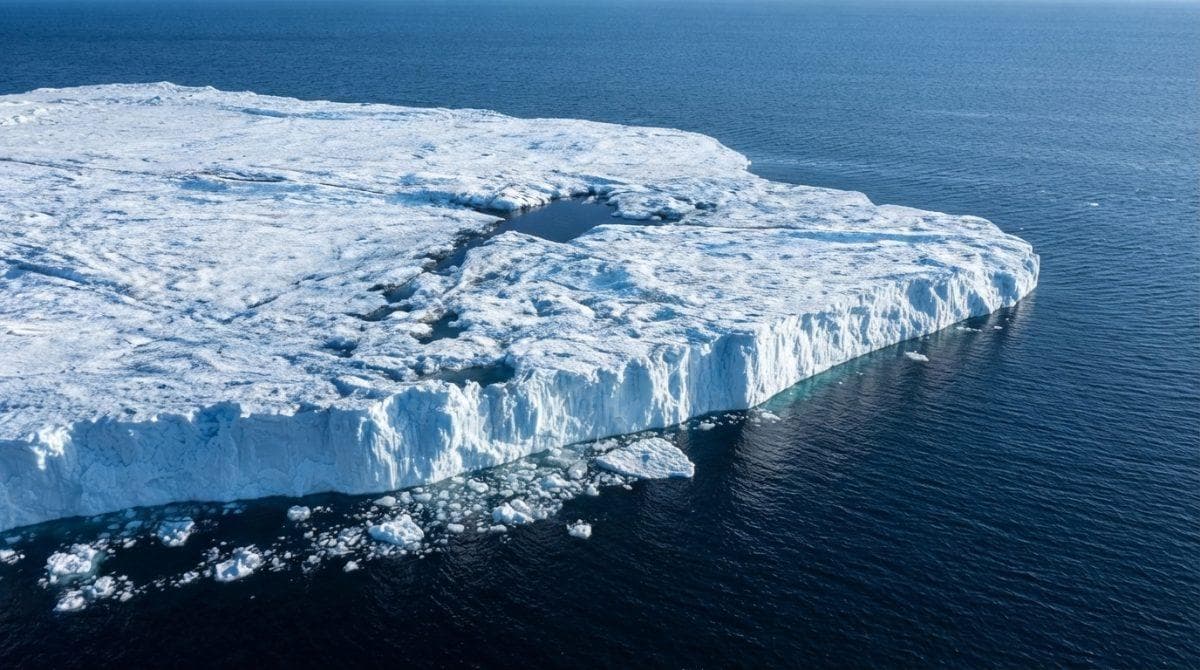
Alarming polar anomaly emerged in the frozen expanse during August 2024 when researchers detected a massive opening where solid pack ice normally forms.
-
Advanced satellite observations confirm that atmospheric rivers and ocean upwelling triggered this unprecedented winter disruption.
-
Environmental specialists warn that climate shifts will likely accelerate similar disturbances across the southern polar region.
In August 2024, researchers discovered a massive opening of open ocean where solid pack ice normally forms in the eastern sector of the continent, marking an alarming polar anomaly and creating an unexpected hole in Antarctica that caught the scientific community completely off guard, while satellite observations from agencies such as the European Space Agency recorded this unexpected disruption during the peak of winter to reveal how extreme atmospheric and oceanic forces converged to fracture the frozen landscape.
Furthermore, specialized investigators publishing scientific studies explain that this sudden event arose from a powerful succession of atmospheric rivers carrying heavy moisture and warm air into the region, whereas simultaneous subsurface winds forced relatively warm deep water upward to create a dual-action mechanism that melted the ice sheet from both top and bottom, which highlights an alarming polar anomaly across southern waters prompting urgent reviews of regional stability.
Ver esta publicación en Instagram
The satellite detection and dimensions of the hole in Antarctica
Advanced satellite monitoring tools tracked the evolution of the feature as it emerged across Breid Bay, providing unprecedented clarity on its massive spatial footprint, while the opening reached a peak extension covering nearly 34k sq mi before freezing back over rapidly later in the month, manifesting as an alarming polar anomaly that challenged historical baselines.
-
Satellite imaging mapped the opening right across Breid Bay within the eastern sector.
-
Peak measurements recorded a total surface area spanning approximately 34,400 sq mi on August 8, 2024, confirming the unprecedented scale of the hole in Antarctica alongside an alarming polar anomaly.
-
Historical satellite records dating back to 1979 confirmed that this specific bay had remained continuously frozen throughout past winters.
-
Rapid refreezing processes closed the vast opening entirely before the end of August.
Loading video...Loading Video
Atmospheric drivers and subsurface ocean dynamics
Meteorological teams identified a sequence of 6 intense atmospheric rivers driving warm moisture into the polar atmosphere, acting essentially as airborne rivers of heat, whereas severe northern gales battered the frozen crust while simultaneous ocean upwelling channeled deep thermal currents toward the upper water column, constituting an alarming polar anomaly of regional significance.
Additionally, this destructive combination created a compounding thermal assault where external air warmth weakened the surface while internal water temperatures blocked any natural ice regeneration, meaning that the resulting open water zone demonstrated how vulnerable the regional cryosphere remains when multiple extreme weather vectors collide.
Future environmental forecasts and alarming polar anomaly implications
Polar researchers emphasize that while the specific atmospheric convergence of 2024 was exceptionally rare, climate models project an increased frequency of similar events ahead and as global temperatures rise alongside intensifying atmospheric moisture rivers, scientists anticipate recurrent disruptions to the sea ice buffer protecting the continental shelf, underscoring this alarming polar anomaly.
Consequently, environmental analysts caution that losing winter ice cover exposes vulnerable coastal ice sheets directly to warming ocean waves, threatening long-term stability across the entire region, so ongoing satellite tracking remains critical for measuring how atmospheric anomalies continue reshaping polar stability in coming years, leaving a profound hole in Antarctica.
