

WATCH NOW
Watch on the app















House of the Dragon the making of TV’s most realistic dragons
-
Advanced digital animation techniques transform the small screen, elevating the realism of fantastic creatures through sophisticated dragon visual effects in current television productions.
-
Examining technical innovations allows audiences to understand the heavy production effort behind every epic sequence in the series.
-
Post-production houses implement cutting-edge tools that establish a brand-new aesthetic standard within the entertainment industry.
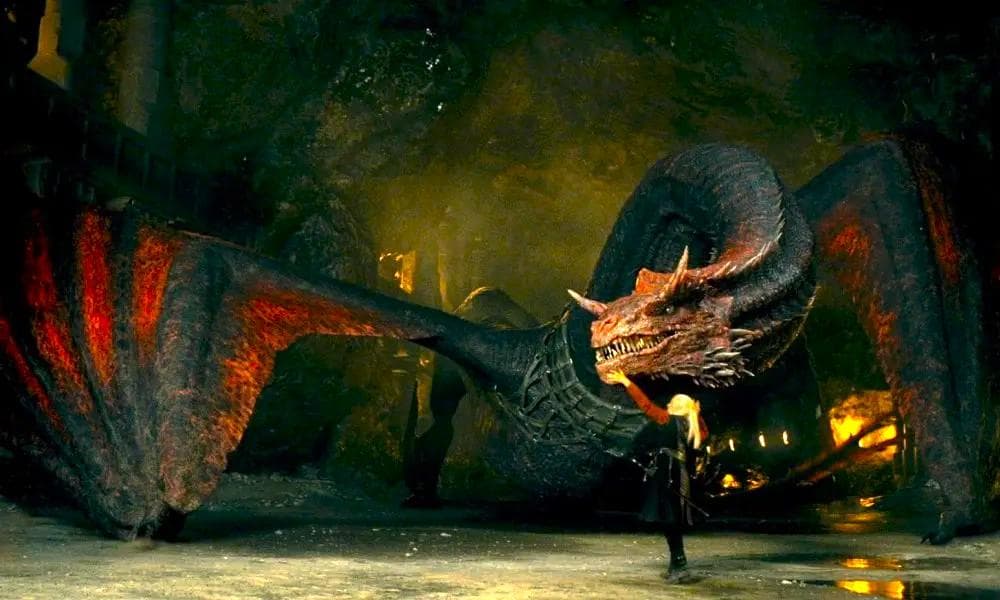
House of the Dragon redefines contemporary television standards by deploying advanced digital technology at Warner Bros Studios Leavesden, where special effects supervisors coordinate rigorous technical processes, recently delivering more than 900 complex shots integrating virtual environments and immersive LED screens to maximize viewer immersion. Additionally, this technical deployment demands millimeter-level synchronization between specialist teams and camera operators to fuse practical elements with computer-generated animations in every episode, while complex flight sequences require detailed atmospheric simulations that replicate real weather conditions and sophisticated organic movements.
Ver esta publicación en Instagram
During the pre-production phase, creators establish unique anatomical features based on real reptiles and birds to give every mythological creature its own distinct identity, similarly applying meticulous layers of textures, scales and digital scars through animators to guarantee a photorealistic look under any lighting condition. Concurrently, industry-leading companies like Moving Picture Company and Pixomondo develop rigorous digital skeleton systems that anticipate behavioral patterns before scene filming begins, resulting in a structural design for these mythological beings that consolidates a cohesive visual aesthetic captivating millions of followers worldwide.
The technical process with dragon visual effects
During studio recording sessions, actors simulate flights mounted on advanced mechanical platforms known as tilting cabs, reciprocally utilizing specialized cameras equipped with high-precision lenses to capture analog textures that visually enrich every shot. Simultaneously, directors combine real physical sets with virtual backgrounds projected onto giant screens to optimize performers’ interaction with the fantastic environment, whereas engineers monitor every frame in real time to ensure seamless quality. Moreover, coordination between the practical and digital effects departments guarantees that fire-breathing sequences achieve a profoundly compelling visual impact, elevating overall production values.
Ver esta publicación en Instagram
Throughout complex action sequences, specialists coordinate millimeter-level movements through physical references and chromatic supports inside recording stages, jointly enabling animation teams to process millions of geometric data points simulating intricate interactions with water and wind. Likewise, major television networks continue investing millions in technological innovation to surpass public aesthetic expectations, while cinematographers refine new lighting techniques designed to enhance the monumental scale of the beasts across every single episode.
Innovation and future of audiovisual production
-
Digital modeling: Constructs detailed three-dimensional structures with hyper-realistic skeletons, muscles and skin layers.
-
Advanced rigging: Implements virtual supports to facilitate natural movements and character expressiveness.
-
Specialized filming: Utilizes mobile mechanical platforms to accurately simulate aerial displacements.
-
Lighting integration: Combines real fire and practical effects with computer-generated environments.
Ver esta publicación en Instagram
Based on technical reports from the Visual Effects Society, filmmakers continuously integrate sophisticated dragon visual effects to accelerate the rendering of complex scenes, analogously reminding experts that close collaboration among puppeteers, stunt doubles and digital artists remains indispensable to maintaining dramatic credibility. Meanwhile, the entertainment sector trusts that these technological innovations will permanently transform filming methods in major global productions, sowing a horizon where every frame impresses and House of the Dragon transcends screens to establish a new cinematic legacy.
