

WATCH NOW
Watch on the app









Seven historical moments where the Oscars had two winners in one night
-
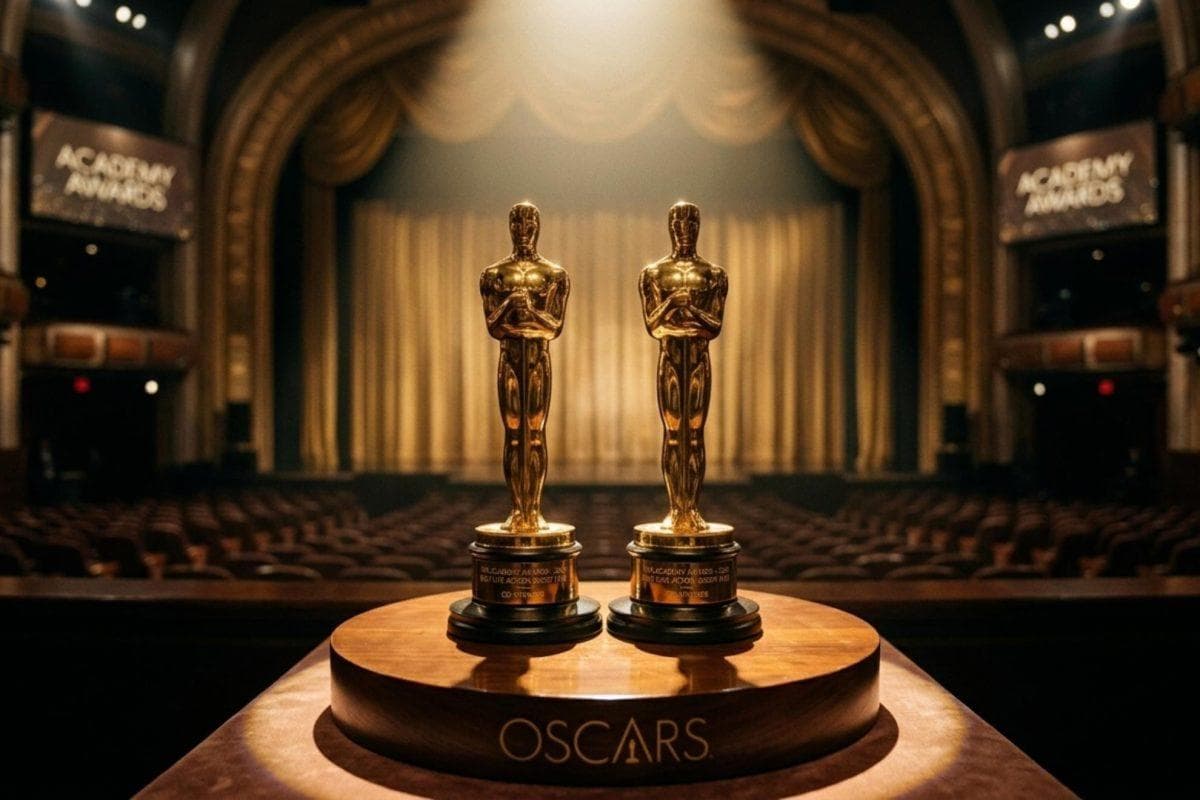
Academy history holds unusual chapters where the voting system resulted in an absolute tie, forcing the duplication of cinema’s most coveted award.
-
From the legendary duel between Barbra Streisand and Katharine Hepburn to the recent surprise of 2026, these moments have challenged Hollywood statistics.
-
Although parity is nearly impossible among thousands of voters, ceremony regulations guarantee that, in the event of an equal number of votes, shared talent deserves its own statuette.
In the competitive universe of Hollywood, the golden statuette is usually a trophy reserved for a single victor who manages to prevail over their colleagues in a night of solitary glory. However, cinematic fate has allowed, on rare occasions, the spotlight to split and illuminate two winners simultaneously, breaking the tradition of individual victory. These ties, although statistically appearing to be a miracle, represent memorable moments where artistic excellence is so balanced that it becomes impossible for the Academy to settle on a single name, turning the gala into a doubly historic event.
The pioneers of equality: The 1932 case
The path of shared awards began much earlier than many imagine, specifically during the fifth edition of the awards held in 1932. That gala set a curious precedent when Fredric March, for his shocking transformation in Dr. Jekyll and Mr. Hyde, and Wallace Beery, for his emotional role in The Champ, ended the day with a vote difference so insignificant that an official tie was declared in the Best Actor category. This event not only surprised the attendees of the time but also inaugurated a list of “coincidentals” that would continue to grow over the decades in the most unexpected categories.
1969: The tie that paralyzed the industry
If there is a moment that defines the rarity of these awards, it is the 1969 ceremony, where two of the greatest actresses of all time shared the Oscar for Best Actress. The statuette was delivered equally to Barbra Streisand for her staggering debut in Funny Girl and to veteran Katharine Hepburn for her impeccable work in The Lion in Winter. Since Hepburn decided not to attend the gala, the stage belonged entirely to a young Streisand, who starred in one of the most iconic speeches in history by addressing her award with a complicity that only a tie of such magnitude could justify.
From technical skills to fiction: Other balanced duels
Beyond acting categories, ties have emerged in sections where technical precision is fundamental, making it clear that consensus is not always easy to reach. In 1950, the Best Documentary Short Subject category ended in a symbolic embrace between two productions, a phenomenon that would be repeated years later in 1987 with Best Documentary Feature. Even in the modern era, the year 2013 gave us a major surprise when the Best Sound Editing Oscar was awarded to both Zero Dark Thirty and Skyfall, proving that even in auditory details, perfection can be shared.
2026: The return of duality to the Oscars
The most recent chapter of this chronology was written at the recent 2026 ceremony, where the Best Live Action Short Film category once again tested the Academy’s regulations. On this occasion, the works The Singers (2025) and Two People Exchanging Saliva (2024) reached the magic figure of the same number of votes, forcing the presenters to announce two consecutive winners. This fact, though unusual, reminded those present that Hollywood’s rules are clear: if the industry’s support is divided equally, the glory must be delivered in duplicate.
