

WATCH NOW
Watch on the app













Google plans to drill deep into a volcano in search of “superpower” for its data centers
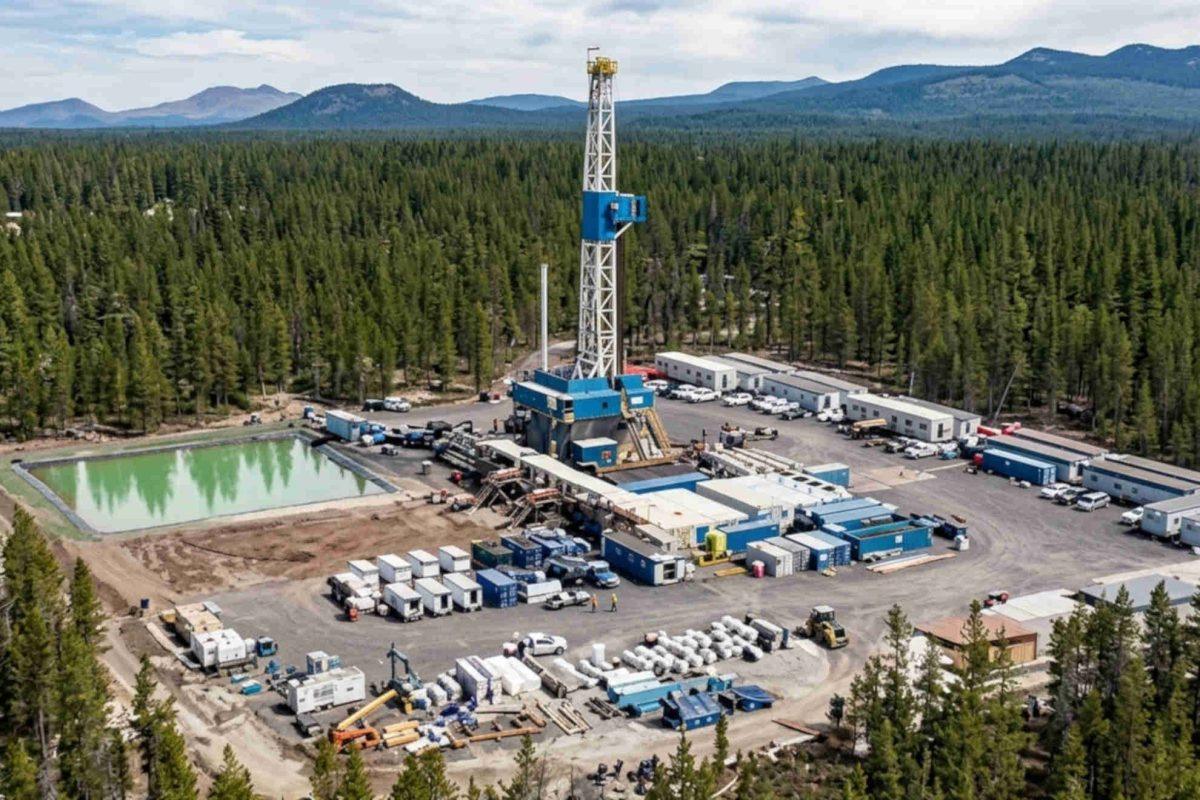
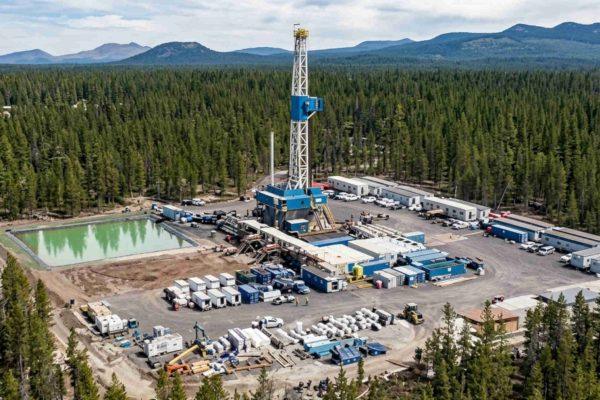
- Google plans to drill deep into a volcano alongside Quaise Energy through a fifty-megawatt agreement under Project Obsidian launching in 2030.
- The push for superhot rock above three hundred seventy-four degrees targets supercritical water capable of multiplying traditional geothermal output up to tenfold.
- The move joins the race for firm, zero-emission power for artificial intelligence data centers across The United States.
Drilling next to an Oregon volcano and how superhot rock works
The move in which Google looks to tap volcanic heat gained momentum recently when Quaise Energy announced a fifty-megawatt power purchase agreement under Project Obsidian to supply Google’s data center in The Dalles, Oregon, along with nearby communities starting in 2030 using temperatures near four hundred degrees Celsius roughly five kilometers down on the southern flank of Newberry Volcano.
Unlike conventional geothermal setups that usually stay below three hundred degrees in shallow reservoirs and supply a tiny fraction of global electricity, pushing past three hundred seventy-four degrees under enough pressure brings water into a supercritical state that carries far more energy and could generate up to ten times more power per well, a leap that already showed clues in 2009 when the Iceland Deep Drilling Project struck magma about two kilometers down and steam above four hundred fifty degrees even though extreme conditions damaged the equipment. For anyone closely following how technology reshapes power consumption, this bet shows just how far engineering goes when chasing steady clean energy.
Millimeter waves, gyrotrons and real progress on the Oregon project
Likewise, while Google evaluates how to drill to great depths next to a volcano without wearing down mechanical drill bits in hard, superhot rock, Quaise Energy pushes to vaporize the ground with millimeter waves fired from a gyrotron, a device originally built to heat plasma inside experimental nuclear fusion reactors, even though its July test in Texas reached roughly one kilometer, still far shy of the five kilometers needed in Oregon.
For that reason, the first phase of Project Obsidian will rely on conventional drilling similar to oil and gas operations to build an enhanced geothermal system by pumping water into fractures and extracting steam, saving the commercial debut of millimeter waves for a second phase targeting two hundred fifty megawatts while a confirmation well advances roughly four thousand five hundred meters at Newberry without disclosing temperatures yet. In this way, backed by a one-hundred-eighty-million-dollar funding round in August and a September selection to receive up to twenty-five million dollars from the Department of Energy of The United States, the project gains momentum to scale.
Firm power for data centers and the artificial intelligence pulse
On the other hand, the scenario in which Google and Quaise Energy pursue round-the-clock electricity for data centers, in this case right next to a volcano, answers a concrete need, since these artificial intelligence facilities demand continuous twenty-four-hour, zero-emission power that solar or wind cannot guarantee alone due to weather shifts. Even though the tech giant already opened another geothermal front with Fervo Energy to deliver one hundred fifteen megawatts to its Nevada operations using oil-industry horizontal drilling at more moderate temperatures with proven technology, Quaise’s superhot rock carries higher technical risk in exchange for massive upside once validated in Oregon. Thus, between the race for firm power and the chance to replicate this method across volcanic zones from Iceland and Japan to the Andes, the road to 2030 promises decisive chapters.