

WATCH NOW
Watch on the app



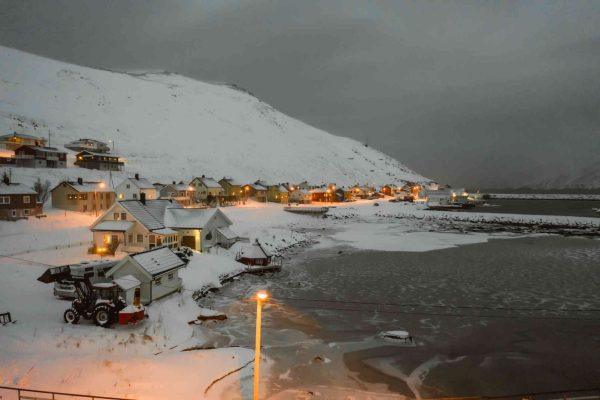











The sun has disappeared from an Alaska town and won’t return until 2027
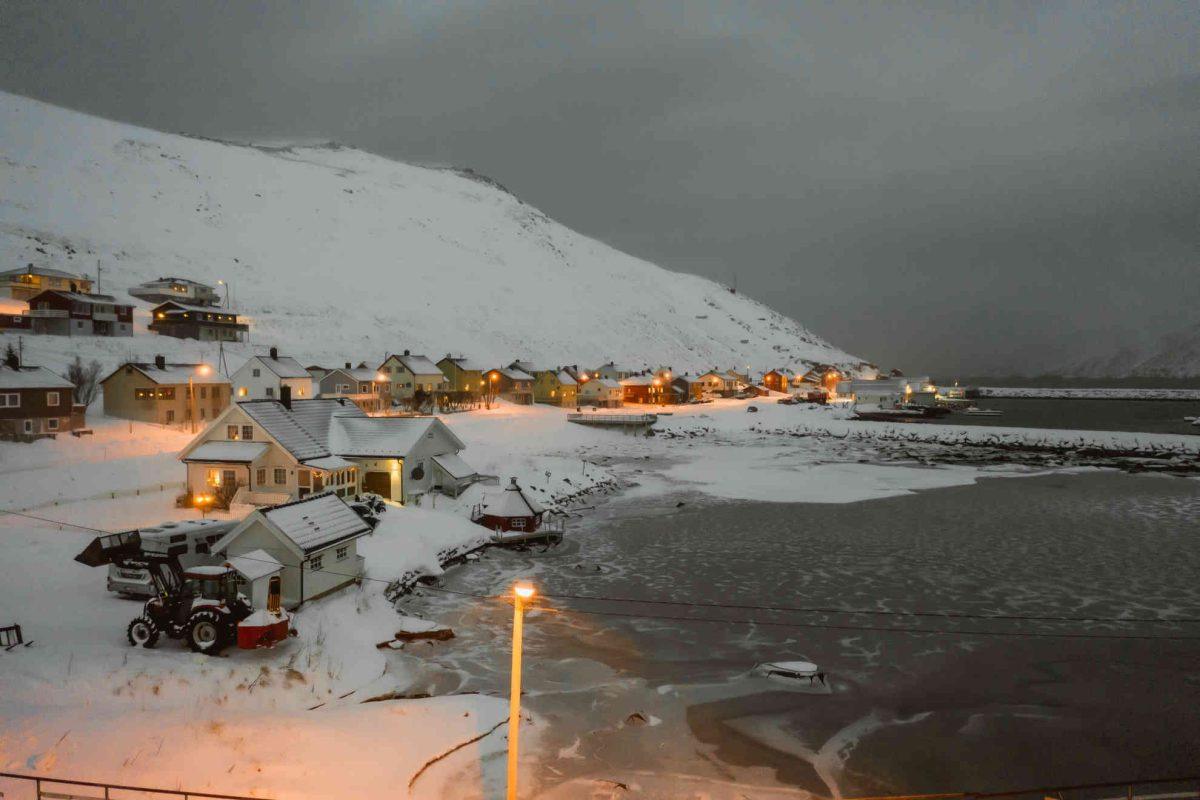
- The sun has disappeared from an Alaska town on November eighteenth at 1:42 p.m. and will leave around five thousand residents without sunrises until January 2027.
- Polar night in Utqiagvik, formerly Barrow, stems from Earth’s 23.5-degree tilt that keeps the sun below the Arctic horizon.
- This extreme phenomenon in The United States does not stop schools, hunting, or fishing, and later gives way in summer to over eighty straight days of sunlight.
The sun has disappeared from an Alaska town and marked the start of polar night
News that the sun has disappeared from an Alaska town gained momentum on November eighteenth, 2026 at 1:42 p.m. local time in Utqiagvik, the northernmost town in The United States, where nearly five thousand residents entered sixty-five consecutive days without a single sunrise. In this way, after seeing just over sixty minutes of direct sunlight between 12:41 p.m. and 1:42 p.m. on that final day, the sun dipped below the horizon starting November nineteenth and, according to data from the Naval Observatory of The United States and Sunrise-Sunset.org, will only peek back out on Saturday, January twenty-third, 2027 around 1:03 p.m. local time for barely over an hour. Even though our Latino community in The United States usually associates winter with shorter days, picturing more than two straight months without watching the sun rise turns this Arctic corner, formerly known as Barrow, into an extraordinary setting.
Why polar night happens in Utqiagvik and how daily life continues
In that sense, understanding why the sun has disappeared from an Alaska town for so long takes only a glance at the map, since Utqiagvik, called Barrow until it reclaimed its Iñupiat name meaning place where wild roots are gathered in 2016, sits along the Arctic Ocean coast at 71.3 degrees north latitude and roughly five hundred fifteen kilometers north of the Arctic Circle.
Ver esta publicación en Instagram
Because Earth’s axis holds an approximate tilt of 23.5 degrees relative to its orbital plane, the North Pole stays angled away from solar rays during the northern winter, although during the darkest weeks around the December twenty-first solstice, nearly three hours of civil twilight appear at midday with blue and orange hues across the southern sky whenever the sun comes within five degrees below the horizon. Furthermore, outside that faint band of light, the town relies on artificial lighting, the moon, polar night, stars and occasional northern lights while the predominantly Iñupiat community keeps schools, hunting and fishing running as usual.
From January’s gradual return to summer’s midnight sun
Now, beyond the shock of hearing that the sun has disappeared from an Alaska town until January 2027, the Arctic calendar balances this dark polar night stretch with a steady recovery that reaches nearly four hours of daily daylight by January thirty-first. Likewise, that shift keeps building toward spring until completely flipping the scale in summer, when Utqiagvik experiences the midnight sun and keeps the sun above the horizon for more than eighty straight days from mid-May until roughly 2:00 a.m. on August second. Thus, between sixty-five days of polar night and unbroken weeks of nonstop daylight in Barrow, this town shows how an entire community adapts its daily rhythm to Earth’s most extreme cycles.