

WATCH NOW
Watch on the app










Florida doctor’s asthma drug trials involved patients who never participated
-
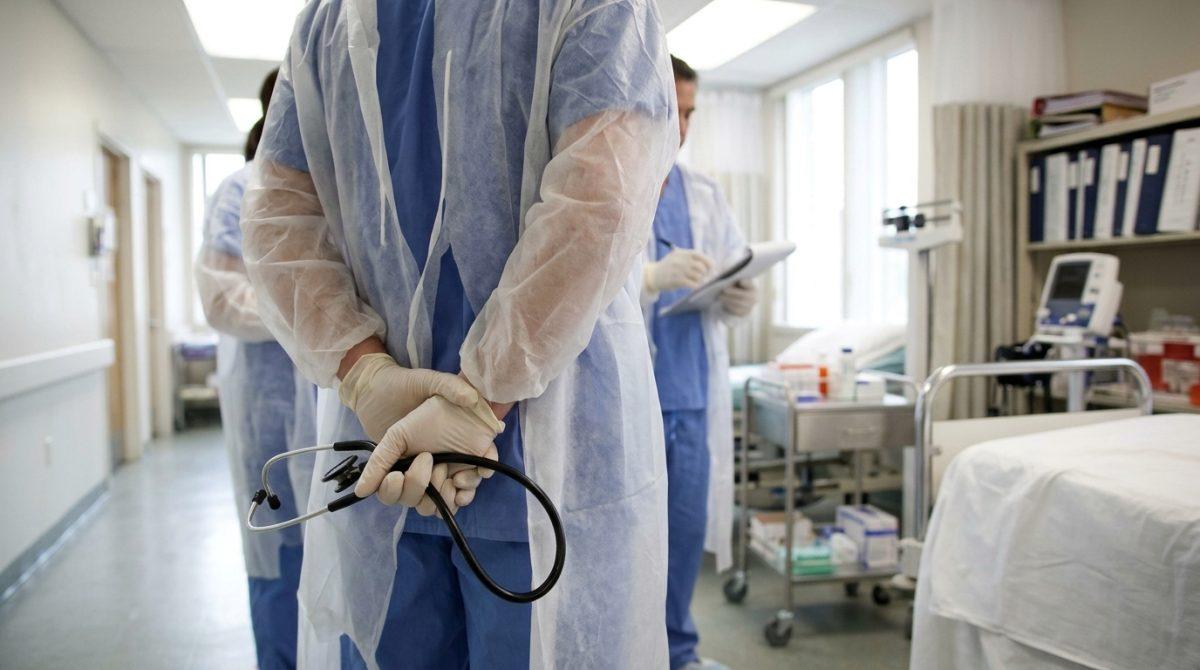
A fake patient scheme came to light in a medical study after federal investigators uncovered falsified files.
-
A federal jury convicted a physician and three research center employees of wire fraud.
-
The Florida research center collected over $824K through manipulated records and paid stand-ins.
A Florida research center turned respiratory clinical studies into a network of deception using fictitious volunteers and paid stand-ins after a federal jury convicted a physician and three research center employees of conspiracy and wire fraud. Moreover, federal prosecutors detailed how the operation ran between February 2019 and January 2022 to collect over $824K from a sponsoring pharmaceutical company by altering medical data on the safety and efficacy of experimental treatments.
Furthermore, court records revealed that the fraud compromised two clinical studies funded by a pharmaceutical development company, while the U.S. Food and Drug Administration and the Department of Justice underscored the public health risk following an investigation led by federal authorities. Meanwhile, a senior Justice Department official warned that accurate human testing data remains essential to approving new medications, noting that the defendants abused their positions to falsify vital records.
How the Florida research center operated with paid stand ins
Investigators discovered that the research center secured contracts to recruit volunteers with confirmed asthma diagnoses across two distinct studies: one trial compared the safety and efficacy of two experimental drugs for severe asthma attacks, while the other measured whether an experimental drug and its components improved lung function and eased symptoms. Additionally, the defendants used personal data and identification documents from individuals outside the studies to fabricate complete medical files, with the center’s co-owner and principal investigator signing false physical examination records and a clinical research coordinator certifying lab samples from people she had never seen.
Meanwhile, two other clinical research coordinators operated laboratory spirometers to record the lung air volume and airflow speed of paid stand-ins, who completed 12 pulmonary function tests during each of five follow-up visits over seven-hour intervals. Consequently, the machines electronically transmitted authentic physiological measurements under false identities to an external data collection firm, allowing the clinic to bill nearly $13.4K per participant who completed one study, $11.4K for the other and additional fees for screening rejected candidates as part of the fake patient scheme.
Key details of the convictions and the fake patients scheme
- A 50-year-old physician and two clinical research coordinators, aged 56 and 41, received guilty verdicts for conspiracy and three counts of wire fraud, each facing up to 80 years in federal prison for their involvement in the fake patient scheme.
- Another clinical research coordinator, aged 42, was convicted of conspiracy to commit wire fraud, carrying a maximum penalty of 20 years, while the four convicted defendants from the Florida research center remain free on bond ahead of their February 9, 2027, sentencing hearing.
- A fourth clinical research coordinator, aged 38, pleaded guilty in August and testified for prosecutors ahead of her December 15 sentencing. However, the U.S. district judge cautioned the jury that her cooperation could lead to a more favorable sentence.
- During the nine-day trial, which featured extensive bank records and checks, attorneys representing one of the defendants objected to jury instructions over the risk of conviction for coworkers’ actions without proven individual intent. Meanwhile, prosecutors documented clinical data transmissions to an out-of-state data collection firm in June 2021 and clinic payments of $66K in January 2022 and $13.8K in May of that year.
Scope of the falsified data in the Florida clinical trials
Several questions remain open in the court record, since officials still do not know how the fraud first surfaced, whether staff excluded the altered data before submitting results to federal regulators, or whether any patient suffered direct harm. Meanwhile, a senior FDA official responsible for criminal investigations warned that a fake patient scheme can influence agency decisions on drug safety and efficacy. Federal prosecutors demonstrated how the clinic reported 14 screened and 11 enrolled subjects in the first study, plus 69 screened and 59 enrolled subjects in the second, without records showing how many of those roughly 70 participants were real or what share of the $824.2K constituted actual financial losses.
At the same time, the case exposes weaknesses in verification safeguards across medical studies contracted by pharmaceutical companies in the United States, where federal agencies rely on accurate documentation from private clinics to approve respiratory therapies. In this context, the convictions against the clinic’s leadership and coordinators underscore the importance of criminal accountability and regulatory oversight across Florida’s medical research centers.