

WATCH NOW
Watch on the app









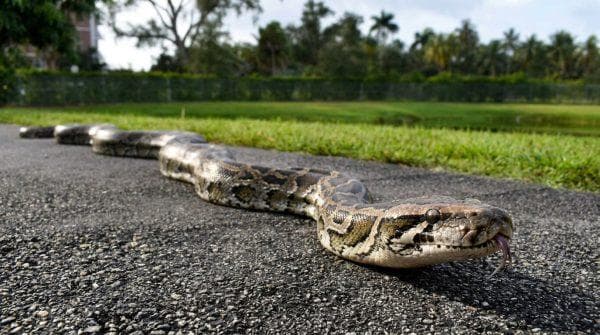





Florida scientists release a 16-foot snake into the Everglades
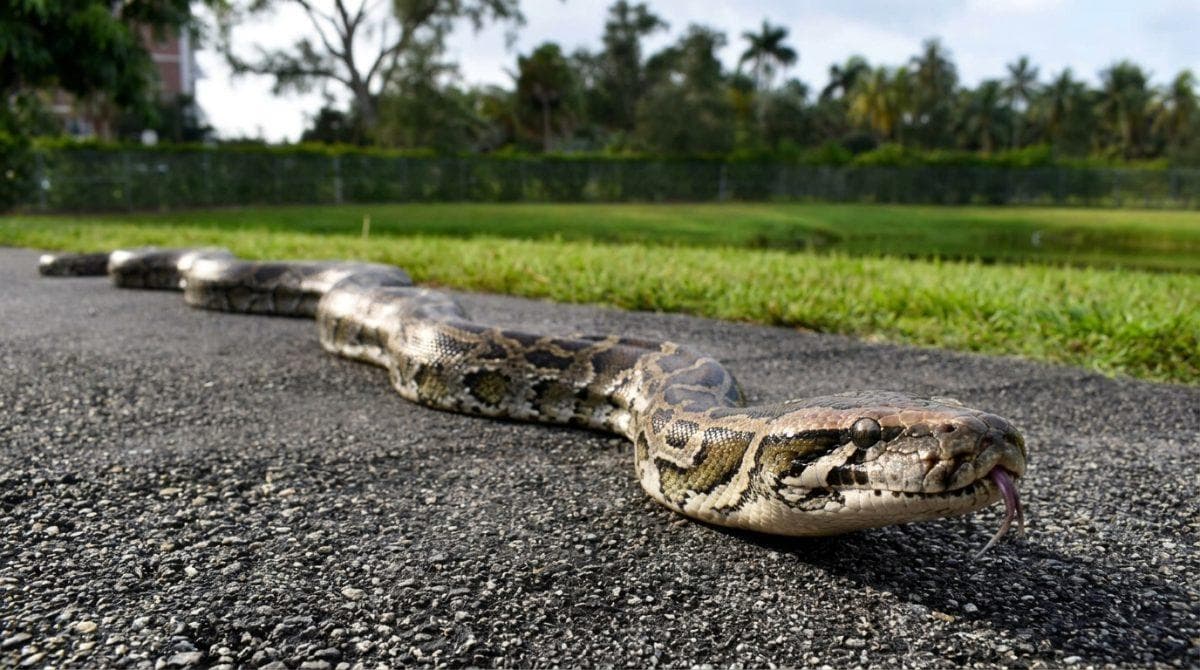
-
Giant snakes challenge United States Geological Survey scientists, who implemented an unprecedented experimental strategy by releasing a 16-ft female into southern wetlands to combat Florida invasive pythons.
-
The research combines unmanned aircraft technology with radiotelemetry tracking to leverage the natural breeding habits of these reptiles and pinpoint hidden reproductive clusters within Big Cypress National Preserve.
-
Historical records confirm a devastating impact on native wildlife with drastic population drops among raccoons and opossums, forcing specialists to redesign traditional ecological control methods.
The delicate ecosystem of the southern wetlands faces an extraordinary challenge as Florida invasive pythons continue expanding their territory across protected habitats, where these massive constrictors can exceed 16 ft in length and prompt researchers to adopt a counterintuitive approach to curb their widespread population growth; in fact, experts from the U.S. Geological Survey documented the release of a 16-ft female weighing 148 lbs equipped with a radiotransmitter during collaborative tests with researchers at the University of Florida, establishing a controlled procedure that utilizes natural animal behavior to locate hidden groups thriving among dense vegetation rather than representing an operational error.
Originally native to Asia, the Burmese python (Python bivittatus) established permanent breeding colonies in southern Florida due to its ability to remain unseen while navigating aquatic environments, which allows this invasive species to feed on diverse native fauna and move effortlessly through complex marshlands spanning millions of sq ft; consequently, eliminating these predators remains exceptionally difficult because exact population estimates stay uncertain across vast expanses of swampy terrain, prairies, and thick vegetation.
Florida invasive pythons drive an unprecedented ecological crisis in the wetlands
Scientific assessments reveal devastating impacts on native wildlife populations since these giant snakes established breeding colonies in the region, as published reports in PNAS show that wildlife monitoring inside Everglades National Park recorded a staggering 99.3% reduction in raccoons, a 98.9% drop in opossums, and an 87.5% decline in bobcats, while experimental research in Proceedings of the Royal Society B demonstrated that pythons caused 77% of tracked marsh rabbit deaths, confirming their role as primary drivers of severe ecological collapse.
Although these figures highlight a dramatic loss of local biodiversity, traditional control techniques continue to struggle against the camouflage skills of these reptiles, forcing field teams to spend countless hours walking through dense prairies and flooded environments to discover individual specimens and compelling researchers to explore unconventional alternatives to protect vulnerable fauna.
Snake hunter in the Florida Everglades discovered two Burmese python nests right next to each other…with both combined having 120 eggs 🤯https://t.co/e85e5j7gxT
— Daily Loud (@DailyLoud) March 31, 2026
How scout snakes betray hidden breeding hubs across the Everglades
To tackle this persistent issue, specialists began leveraging a crucial behavioral trait during the active mating season to locate elusive giant snakes, fitting monitored specimens known as scout snakes with radiotransmitters and returning them to the wild to guide field teams toward other individuals, which enables scientists to intervene effectively and remove multiple adult snakes at once that would otherwise pass unnoticed whenever a scout python joins a reproductive cluster.
This targeted method currently takes place across 2 distinct environments located inside the Big Cypress National Preserve, where scientists closely study survival rates, hatchling survival odds, growth in in, seasonal movements and reproductive success beyond merely capturing adult specimens, providing gathered information that helps conservationists design far more efficient intervention strategies across the region.
🚨FOUR TONS OF SNAKES: Biologists in Southwest Florida just shattered records by pulling a massive 8,080 pounds of invasive Burmese pythons from the Everglades in a single breeding season.
@ConservancySWFL President & CEO Rob Moher: “Every python removed reduces pressure on the ecosystem.”
Check out the jaw-dropping numbers behind the haul!
— Michelle Vecerina (@michellevnews) June 15, 2026
Unlocking high-tech defense mechanisms against giant snakes
-
Aerial telemetry tests with drones: Unmanned aircraft equipped with radiotelemetry gear scan the wetlands from above to evaluate signal reception from marked pythons, explicitly testing transmitter signal tracking rather than automatic identification of untagged wild giant snakes.
-
Comprehensive 2026 USGS database: A major database published by the USGS in September 2026 aggregates tracking locations collected between 2005 and 2026 to analyze long-term territorial movements and spatial usage across millions of sq ft.
-
Strict scientific protocol: Releasing tagged females measuring up to 16 ft remains strictly reserved for authorized research initiatives rather than public application, ensuring experimental tracking operates under tight supervision.
-
Predictive control models: Detailed observations regarding hatchling survival, growth in, adult survival rates and seasonal distribution directly inform upcoming models designed to strike targeted blows against Florida invasive pythons.
Loading video...Loading Video
By leveraging telemetry data and aerial technology, turning invasive constrictors into tracking assets marks a decisive shift from passive containment to data-driven ecological intervention, as researchers refine these tracking methods and aggregate decades of territorial movement records to build long-term predictive management models beyond immediate removals, ensuring that scientists stay one step ahead of environmental degradation to preserve Florida’s most critical wetland habitats through the targeted management of Florida invasive pythons.
Look how big Burmese Pythons can get in the Florida Everglades. And this isn’t even the biggest one! The state record is 19 feet long. Since 2000, more than 27,000+ invasive Burmese Pythons have been removed from Florida’s environment with many more still to go. 🐍 Credit: Taylor Stanberry
— Matt Devitt (@MattDevittWX) August 7, 2026
