

WATCH NOW
Watch on the app











Elon Musk couldn’t save the entire rocket during SpaceX’s latest mission, despite Starship’s historic return to Texas
-
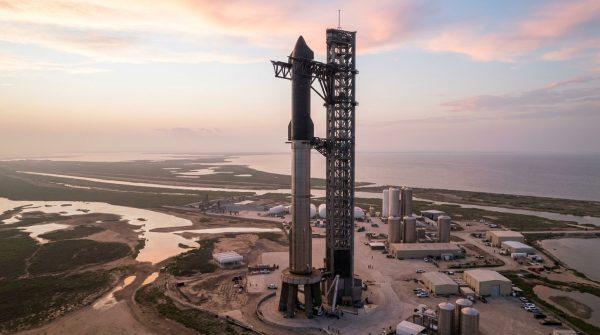
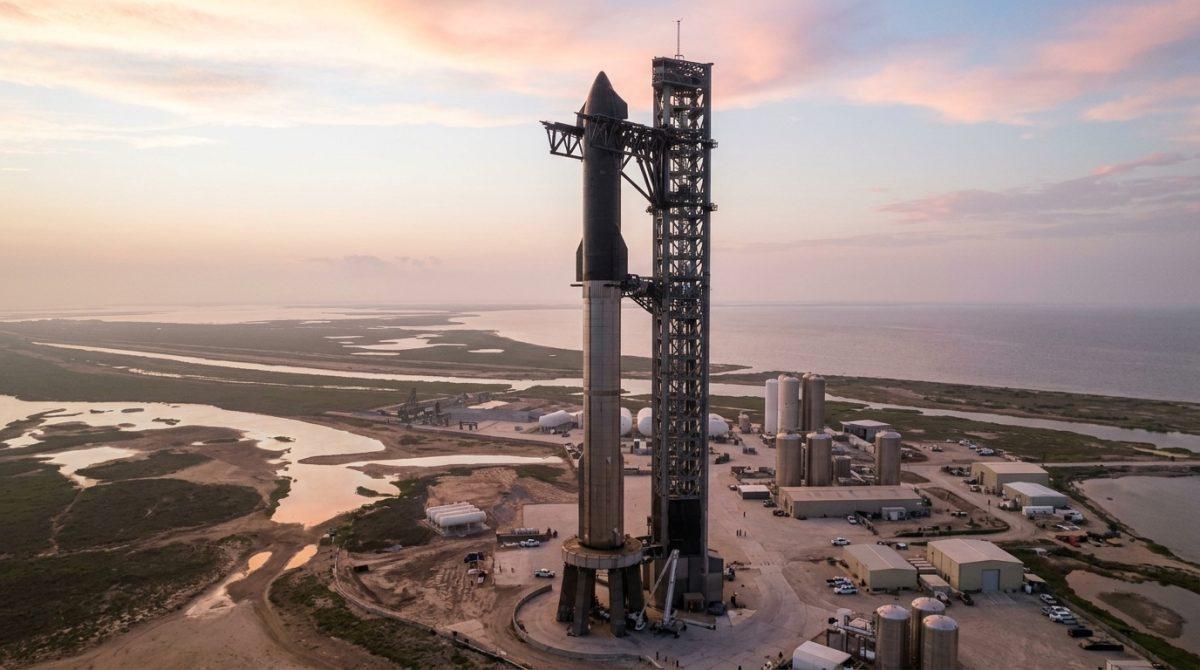
Elon Musk’s Starship achieved a historic Texas return, but SpaceX could not save the entire rocket.
-
The aerospace company accomplished an unprecedented mechanical catch of the orbital ship while losing the Super Heavy booster.
-
Engineers now analyze telemetry data from the Texas launch site to prepare for upcoming flight test operations.
Elon Musk’s Starship pulled off a historic Texas return during a complex orbital mission that tested the limits of reusable space flight technology, whereas the massive spacecraft successfully executed a mechanical tower catch at Starbase on Saturday after completing a 22 h journey with 14 planetary orbits while reaching an altitude of 275 km at 26 minutes and 10 seconds of flight, although the primary booster experienced a navigation abort and detonated safely over the Gulf of Mexico.
Moreover, mission controllers monitored the vehicle throughout the extended flight while deploying 26 Starlink V3 satellites that contributed 1 Tb of data capacity, a volume SpaceX equated to 10 Falcon 9 launches of V2 satellites and three of those liberated units utilized onboard cameras to inspect the exterior thermal protection tiles, while mission planners established 3 decision windows at 7 hours 15 minutes, 20 hours 41 minutes and before de-orbiting to evaluate whether to abort the plan and descend into the Pacific Ocean.
Thermal protection adjustments and booster safety protocols
Furthermore, technical teams confirmed that thermal tile modifications featuring anchor reinforcements, curved pieces on wider surfaces and plasma block barriers functioned properly during hypersonic re-entry phases, validating years of iterative design improvements across Texas testing facilities and the upper stage successfully navigated a carefully calculated trajectory passing north of South Padre Island to avoid the main cities of the Rio Grande Valley before performing its final terminal maneuver at Starbase; additionally, federal regulatory oversight and safety clearances ensured that the Super Heavy booster emergency ocean landing posed zero risk to civilian infrastructure or coastal residents, proving that rigorous pre-flight safety protocols successfully protected ground facilities when anomalies emerged.
The technical milestone of orbital recovery during a historic Texas return
Aerospace engineers point out that launching 33 Raptor engines generating over 18M lbs of thrust sets a massive logistical benchmark for modern space exploration and company representatives confirm that catching the upper stage with mechanical tower arms eliminates the need for traditional landing legs, saving vital weight for deep space missions.
Concurrently, the lower booster faced an unexpected trajectory deviation just 6.5 minutes after liftoff, forcing automated guidance systems to trigger a flight termination sequence over open waters, while company spokespersons emphasized that safety protocols correctly prioritized public protection over experimental hardware recovery when positioning discrepancies emerged during the final vertical burn; additionally, SpaceX spokesperson Dan Huot specified that 32 of the 33 Raptor engines participated in the return burn after one failed following stage separation and technical teams continue reviewing extensive flight telemetry to determine why the propulsion anomaly occurred while ensuring subsequent vehicle iterations incorporate necessary software corrections.
Ver esta publicación en Instagram
Key mission milestones and orbital deployment operations during the historic Texas return
-
SpaceX successfully deployed 26 Starlink V3 satellites contributing 1 Tb of data capacity into low Earth orbit during the extended 22 h flight.
-
Three dedicated payload cameras inspected the exterior thermal protection tiles following orbital insertion, providing engineers with vital visual diagnostics before re-entry.
-
The upper stage navigated a carefully calculated trajectory passing north of South Padre Island during this historic Texas return to avoid the main cities of the Rio Grande Valley before performing its final terminal maneuver at Starbase.
-
Federal regulatory oversight and safety clearances ensured that the Super Heavy booster emergency ocean landing posed zero risk to civilian infrastructure or coastal residents, building upon prior company milestones where SpaceX had already recovered 3 Super Heavy V1 boosters and reused 2 in subsequent launches.
Loading video...Loading Video
Future implications for commercial spaceflight and interplanetary exploration
Political and industrial leaders highlight that achieving rapid vehicle reuse remains the absolute cornerstone for lowering launch costs toward future lunar and Martian destinations, yet the absence of flawless booster recoveries reminds engineers that heavy orbital rocketry still carries substantial technical volatility, building upon prior company milestones where SpaceX had already recovered 3 Super Heavy V1 boosters and reused 2 in subsequent launches.
Meanwhile, mission planners insist that rigorous post flight analysis represents a necessary phase before approving the next integrated launch attempt, because comprehensive engineering reviews and hardware modifications protect multi-million dollar investments while advancing commercial space capabilities, ensuring North America’s aerospace leadership depends on balancing aggressive technological innovation with strict safety standards for Elon Musk’s Starship.
