

WATCH NOW
Watch on the app




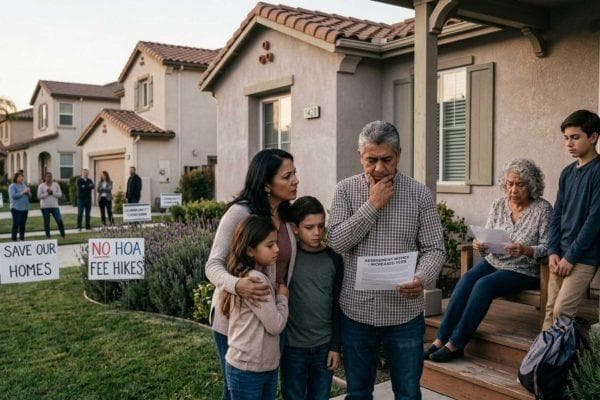










California families want answers about a rare cancer that has affected local children

-
California families closely monitor health updates as medical researchers investigate an unusual cluster of rare childhood tumors affecting local youth.
-
Local health authorities launch thorough epidemiological evaluations to determine potential environmental triggers linked to pediatric medical concerns.
-
Community groups demand comprehensive environmental testing while federal officials review historical data regarding neighborhood safety standards.
Cancer in children sparks deep concern across Orange County as California families seek answers regarding Ewing’s sarcoma, a rare childhood tumor affecting Ladera Ranch, while local leaders coordinate with health agencies to investigate the rising number of diagnoses and, furthermore, multiple households report troubling medical developments over recent years, prompting public health officials to review community data carefully and address growing anxiety among residents.
Medical investigators examine whether local environmental factors contribute to reported illnesses, although officials emphasize that proving a direct connection requires extensive scientific study, moreover, community advocates continue pressing federal representatives for transparent evaluations of neighborhood soil and water quality.
Ver esta publicación en Instagram
Cancer in children and pediatric health concerns
Specialized medical reports indicate that Ewing’s sarcoma generally appears in bones or surrounding soft tissues, representing close to 1% of all childhood cancers while affecting roughly 200 cases annually among children and adolescents across the United States.
Ver esta publicación en Instagram
Medical proffesionals note that this condition typically presents during adolescence, frequently targeting long bones such as legs, pelvis, ribs or arms, whereas California families navigate the emotional toll of sudden diagnoses involving young community members.
Healthcare professionals utilize advanced diagnostic tools to identify early warning signs like persistent pain, swelling, tenderness, fever, fatigue or easily triggered fractures, although symptoms often mimic common sports injuries and delay necessary medical treatments. Researchers highlight that the American Cancer Society identifies a frequent genetic alteration in tumor cells involving a translocation between chromosomes 11 and 22, which creates an abnormal gene linked to cancer development, while local clinics offer support resources to help affected households cope with ongoing medical challenges.
Community response and institutional investigation
-
California families organize neighborhood meetings to discuss safety concerns and share vital health information regarding pediatric screenings.
-
Public health departments deploy specialized epidemiologists to review historical disease registries and assess local cancer rates accurately.
-
Federal environmental protection representatives evaluate historical land use data to determine if abandoned industrial sites require further testing.
-
Local medical centers establish dedicated support networks for parents seeking guidance on early symptom recognition and specialist referrals.
-
Community advocacy groups petition state legislators for increased funding dedicated to pediatric cancer research and environmental monitoring.
-
Public safety officials maintain open communication channels with residents while coordinating thorough investigations across the affected neighborhood.
Environmental assessments and California families
Ladera Ranch represents a planned community designed for 26,000 residents, featuring extensive parks, sports fields and family spaces, whereas local families actively seek to determine whether environmental elements relate to recent health diagnoses. Community groups have tracked multiple cases of Ewing’s sarcoma spanning from 2007 to 2024, incorporating diagnoses reported every single year since 2021, although health officials clarify that these independent tallies lack formal medical verification.
State health authorities analyze potential exposure pathways involving historical agricultural practices, whereas California families maintain constant vigilance over community well being and environmental safety standards, furthermore, ongoing investigations rely heavily on verified data from reputable institutions to prevent widespread public misinformation.
Regional oversight and ongoing environmental investigations
Regional oversight committees evaluate water and soil samples collected from public parks while addressing resident concerns regarding pesticide utilization, drinking water quality and the historic presence of abandoned oil wells, although preliminary findings reveal no immediate environmental hazards. Federal intervention prompted U.S. Representative Bilal Essayli to request that the Environmental Protection Agency analyze potential environmental drivers, yet experts emphasize that establishing a definitive link remains a complex process demanding years of dedicated research, moreover, local leaders pledge continued transparency as dedicated researchers work tirelessly to protect the future of cancer in children.
Ver esta publicación en Instagram
