

WATCH NOW
Watch on the app












California giant lake suddenly returns after 130 years after extreme weather
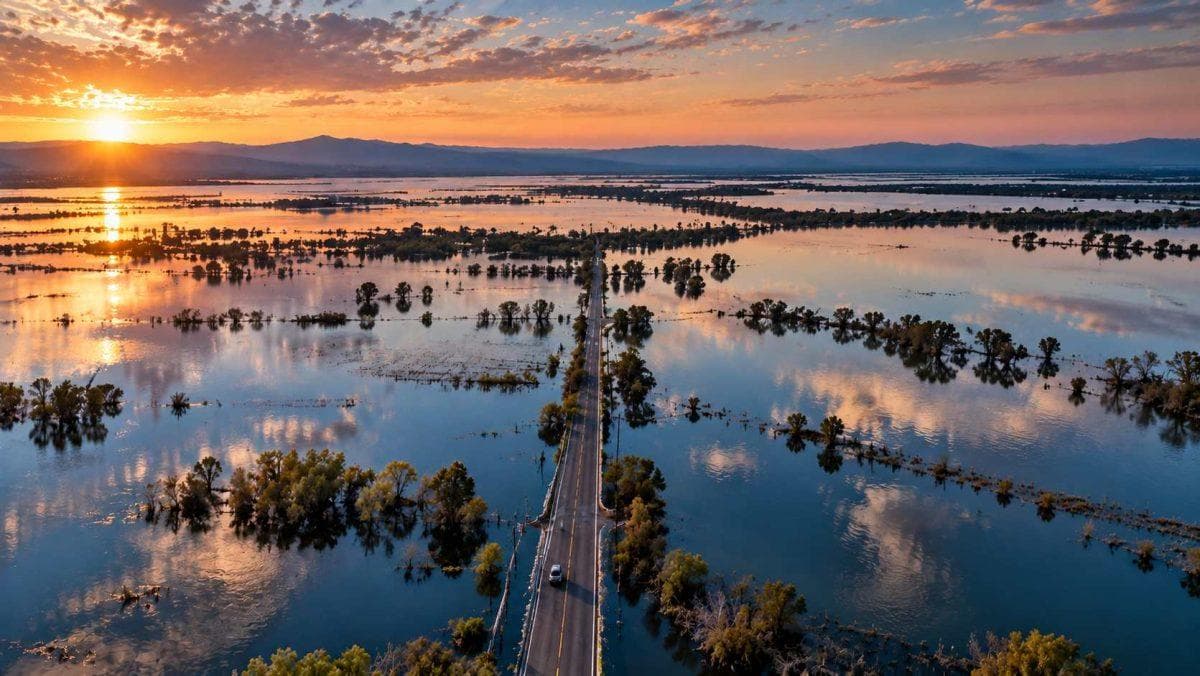
For more than a century, Tulare Lake was essentially missing from California’s landscape. Once the largest freshwater lake west of the Mississippi, it had been drained and transformed into farmland so completely that it was difficult to imagine that a massive body of water had ever existed there. Then California’s extreme weather brought it back.
An entire California lake disappear
Tulare Lake once stretched as much as 100 miles long and 30 miles wide across the San Joaquin Valley. Beginning in the 19th century, however, the rivers feeding it were diverted for irrigation and agriculture. By around 1890, the lake had effectively disappeared, leaving behind land that eventually became highly productive farmland.
California’s storms brought it back
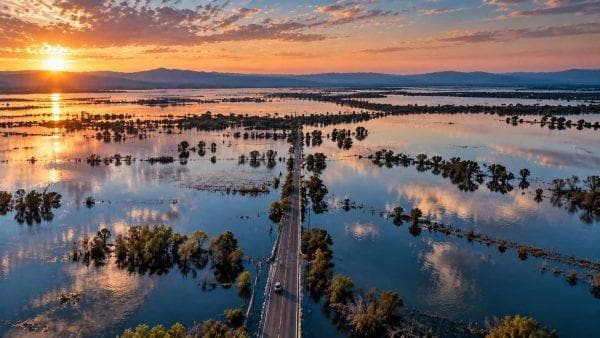
That changed dramatically in 2023. Atmospheric rivers dumped enormous amounts of rain and snow across California, and runoff from the Sierra Nevada flowed toward the natural depression where Tulare Lake once existed. Water eventually covered more than 100 square miles, swallowing farmland and roads while bringing fish, amphibians and wetland birds back to the area. For the Tachi Yokut Tribe, which calls the lake Pa’ashi, its return also carried deep cultural and spiritual significance.
Ephemeral freshwater Lake Tulare has been there 1,000’s of years. Fed by snowmelt and runoff from the southern Sierra Nevada rivers, at its peak, it covered roughly 512,000 to nearly 700,000 acres (about 650 to 800 square miles), stretching up to 100 miles long and 30 miles wide.… pic.twitter.com/qNc2SCvjek
— David L Wagner (@DavidLWagner4) September 9, 2026
The lake began disappearing all over again
The comeback did not last. By early 2024, Tulare Lake had shrunk from roughly 180 square miles at its 2023 extent to scattered areas of standing water, as water evaporated and was redirected. NASA imagery later documented the lake largely vanishing again.
That may not be the end of the story. Tulare Lake has resurfaced during unusually wet periods before, including in the 1930s, 1960s and 1980s. Scientists say future extreme precipitation could bring it back yet again, making California’s “lost lake” something closer to a sleeping one.
