

WATCH NOW
Watch on the app









Why NASA halted the first Spacewalk of 2026: What went wrong?
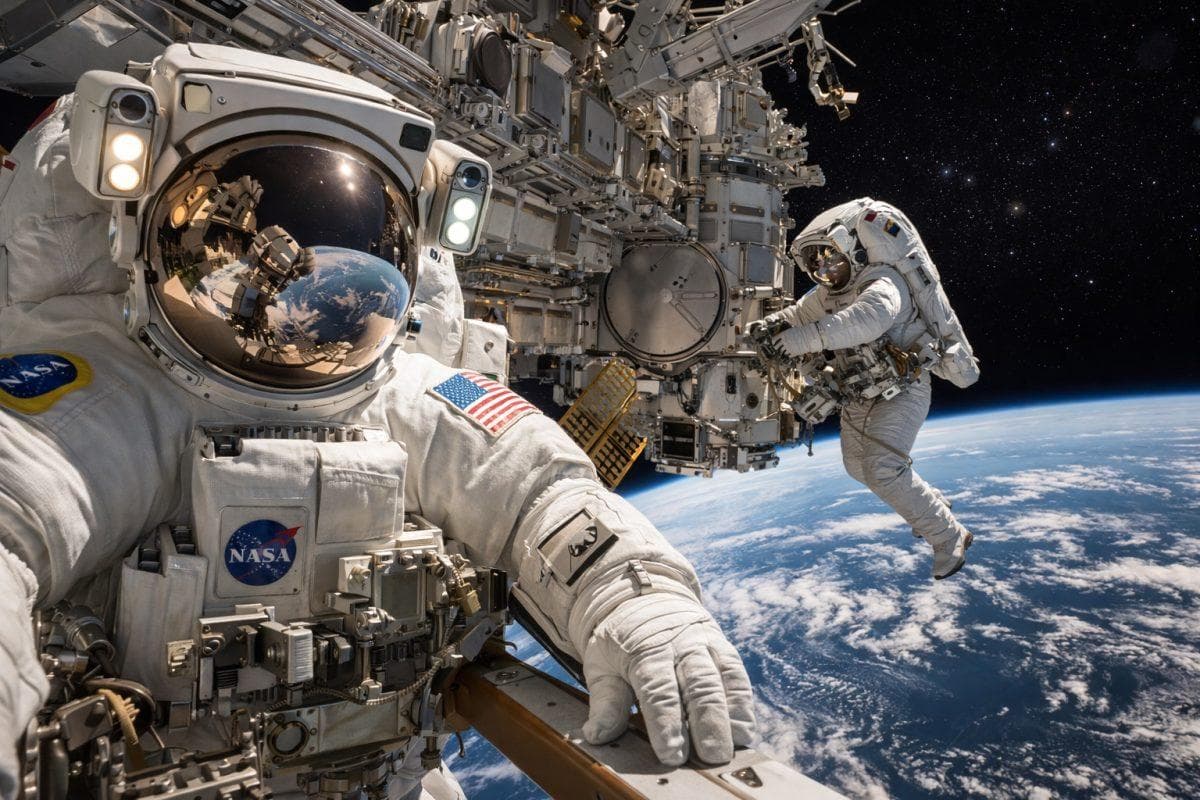
NASA suspended the first spacewalk of the year after a crew member experienced an unexpected medical issue aboard the International Space Station (ISS). The agency adjusted the maintenance and modernization schedule of the orbital laboratory, generating global attention and raising questions about the logistics of extravehicular activities in 2026.
Medical issue forces schedule adjustment
NASA reported that a crew member, whose identity remains undisclosed, experienced a health issue that forced the agency to cancel the spacewalk scheduled for January 8. Spokesperson Cheryl Warner emphasized that “crew safety is our highest priority.” Although the astronaut is stable, NASA is evaluating the possibility of returning them to Earth early.
The agency now adjusts the planned maintenance, modernization and equipment installation schedule for the upcoming weeks, including two consecutive spacewalks.
The importance of spacewalks
Astronauts perform spacewalks to install and maintain scientific experiments outside the controlled environment of the station’s habitable modules. They also test new equipment, repair satellites and address malfunctions that would otherwise require returning devices to Earth. These extravehicular activities can last between five and eight hours and demand rigorous physical and mental preparation, as well as pressurized suits that protect against extreme temperatures, radiation and space debris.
By the time NASA canceled the spacewalk, the international crew, consisting of four members from the United States, Japan, and Russia, had been aboard the station since August, operating under strict safety protocols.
Preparations and planned tasks
NASA scheduled the 94th U.S. spacewalk to begin at 8:00 a.m. ET (13:00 UTC), expecting it to last approximately 6 hours and 30 minutes. Astronauts Mike Fincke and Zena Cardman were selected, with Fincke leading the mission in a suit with red stripes, while Cardman participated in her first extravehicular activity.
The astronauts planned to prepare Power Feed 2A for future solar panel installation, which would increase the station’s energy capacity and support its eventual safe deorbit process. NASA also scheduled a second spacewalk for January 15 to install a high-definition camera, place a planar reflector for navigation, and relocate ammonia service bridges in the S6 and S4 structures.
International coordination and medical oversight
NASA considers spacewalks a central component of ISS operations, combining assembly, modernization and maintenance. Astronauts execute these tasks with international coordination and constant medical monitoring, as highlighted by this forced suspension.
The agency keeps the crew under close observation while deciding whether to reschedule the extravehicular activities once the astronaut’s health stabilizes. NASA reaffirms that each mission prioritizes crew safety and integrity before any operation in the vacuum of space.
