

WATCH NOW
Watch on the app














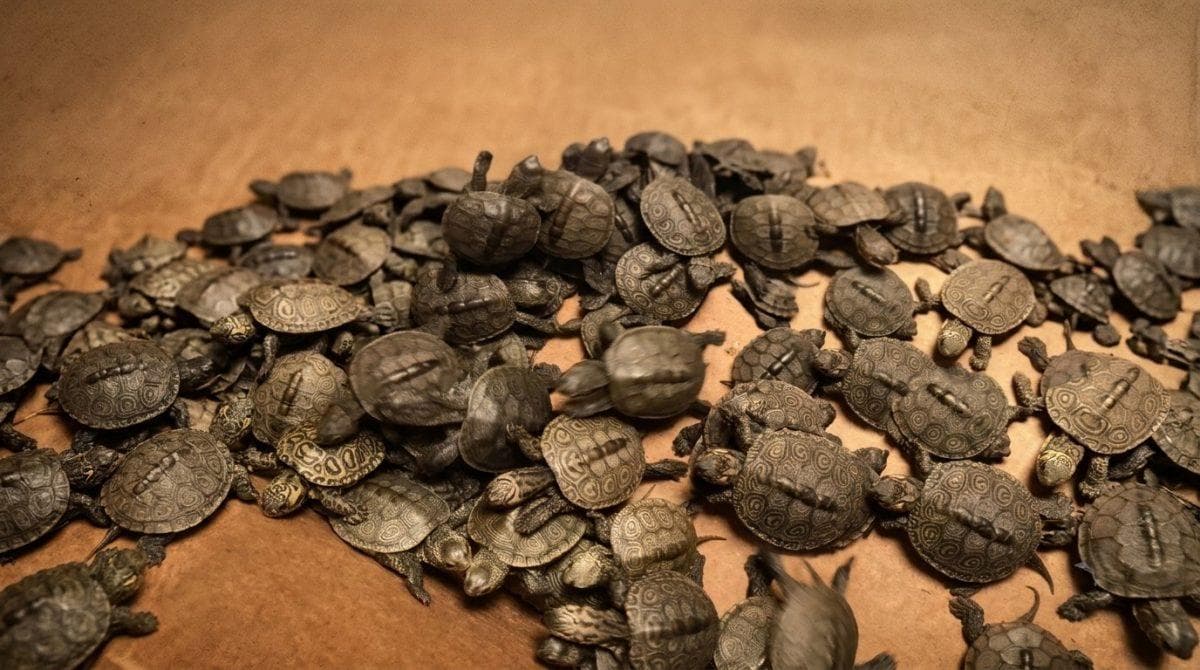
The strange discovery of more than 150 abandoned turtles has New Jersey searching for answers
- Abandoned turtles in New Jersey spark massive rescue after illegal drop-off.
- Local authorities and wildlife specialists urge community cooperation to locate responsible parties.
- Hundreds of neglected reptiles require urgent medical attention following discovery in Cranford.
Abandoned turtles in New Jersey appeared en masse near a river in Cranford during the final days of July 2026, forcing local authorities to coordinate an emergency operation while investigating the origin of the incident; furthermore, the Cranford Fire Department and community rescuers recovered over 150 box turtle specimens, combining native and invasive species that face severe survival risks in the wild.
The situation mobilized various state agencies because the magnitude of the case points toward a possible illegal wildlife trafficking network, triggering an intense search for responsible parties that will culminate in criminal penalties according to regional environmental regulations; consequently, specialists reiterate that citizens must not keep these animals as pets, but rather deliver them immediately to official facilities to guarantee professional rehabilitation.
Ver esta publicación en Instagram
How rescuers manage the recovery of neglected reptiles
Animal control specialists detail that evaluating over 100 specimens simultaneously demands extraordinary resources and specialized veterinary personnel; in consequence, medical teams prioritize treating injuries and signs of extreme stress, ensuring that every creature receives appropriate treatment before evaluating its potential reintroduction to the natural habitat.
That massive influx of animals places severe operating pressure on local shelter capacities; nevertheless, active community participation strengthens daily care efforts, even though time remains a decisive factor, since those coordinating the rescue establish secure protocols to safeguard state biodiversity.
Protection measures and recommended guidelines for the community
-
Collaborate directly with local fire departments by turning in any reptile found in residential areas or nearby riverbanks.
-
Avoid retaining wild animals in private homes to prevent legal penalties and protect ongoing investigations.
-
Prepare ventilated cardboard boxes with paper towels as a base and keep specimens in dark locations at room temperature during transport.
-
Keep them away from domestic pets and other animals to prevent aggression or the transmission of unknown pathogens.
-
Report any suspicious activity related to exotic species trafficking to the corresponding government agencies.
Additionally, neglected reptiles dramatically increase the operating costs of state sanctuaries; therefore, environmental education remains indispensable to prevent similar incidents, consolidating a model where community cooperation acts as the primary support for those who seek to protect vulnerable species.
Factors complicating the rehabilitation of rescued animals
-
Recovered reptiles contrast with healthy local wildlife, saturating rescue center facilities with unexpected medical expenses; consequently, state environmental legislation indicates that illegal pet trading and lack of civic awareness drastically hinder conservation efforts.
-
Elevated operating costs and limited shelter space compete directly with the daily needs of the animals, subtracting financial margin to absorb prolonged treatments.
-
Regulatory restrictions prevent private individuals from returning specimens to nature on their own, forcing them to follow strict protocols to prevent irreversible ecological damage.
-
The scarcity of financial resources allocated to animal control deepens the vulnerability of affected species, obstructing a rapid response by institutions.
Meanwhile, understanding the fragility of local ecosystems underscores that overcoming these crises demands constant vigilance and strict law enforcement; for this reason, collaboration between security agencies and rescue centers configures the sole viable path to protect abandoned turtles in New Jersey.
