

WATCH NOW
Watch on the app















Texas families take Ten Commandments school mandate fight to the Supreme Court
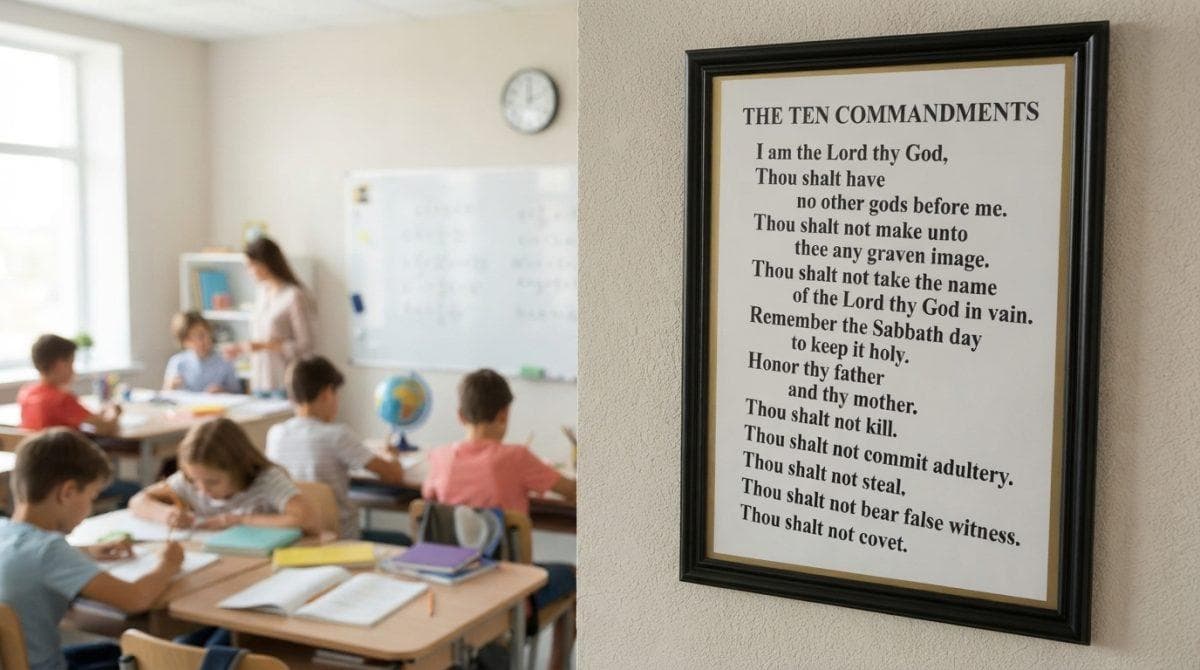
-
Lone Star parents challenged the mandatory display of religious texts in public school classrooms, elevating the legal dispute to the Supreme Court.
-
Civil rights organizations backed the formal petition, arguing that the statewide mandate violates constitutional protections regarding church-state separation.
-
Multiple states monitored the unfolding litigation while legal experts debated the broader implications for public education across the nation.
Texas families initiated a formal challenge before the Supreme Court of the United States during to halt a controversial state law requiring the placement of the Ten Commandments in public school classrooms. Furthermore, this intense legal controversy aims to redefine the boundary lines between government institutions and religious expression following previous rulings from appellate courts.
Additionally, constitutional tensions escalated as numerous school districts faced complex operational dilemmas while attempting to balance local board directives with legal challenges from national advocacy groups; consequently, the ongoing debate triggered widespread public discussion throughout the country. Moreover, a coalition consisting of parents, students and civil liberties organizations formally submitted the petition to prevent the enforcement of the mandate requiring religious displays in visible areas of educational facilities; therefore, legal scholars emphasized that this case represents a critical turning point for modern educational jurisprudence.
Legal framework of the school display mandate
Additionally, Lone Star parents confront a landscape where the state statute known as Senate Bill 10 went into effect last September and mandates public schools from kindergarten through high school to exhibit those religious texts; however, civil rights advocates report through the American Civil Liberties Union that this mandate exerts coercion over a captive audience of underage students. Furthermore, the organization notes that imposing specific symbols fosters institutional favoritism toward particular doctrines; consequently, the state regulation has ignited an intense legal and constitutional debate concerning the First Amendment Establishment Clause prohibiting governments from favoring or imposing a specific religion over others.
Equally, defenders of the statute maintain that the Ten Commandments possess fundamental historical and legal relevance in shaping American laws and traditions, defending their placement as an educational and patrimonial value rather than strictly devotional elements. On the other hand, this position contrasts sharply with arguments from legal representatives of the plaintiffs who assert that permanent displays interfere with the spiritual guidance imparted within each household; thus, the ultimate decision delivered by the highest court will establish a binding precedent for multiple federal jurisdictions.
Arguments presented by school plaintiffs
-
The signing families belong to diverse Christian, Jewish, Hindu, Bahá’í, Unitarian Universalist traditions and non-religious backgrounds.
- Legal defenders state that for Lone Star parents the presence of religious posters directly breaches the constitutional establishment clause embedded across the country.
-
Various civil associations warn through the Americans United for Separation of Church and State portal that the government measure generates psychological pressure and stigmatization regarding students from spiritual minority groups.
-
Judicial precedents from 1980 declared similar state regulations in Kentucky unconstitutional for lacking a strictly secular and educational purpose.
-
Federal magistrates examine whether mandatory poster placement infringes upon the primordial rights of parents guiding their children upbringing.
Moreover, Lone Star parents enjoy backing from civil rights advocates, whose representatives stress that public schools must remain neutral toward any doctrinal creed. Likewise, organizations promoting the lawsuit maintain that constant exposure to religious precepts alters the neutral academic environment required by federal legislation; therefore, the courts must safeguard fundamental rights concerning the minors involved.
Impact on educational institutions and Texas families
Meanwhile, Lone Star parents observe how the distribution of religious posters across different school campuses began immediately following donations arranged by local conservative coalitions. Furthermore, state educational authorities defend the constitutionality of the measure by arguing that no requirement compels participation in formal religious rites; nevertheless, critics counter through reports published by the U.S. Department of Education that mere visual presence of the texts constitutes an indirect form of ideological or confessional indoctrination that compromises student freedom of conscience across diverse beliefs.
Equally, the controversy transformed the Texan territory into the epicenter of a nationwide legal battle regarding boundaries separating religion and public education while neighboring states like Louisiana and Arkansas monitor the litigation closely. Furthermore, the judicial resolution will mark a historic milestone within American jurisprudence concerning freedom of expression and civil rights within school settings, solidifying the definitive impact for Texas families.
Ver esta publicación en Instagram
