















Spain won the World Cup but who takes the biggest share of the prize
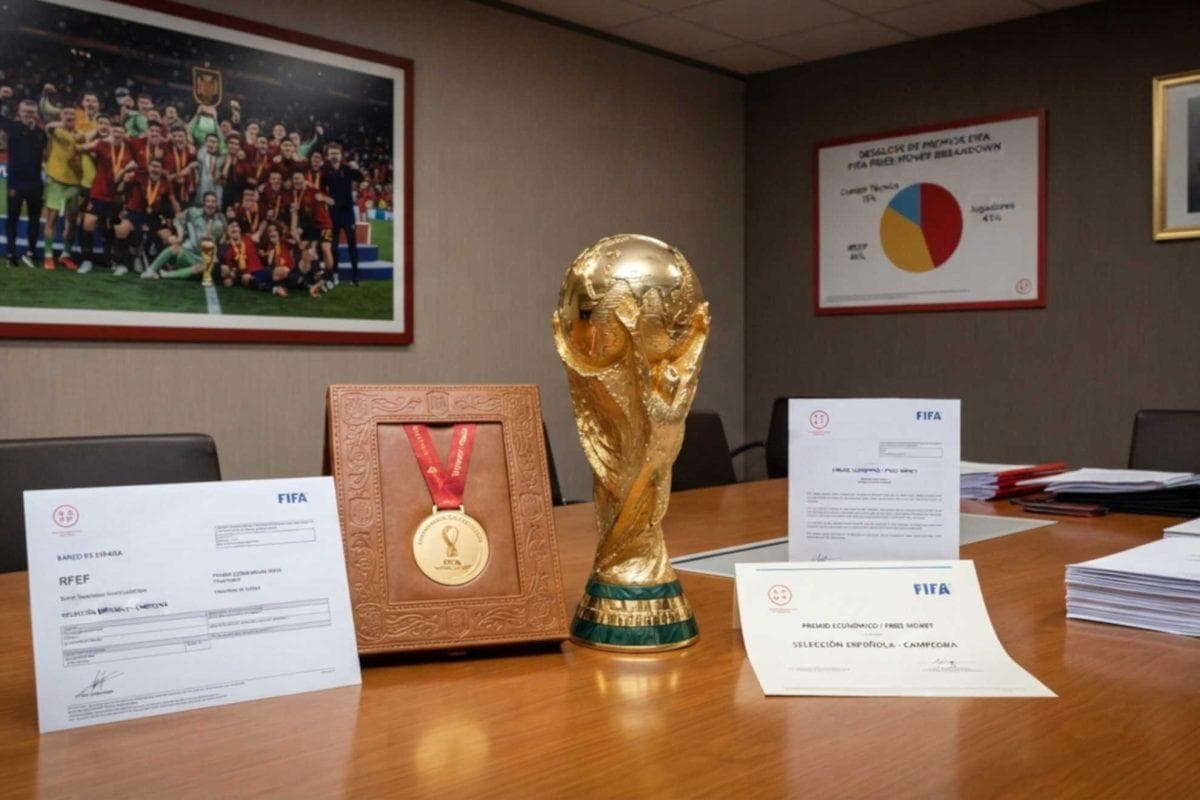
- Spain conquered its second world title by defeating Argentina in the final played at MetLife Stadium in New Jersey.
- FIFA granted a $50 million prize to the Royal Spanish Football Federation, of which the squad will receive 45% according to internal agreements.
- Players like Lamine Yamal, Pedri or Rodri will face a heavy tax burden due to the tax laws of the United States and Spain.
The Spanish national football team was proclaimed champion of the 2026 World Cup after narrowly defeating Argentina in a nail-biting final played at MetLife Stadium in New Jersey, a historic milestone that unleashed euphoria throughout the country. However, the sports celebration came alongside an inevitable economic reality because the impressive financial prize awarded by FIFA will not reach the football players’ bank accounts in full, as a considerable portion of it will end up in the hands of tax authorities in both the United States and Spain.
In this regard, FIFAhanded the Royal Spanish Football Federation a $50 million check for conquering the title, but this multi-million figure drops significantly before reaching the pockets of the twenty-six squad members; according to Gestha, the union representing experts from the Spanish Tax Agency and based on the current agreement between the federation and the players, the team corresponds to 45% of the total, meaning about 22.5 million dollars. This translates into an individual gross payment hovering around 754,701.92 euros per player, equivalent to approximately $861,360 dollars before taxes.
The US IRS claims its share of the pie for the victory in New Jersey
Furthermore, Spain’s tax situation becomes even more complicated because the tournament took place on American soil, which activates the obligation to pay taxes to the IRS, the Internal Revenue Service of the United States, for income generated inside the country, including sports prizes. In other words, the US IRS claims its share of the pie for the victory in New Jersey. Thus, specialists in the field, such as Robert Raiola from PKF O’Connor Davies, confirmed that the IRS will keep a portion of the earnings regardless of the athlete’s nationality. To this, New Jersey state income tax adds up, as the state where the final was played taxes these earnings differently than the federal government.
Ver esta publicación en Instagram
The final blow from the Spanish tax agency for players residing in Spain
Once the United States takes its cut, Spain’s players must deal with their own tax agency, though the impact will depend entirely on where they live. Likewise, the seventeen footballers playing in Spanish clubs face personal income tax, with rates climbing up to 49.5% depending on the autonomous community. For example, a player paying taxes in Catalonia might ultimately take home roughly 353,500 euros ($403,472 dollars), while regions with lower levies like Madrid would let them keep approximately 385,000 euros ($439,458 dollars).
On the other hand, the members of the Spain national team playing in foreign clubs, notable cases like Rodri, David Raya or Mikel Merino, will face a different tax panorama, determined by their personal tax residency and existing double-taxation treaties between Spain and the countries where they live and work. Meanwhile, Gestha estimates that solely from the footballers playing in LaLiga, the Spanish tax agency would collect around 5 million British pounds, which demonstrates the significant economic impact that La Roja’s triumph represents for public coffers.
Ver esta publicación en Instagram
