

WATCH NOW
Watch on the app










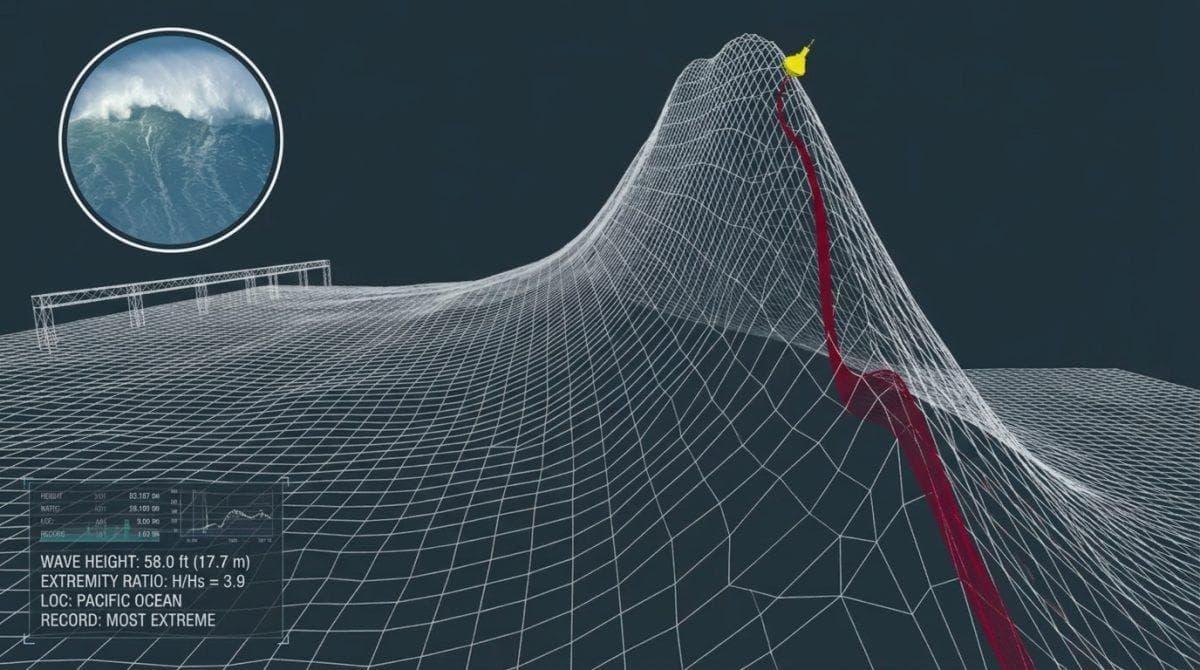
Massive 58-foot wave in the Pacific Ocean was the most extreme rogue wave ever recorded
-
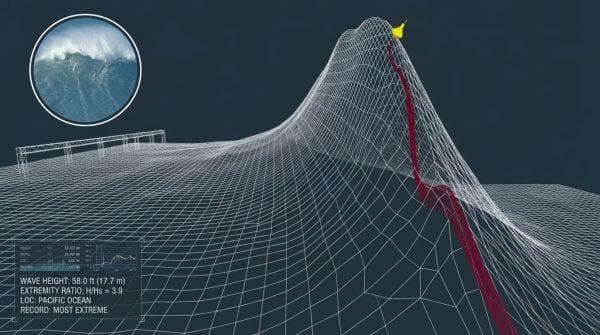
Extreme rogue wave records shattered off the British Columbia coast when a massive 58 ft water wall lifted a solitary research buoy to unprecedented heights.
-
Scientists at MarineLabs and the University of Victoria confirmed the swell measured nearly three times higher than surrounding ocean currents, an event occurring once every 1,300 years.
-
Advanced buoy networks deployed across the North Pacific monitor real-time ocean conditions to protect coastal infrastructure and commercial shipping lanes.
A massive 58 ft wall of water surged unexpectedly off the Vancouver Island coast near Ucluelet, where a solitary research buoy recorded the most severe Pacific Ocean Wave anomaly in modern history; consequently, marine physicists at the University of Victoria analyzed data published in Scientific Reports to verify that this 4-story benchmark redefined previous oceanographic models, while global research teams updated wave predictability frameworks.
Meanwhile, oceanographers confirmed that this extraordinary surge towered nearly 3 times higher than neighboring ocean swells, establishing unprecedented statistical proportions across maritime records, while specialized research vessels expanded buoy deployment grids along the western coastline; furthermore, scientific definitions formally establish that a liquid wall qualifies as an extreme rogue wave only when it doubles the height of surrounding swells, an extreme phenomenon documented across open seas and inland lakes alike.
Historical anomalies, exact science and oceanographic measurements
Naval lore long classified monster swells as unverified nautical folklore, yet modern sensor technology confirmed their physical existence when Norway’s historic 85 ft Draupner event demonstrated the reality of these liquid walls; in parallel, University of South Florida research published in Ocean Science revealed that global forecasting models consistently underestimate peak wave heights, driving immediate structural updates across offshore engineering standards.
Furthermore, marine physicists explained that the unpredictability and devastating force of these water walls present a constant threat to marine operations, as similar 1970s events explain the tragic disappearance of multiple commercial vessels that sank without a trace after impact; in response, research teams integrated real-time telemetry to detect the wave correlation drops that precede 75% of critical extreme rogue wave impacts.
Pacific Ocean Wave records and the 58-foot water wall
-
The solitary research buoy deployed by MarineLabs captured real-time elevation changes recording an extreme rogue wave.
-
The high-precision sensor registered sea-surface elevation spikes measuring a record Pacific Ocean Wave anomaly.
-
Climate change models predict that global warming will significantly increase wave heights in the North Pacific.
-
Recent laboratory experiments indicate that these monstrous crests can reach 4 times normal ocean height.
-
The early warning signal appears when a sharp drop follows a rapid rebound in wave correlation.
Equally important, MarineLabs executives emphasize that measuring world coastlines through coastal intelligence fundamentally transforms decision-making for communities and maritime industries, even though unpredictable wind-wave interactions still present operational challenges; similarly, ongoing research confirms that climate change intensifies wind patterns, accelerating the frequency with which these oceanic walls emerge.
Cultural references, extreme sports and safety in Nazaré
The fascinating behavior of massive swells connects directly to world sports milestones, as seen along the famous shores of Nazaré, Portugal, where surfers set the historic record for the largest wave ever ridden in 2017; however, unlike ground swells generated by deep underwater canyons that big-wave surfers utilize, an extreme rogue wave surges without prior warning and destroys structures rather than enabling sports navigation.
Beyond standard forecasting, proactive safety engineering safeguards offshore oil platforms, towering wind turbines and vulnerable coastal communities, driving breakthrough advancements in fluid dynamics and deep-sea protection across the maritime industry.
