

WATCH NOW
Watch on the app













World Cup 2026 sparks doubts in New York: Why hotel bookings are lower than expected
-
With less than three months until the tournament, tourism demand in the Big Apple is 2% lower than during the same period in 2025, sparking alarms in the service sector.
-
Initial projections of $3 billion in economic benefits face a “reality check” amid the slow pace of bookings and rising operational costs.
-
Experts suggest that restrictive immigration policies and inflated room prices are deterring international visitors.
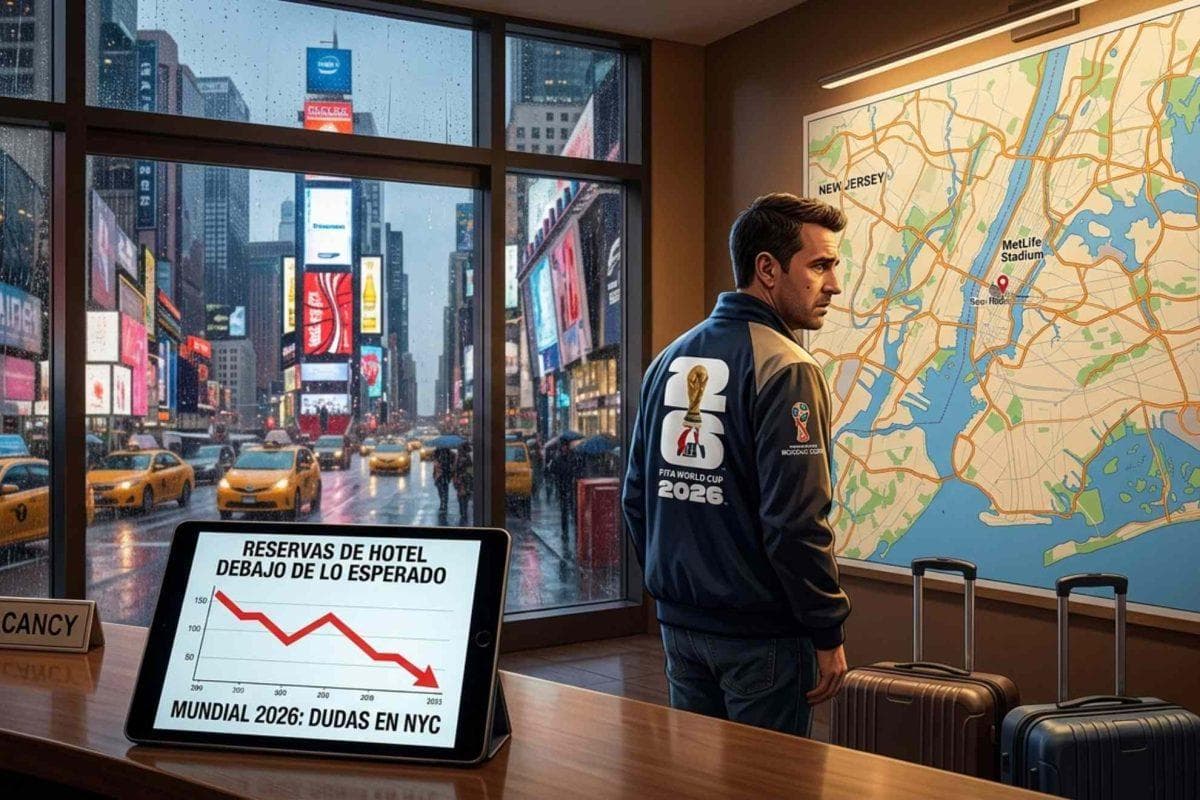
The countdown to the 2026 World Cup has begun, but in New York, sporting enthusiasm is being overshadowed by growing economic uncertainty. Although MetLife Stadium is set to be one of the tournament’s epicenters, the latest tourism indicators suggest that the financial impact on the city could be significantly lower than originally projected. According to data from local outlet THE CITY, lodging demand for the World Cup dates has not only failed to rebound but sits 2% below figures recorded in 2025, a year that lacked any events of this magnitude.
FIFA expectations vs. local reality
Originally, FIFA and Mayor Zohran Mamdani’s administration estimated that the arrival of 1.2 million visitors to the New York and New Jersey area would inject some $1.7 billion in direct spending, generating $432 million in tax revenue. However, a recent report by Comptroller Mark Levine presents a much more conservative outlook. Current projections suggest that the extra tax flow will barely reach $55 million, a figure that wouldn’t even cover the $70 million the city plans to invest in security, emergency services and small business support to handle the event’s logistics.
Hotel rates: An obstacle for the average tourist?
One of the factors seemingly slowing the pace of bookings is the aggressive increase in room prices. At iconic establishments like the Midtown Hilton, rates have climbed from the usual $379 in May to over $627 for dates near the final in July. According to Sarah Bratko of the American Hotels & Lodging Association, this phenomenon could be deterring middle class travelers, who are opting to look for options away from the city center or, in the worst-case scenario, canceling their travel plans altogether due to costs they consider prohibitive.
The dilemma of operational costs and the labor sector
Despite the increase in rates, New York’s hotel industry is not necessarily seeing higher profit margins. Vijay Dandapani, executive director of the Hotel Association of New York City, has warned that post pandemic operational costs have grown at a much faster rate than room prices. Added to this is labor tension, as the contract with the hotel union expires on June 30. With base salaries for housekeepers already around $82,000 annually, upcoming wage negotiations could further pressure the profitability of hotels outside the ultra luxury segment.
External factors: Visas and immigration policies
Sports economists and mega event specialists, such as Professor Victor Matheson, point out that factors external to the industry are also playing a crucial role. There is a quiet concern about how current visa restrictions and immigration policies might be limiting the arrival of foreign fans. For many international tourists, the entry process into the United States has become more complex, which, combined with travel bans from certain countries, reduces the pool of potential visitors who traditionally fill hotels during a World Cup.
Official optimism remains cautious
Despite the discouraging figures, NYC Tourism + Conventions maintains an optimistic stance, Executive Director Julie Coker is confident the trend will reverse following the final ticket sales phase in April, noting that nearly 50% of surveyed international travelers have concrete plans to attend, even if they haven’t confirmed their lodging yet. From the mayor’s office, it is argued that the World Cup’s impact transcends strict monetary terms, seeing it as an invaluable opportunity to strengthen New York’s international image and foster cohesion in outlying neighborhoods that will also see an influx of people.
Real benefit or a displacement effect?
The big question remains among analysts: will the World Cup truly attract “new money,” or will it simply displace traditional tourists who avoid the city during massive events? Experience from previous tournaments suggests that most match attendees tend to be local residents who do not require hotel stays. If the flow of foreign tourists does not pick up in the coming weeks, New York could face a scenario where logistical costs outweigh real benefits, leaving the city with a financial hangover instead of the economic feast that was initially promised.
