

WATCH NOW
Watch on the app












Latino players set for their first World Cup in 2026: the new generation ready to break through
-
A new Latino generation is emerging ahead of World Cup 2026
-
Several young players could debut on the biggest stage
-
Their impact goes beyond participation, they could shape matches
The World Cup where a new Latino wave arrives
The 2026 FIFA World Cup won’t just be historic because of its expanded format or the fact it’s hosted across the United States, Mexico, and Canada.
It will be remembered for something more subtle, but just as powerful, the arrival of a new Latino generation stepping onto the biggest stage for the first time.
For years, the narrative has revolved around established stars; familiar names and proven leaders, but beneath that surface, something has been building quietly, a group of young players shaped by different systems, different cultures and a faster version of the game.
Mexico’s quiet transition is already underway
Mexico isn’t announcing a rebuild; it doesn’t need to, you can feel it in the profiles of the players coming through.
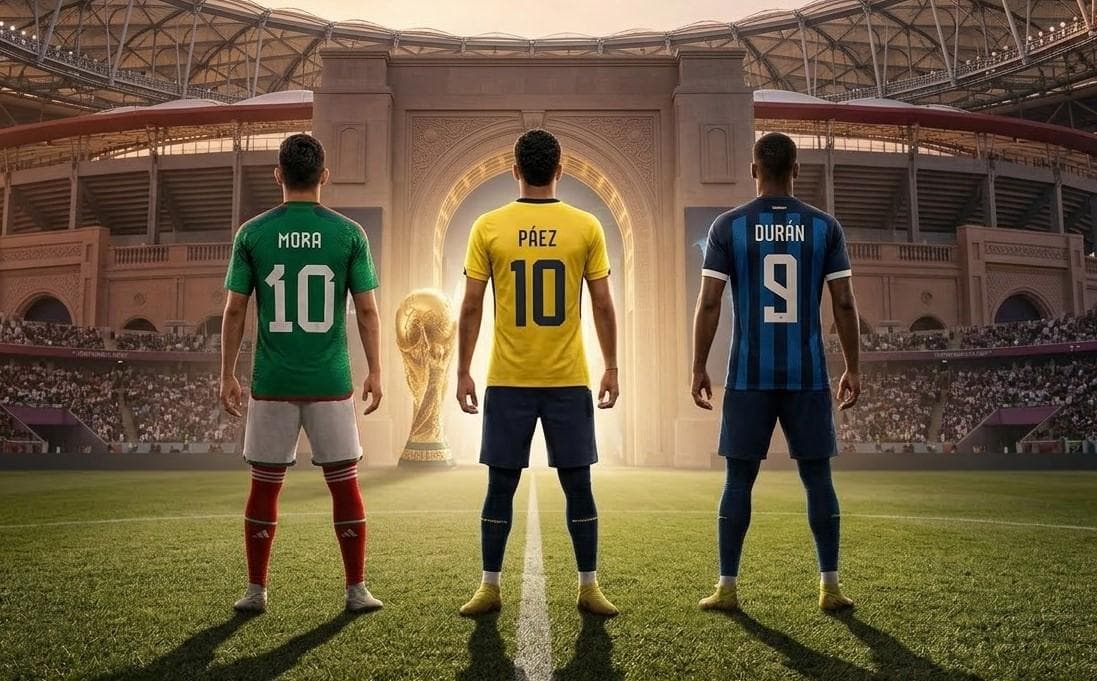
Gilberto Mora represents that change in its purest form; not just because of his age, but because of how naturally he plays at speed, how instinctively he reads the game. He doesn’t look like the future, he looks like someone already adapting to the present.
Alongside him, profiles like Obed Vargas bring something equally important: a hybrid identity. Developed in the U.S., choosing to represent Mexico, carrying both influences into his game. More physical, more structured, but still technically sharp.
The hidden story is happening in between borders
One of the most defining trends of this World Cup isn’t tied to a single country. It’s happening in the space between them.
A growing number of Latino players are being developed in the United States, shaped by its infrastructure and then choosing to represent their roots internationally. That blend is creating a new type of footballer, tactically disciplined, physically ready, but still deeply connected to the technical and cultural identity of Latin football.
Debuting no longer means waiting your turn
And beyond the first wave, there’s an even deeper layer of talent quietly building momentum; players like Santiago Giménez, who has already shown he can deliver goals in Europe but could still be stepping into his first true World Cup spotlight.
Young Mexican profiles like Marcelo Flores and Fidel Ambríz, still shaping their consistency but carrying clear upside.
In South America, emerging names such as Kendry Páez from Ecuador, already playing with a maturity far beyond his age, or John Durán from Colombia, whose physical presence and explosiveness make him a constant threat, are edging closer to defining roles.
Even in the U.S. Latino pipeline, players like Diego Luna are starting to carve out space, representing a new layer of identity within the game.
Not all of them are guaranteed starters; not all of them will even make the final squads, but that’s exactly the point, the depth is growing, the competition is real and the next breakout story could come from anywhere.
