

WATCH NOW
Watch on the app







Justin Bieber defies critics at Coachella: What is the hidden motive behind the use of his old videos?
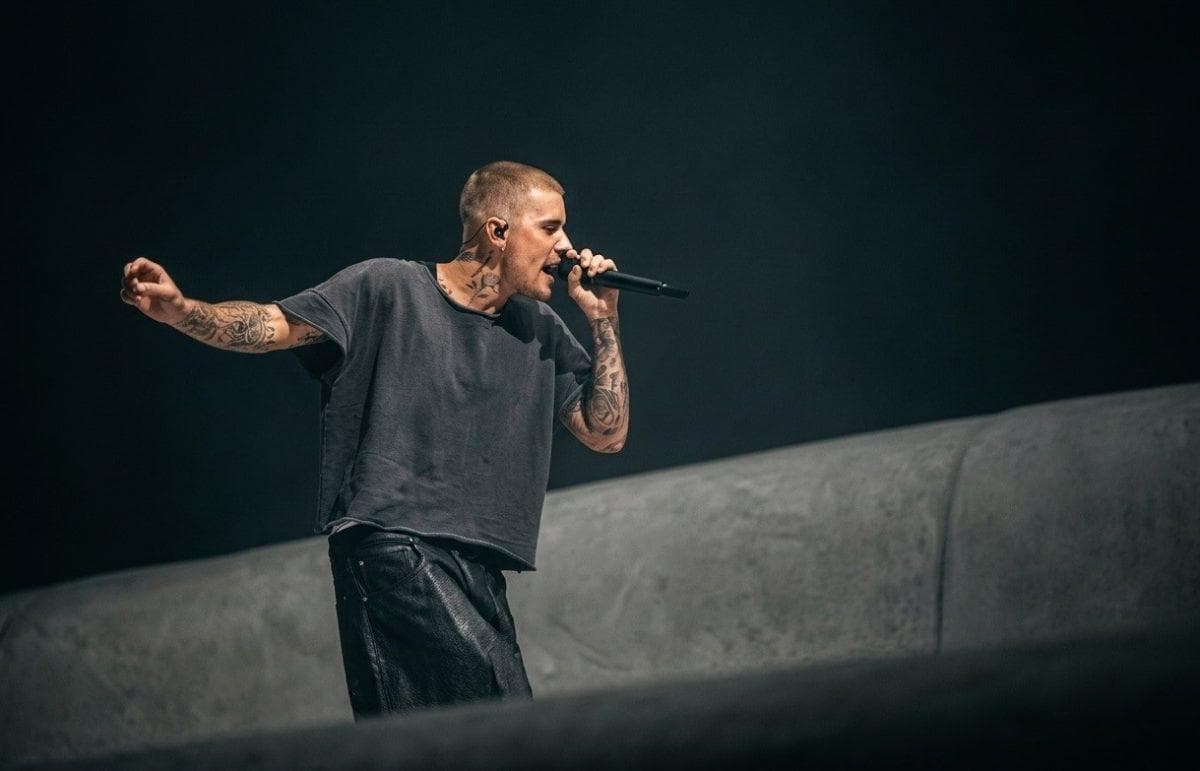
- Justin Bieber defied expectations at Coachella 2026, turning his set into a piece of conceptual art rather than a conventional pop concert.
-
The decision to project his original YouTube videos served as an act of vulnerability and a “reclamation” of his own history, following years of industrial pressure.
-
Today you will learn why the Canadian has the absolute right to perform his catalog, even after the multi-million dollar sale of his rights to Hipgnosis.
Justin Bieber’s performance at Coachella 2026 has undoubtedly been the most divisive topic of this edition. Between those expecting a superproduction in the style of other headliners and those who celebrated the intimacy of his proposal, the Canadian artist opted for a risky path with a stage, a microphone, a computer and a personal archive projected on the giant screens. Far from being a lack of budget or preparation, the use of his old videos, from “Baby” to “Never Say Never,” served as a statement of principles.
An act of protest and reconciliation
What motivated a star of his caliber to opt for this format? The answer might lie in the exhaustion with the industrial machinery. After years of dealing with mental health issues and the aftermath of Ramsay Hunt syndrome, Bieber returned to the public eye not to fit into the millimetric perfection of the current industry, but to dialogue with the child he once was.
By singing over his original YouTube tracks, with home videos in the background, Justin did not perform karaoke; he performed an archival piece. It was a way to strip his songs of excessive production to return them to their original essence. For many, this served as an act of subtle protest, the artist reclaiming his narrative in the face of an industry that treated him like a commodity for years. Bieber presented himself as human, vulnerable and, above all, the owner of his own legacy.
The legal truth behind the controversy
Faced with criticism and public curiosity, a technical doubt arose: How is it possible that he performed songs that, according to reports, he sold to Hipgnosis Songs Capital? The answer lies in the legal distinction between commercial exploitation rights and the right of performance.
It is important to clarify that the sale of Justin Bieber’s catalog granted Hipgnosis commercial licenses and rights of use in film, television and streaming, but this does not disqualify him from singing his own work.
-
Public performance license: For festivals like Coachella, organizers pay a “blanket license” that allows artists to perform any song from their repertoire without needing individual permits.
-
Copyright: According to Section 106 of the United States Copyright Act, the creator maintains the fundamental right to perform their works in public.
Therefore, his “karaoke-style” format was not a legal imposition, but an aesthetic choice. Bieber chose to celebrate his journey exactly as it happened, without filters, reminding us that his footprint on pop culture remains indelible.
The verdict: Strategist or improviser?
While some critics compared his minimalism with other more choreographed presentations, the reality is that Justin Bieber’s show achieved something very few artists manage, capturing absolute attention. It was a “lo-fi” moment in a hyper-produced festival. In the end, the Canadian not only fulfilled the contract; he closed a cycle, validated his history and made it clear that, after all, he remains the sole owner of his voice.
