

WATCH NOW
Watch on the app




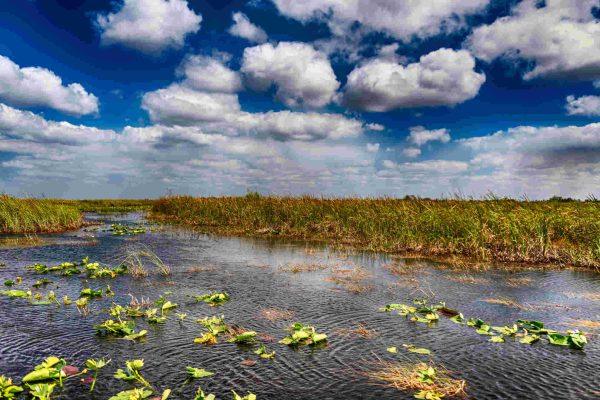







Florida’s most precious natural treasure may need more than a billion-dollar rescue
- Everglades restoration moves at a record pace in Florida with seven completed projects and a massive reservoir on track for 2029.
- Scientists warn that water quality, federal staffing shortages and peat loss demand far more than budget dollars.
- The future of the river of grass will mark Ron DeSantis’ exit and Byron Donalds’ start, directly impacting Florida communities and Lake Okeechobee.
Historic public works progress facing a still-fragile watershed
Everglades restoration in Florida is experiencing an unprecedented acceleration after nearly twenty-six years of continuous work, although a new report from the National Academies of Sciences, Engineering, and Medicine warns that the multi-billion-dollar push faces scientific and operational obstacles that money alone cannot solve.
According to the document released last month, stronger coordination between federal and state authorities alongside a historic budget injection already enabled crews to complete seven key projects, including reservoirs east and west of Lake Okeechobee to curb harmful discharges and toxic algae blooms, while construction moves forward on the massive Everglades Agricultural Area Reservoir slated for 2029. However, even though healthier dry-season flows already appear inside Everglades National Park and Shark River Slough alongside wetland vegetation recovery in Picayune Strand, specialists stress that scientific monitoring remains inconsistent and major questions linger over salinity in Florida Bay and water quality.
Water quality, staff cuts and wildlife under constant pressure
In this way, one of the biggest brakes on Everglades restoration centers on water quality, since the EAA reservoir, viewed as the crown jewel of Florida’s environmental plan, cannot operate at full capacity until it meets the Water Quality-Based Effluent Limitation standard for at least five straight years against nutrient pollution from sugar farms south of Lake Okeechobee.
According to records available through the 2025 water year, officials have not yet hit that target, prompting Everglades Foundation experts like Steve Davis to argue that tougher steps will become necessary, such as cutting agricultural nutrient runoff or expanding filtering wetlands known as stormwater treatment areas. Adding to this picture are warnings over budget cuts exceeding 30 percent proposed by the U.S. Army Corps of Engineers and the loss of federal staff protecting species like the Cape Sable seaside sparrow, whose seasonal nesting protections force crews to close floodgates and risk flooding tree islands vital to the Miccosukee Tribe and local wildlife.
Political handover and what is at stake for people living in Florida
Beyond dollar figures and hydraulic works, the future of Everglades restoration stands at a decisive moment during Florida’s political transition, as Governor Ron DeSantis wraps up his term in January after championing multi-billion-dollar investments, amid criticism and federal litigation over the Alligator Alcatraz detention facility that closed this summer and hands the reins to Governor-elect Byron Donalds, who also pledged to prioritize the river of grass.
For millions of residents across central and southern parts of the state, including the Latino community relying on this watershed for drinking water and quality of life, the long-term challenge will require balancing urban growth, flood control, sea-level rise and invasive species without lowering the scientific bar. As advocates at Friends of the Everglades remind decision-makers, holding steady will demand real technical backing and environmental rigor so nature’s gains never depend solely on political cycles or big checks.
Ver esta publicación en Instagram