

WATCH NOW
Watch on the app












Dust Bowl fears return as extreme drought grips parts of the US
-
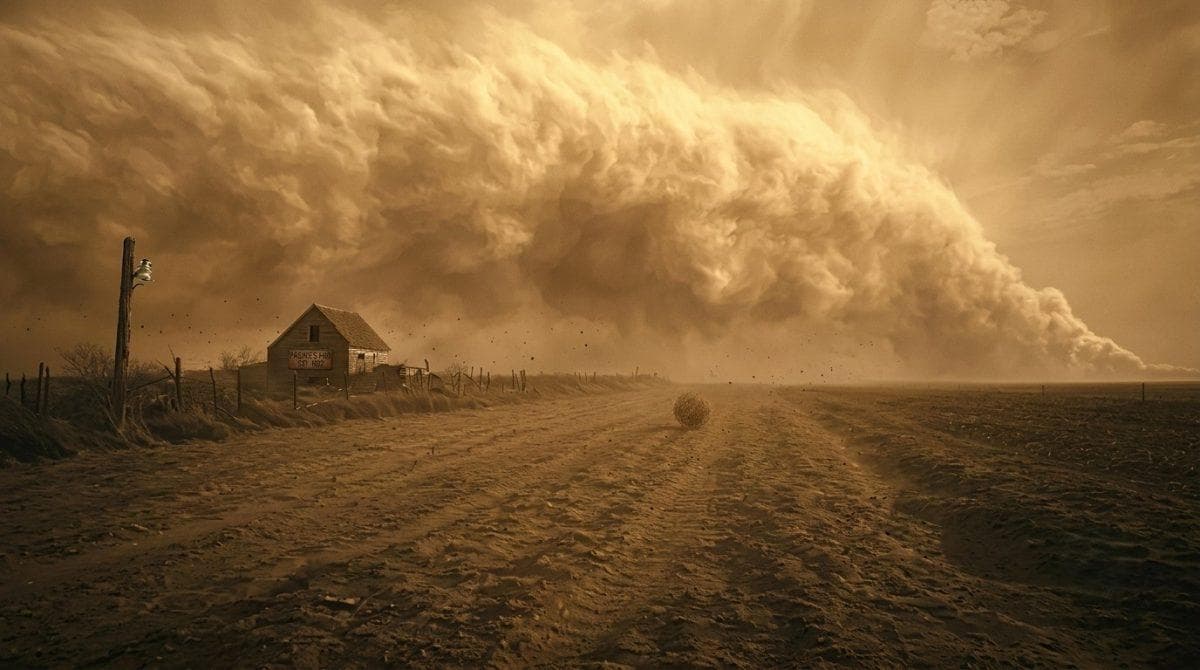
The phenomenon of the Dust Bowl returns to ignite meteorological alarms across North America due to an extreme drought threatening agricultural fields throughout the year.
-
Studying the climatic impact allows specialists to anticipate severe risks for food production and economic stability.
-
Environmental agencies intensify constant monitoring to prevent catastrophic damages in the most vulnerable regions of the American territory.
Dust Bowl returns to the news headlines because various AccuWeather specialists detected a critical climate crisis striking hard across several zones of the American West during this summer, while meteorologists recently issued urgent warnings regarding the latent risk of intense windstorms capable of affecting essential crops on the plains. Additionally, high temperatures combined with prolonged precipitation scarcity generate favorable conditions for heavy erosion in arid soils, whereas local authorities recommend preventive measures to farmers, directly affecting food stability through this delicate scenario and demanding a coordinated response among governmental agencies and water resource management experts.
During the upcoming months, agricultural producers will face monumental challenges if the water deficit persists within primary basins, just as economic analysts anticipate an inevitable increase in basic grain prices due to reduced harvest yields, while scientific institutions simultaneously recall that these current emergencies do not reach the magnitude of the historical crisis from the 1930s although demanding strict vigilance. Consequently, rural communities implement novel land conservation techniques to mitigate environmental damages, while specialized organizations constantly evaluate the evolution of global atmospheric patterns.
Ver esta publicación en Instagram
States and regions at risk from extreme drought in the US
-
Oregon and Idaho experience drastic drops in their freshwater reserves, severely affecting seasonal local harvests.
-
Nevada, Wyoming, and Utah suffer record temperatures accelerating surface evaporation, gravely compromising livestock pastures.
-
Colorado, New Mexico, and Nebraska register critical soil moisture levels, increasing the danger of destructive dust storms.
-
Oklahoma and the Texas Panhandle accumulate decades of water deficit, limiting agricultural recovery despite potential future rainfall arrivals.
During recent official reports, meteorologists noted that these geographic zones concentrate the highest vulnerability against the current climatic phenomenon, reciprocally as state governments allocate extraordinary funds to support producers affected by resource scarcity. Simultaneously, experts emphasize that extreme drought in the US requires long-term strategies to prevent permanent desertification of arable lands, while the federal administration coordinates financial assistance plans, making cooperation between NOAA atmospheric research centers and local farmers fundamentally crucial for securing national safety against these recurrent seasonal threats.
Innovation and climatic mitigation
-
Conservation agriculture: Implements advanced minimum tillage methods to retain essential moisture within arid soils.
-
Satellite monitoring: Utilizes space technology to track drought evolution and issue precise early warnings.
-
Crop diversification: Promotes planting varieties resistant to high temperatures and low precipitation conditions.
-
Water management: Optimizes underground reservoir usage through automated efficient irrigation systems in critical zones.
Ver esta publicación en Instagram
Based on technical reports issued by AccuWeather, local administrations permanently integrate adaptation strategies to mitigate the devastating impacts of extreme drought in the US, similarly as analysts recall that institutional preparation proves key to avoiding severe humanitarian or economic crises. Meanwhile, affected communities trust that technological investment and scientific research will transform natural resource management, sowing a horizon where climatic prevention prevails and the Dust Bowl remains solely a surpassed historical warning.
