

WATCH NOW
Watch on the app






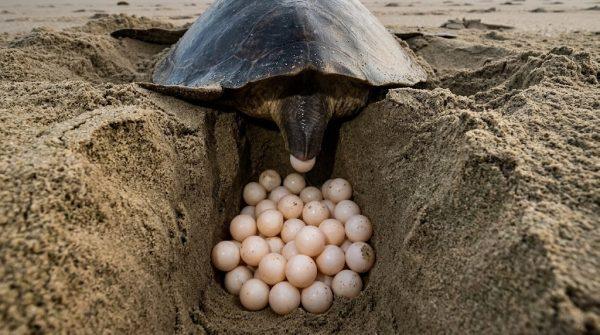




California sea turtle stuns scientists after laying eggs on a beach in an extraordinary location
-
Sea turtle eggs on San Buenaventura State Beach trigger a major investigation by US Fish and Wildlife Service experts.
-
State environmental officials enclose the nesting perimeter to safeguard the clutch throughout its incubation cycle.
-
Marine biologists evaluate elevated ocean temperatures pushing olive ridley nesting activities into unprecedented northern latitudes.
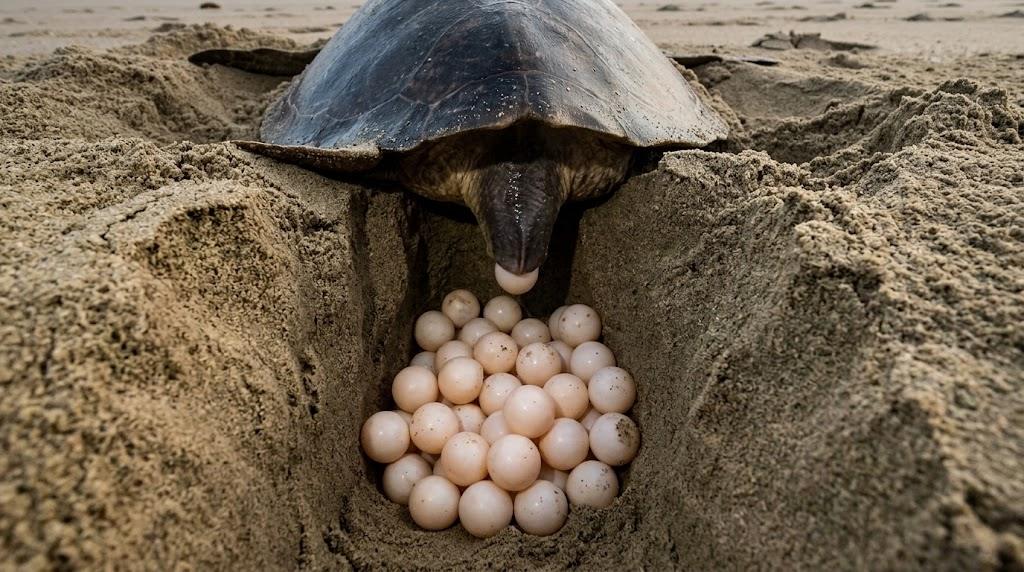
A California sea turtle stuns scientists after laying eggs where no one expected along San Buenaventura State Beach in Ventura County; furthermore, this historic event represents the northernmost sea turtle nesting site ever documented along the US West Coast following official verification on Nov 1 by the US Fish and Wildlife Service, which shifts the known breeding boundary of the species (Lepidochelys olivacea) more than 700 mi (3696000 ft) north from previous limits in Baja California Sur, Mexico, as the arrival of this marine creature coincides with unusual ocean warming trends that draw intense interest from coastal biologists.
A California sea turtle stuns scientists after laying eggs where no one expected by mobilizing local beachgoers who quickly alerted state park rangers after spotting crawl tracks near the promenade; additionally, technical teams installed protective fencing around the sandy site to prevent urban disturbances while securing the sea turtle eggs throughout the 60 day incubation window.
Local Beachgoer Statement:
“A young local resident walking the shoreline expressed sheer disbelief at seeing the nest, urging officials to keep the hatchlings as safe as possible.”
Consequently, the young woman who stumbled upon the clutch on Nov 3 shared her amazement with news outlets as government inspectors established round the clock monitoring near Ventura Pier; furthermore, specialized conservation teams chose to leave the nest in place rather than relocating it to regional aquariums.
Technical details of the historic nesting event and protective measures
Coastal monitoring programs managed by California State Parks enforce strict operational guidelines to preserve regional marine life:
-
Identified species: Olive ridley sea turtle (Lepidochelys olivacea), recognized by its heart shaped shell and compact body.
-
Geographic coordinates: Sandy stretch on San Buenaventura State Beach positioned between the tide line and the boardwalk near Ventura Pier.
-
Global habitat: Marine species inhabiting warm waters across the Pacific, Atlantic, and Indian Oceans.
-
West Coast timeline: 3rd natural nesting record this season, following Sept 16 at Surfside and Sept 19 at Huntington Beach 8 mi (42240 ft) south.
-
Incubation period: Technical teams project embryological development to span between 45 and 60 days in ambient sand.
-
Federal protection: Managed under the Endangered Species Act as threatened in the US, while Pacific coast populations in Mexico maintain endangered status.
-
Key breeding grounds: Major nesting activity concentrated across tropical beaches in Mexico, Nicaragua, Costa Rica, and Panama.
-
Interagency management: Joint oversight between California State Parks and federal Wildlife Service biologists.
-
Emergency protocols: Earlier intervention relocated over 200 sea turtle eggs on Sept 25 to the Aquarium of the Pacific in Long Beach due to extreme high tides.
Marine heatwaves and sea turtle eggs in altered Pacific migration corridors
Marine biologists link this unprecedented nesting behavior directly to sharp temperature spikes across Pacific waters; specifically, intense El Niño conditions elevated coastal water temperatures off Southern California into the upper 60s and low 70s Fahrenheit, levels typical of tropical nesting grounds during the primary July to December season and finding sea turtle eggs at such northern latitudes forces scientists to update distribution maps for the entire region while researchers continue analyzing whether these events stem from temporary weather anomalies or reflect permanent shifts in marine migration routes.
Environmental scientists attribute these unusual California nesting events to prolonged ocean warming trends recorded across the region.
Similarly, federal authorities resolved to keep the Ventura clutch in place rather than executing a rescue like the earlier Huntington Beach operation; likewise, field researchers maintain continuous observation over the beach line while the California sea turtle establishes a landmark ecological milestone along the Pacific coast.
