

WATCH NOW
Watch on the app




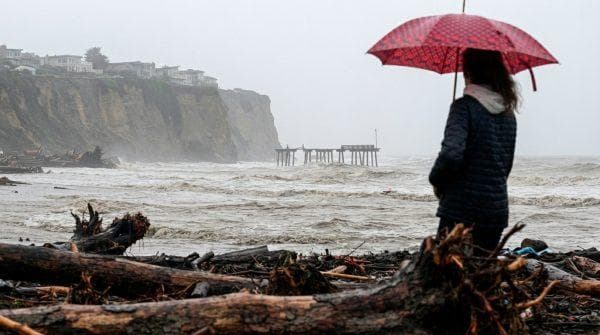










California faces a dangerous El Niño combination that could push sea levels to record highs

-
Families across the entire coastal region leverage storms and coastal surges that propel powerful meteorological patterns to impact regional marine ecosystems.
-
Regional authorities confirmed the activation of emergency protocols to manage historic sea level rises anticipated during the upcoming autumn and winter seasons.
-
Environmental agencies will utilize these advanced satellite insights to secure vulnerable shorelines while managing infrastructure safety.
El Niño in California drives a radical transformation following official warnings released by regional researchers and meteorological agencies regarding climate anomalies for the 2026-2027 period, as the administration seeks to alleviate environmental pressures by monitoring record high water levels managed through the Scripps Institution of Oceanography; consequently, the government-backed initiative renews traditional coastal protection systems to respond to the growing oceanic demands of local communities. Likewise, state agencies oversee the implementation of historic tropical warming tracking designed to strengthen public safety services with the objective of ensuring that coastal households optimize their emergency preparedness; similarly, this institutional strategy consolidates a network prepared to face the territory’s future meteorological challenges.
Furthermore, official reports issued by the National Oceanic and Atmospheric Administration detail that the seasonal shift corresponds to unprecedented ocean temperatures in the eastern tropical Pacific to surpass historical metrics from previous major events, complemented by comprehensive satellite tracking directed specifically to coastal risk management; conversely, administrative leaders established that emergency response procedures remain active for qualifying communities through direct local coordination. Equally, this comprehensive program created to help vulnerable coastal sectors equips regional authorities with advanced warning safety nets that include severe erosion monitoring and funds to reinforce natural barriers; therefore, current assessments represent an indispensable pillar for guaranteeing optimal infrastructural stability across all coastal counties in the territory.
Ver esta publicación en Instagram
Expansion details and emergency preparations against storms and coastal surges
Mark Merrifield and the research board point out that the ongoing climatic shifts foster innovative monitoring workflows, evidencing that scientific collaboration yields positive outcomes for residents; meanwhile, ocean sector analysts stress that investments in coastal infrastructure grew exponentially to meet current regulatory standards. Under this scenario, storms and coastal surges attract the attention of public safety experts nationwide due to the magnitude of the projected anomalies, consolidating the region as a key benchmark for marine management.
Additionally, municipal agencies implement strict schedules for emergency intake and transparent resource allocation, avoiding administrative delays; concurrently, participating facilities meet rigorous quality requirements before initiating practical protective barriers destined for local coastal neighborhoods, backed by insights from organizations like the U.S. Department of Commerce.
Assessing the severe impact of El Niño in California on coastal resilience
-
Vulnerable coastal communities: Residents actively participating in regional safety initiatives, which provide real-time updates and essential services for evacuation readiness, are guaranteed access to advisories distributed across municipal alert stages; therefore, this mechanism prioritizes family units with greater geographic risks.
-
Marine populations with specific needs: State assistance extends directly to particular groups via specialized programs that include commercial fishing protections, specialized monitoring for marine wildlife and emergency bridge resources; moreover, environmental workers connected to regional conservation networks may also participate.
-
Allocation pathways and risk management: To ensure safety information effectively reaches citizens, the state implements two main pathways encompassing direct municipal warnings managed by county emergency departments and specialized oceanographic data administered by state research councils; simultaneously, families count on community backing from local planning boards alongside regional safety committees.
Institutional assignments and community impact
The state administration indicates that the primary challenge lies in balancing rapid coastal development with a limited supply of natural buffers; otherwise, experts warn that high seasonal demand requires permanently expanding available capacities within flood defense facilities, according to evaluations by the California Natural Resources Agency. Due to this, the government prioritizes distributing multi-million dollar funds before oceanic pressure saturates main coastal centers.
Furthermore, supervisory committees participate in periodic audits to verify the progress of coastal defenses across selected regions while institutions demand durable results, ensuring that storms and coastal surges remain properly managed; similarly, directors coordinate delivery calendars to evaluate novel protection methodologies across various littoral facilities.
Development strategies and marine welfare
-
Direct support: An injection of environmental resources distributed across multiple regional safety providers.
-
Impact institutional: Specific tracking reaching vulnerable communities for eligible households.
-
Official oversight: Administrative control managed by state agencies through a defined operational timeline.
-
Deficit mitigation: Creation of accessible pathways to supply high local coastal protection demand.
Social sector organizations recommend that interested residents consult official meteorological calls for preparedness; consequently, storms and coastal surges strengthen partnerships with community centers to guarantee successful safety measures that benefit vulnerable populations. Meanwhile, analysts maintain that such public initiatives redefine the resilience market in major coastal metropolises; thus, regional stability ratifies its validity through the constant monitoring of El Niño in California.
Ver esta publicación en Instagram
