

WATCH NOW
Watch on the app















California built an entire mining town from scratch now it is one of America’s largest ghost towns
-
An impressive massive abandoned settlement surged across the arid desert during 1948 to supply soaring postwar industrial demands.
-
Striking structural remnants and vacant homes echo the dramatic rise and fall of a self sufficient desert enterprise; consequently, curious visitors closely study this remarkable historic vestige.
-
Industrial history experts emphasize the importance of preserving these modern archaeological landmarks; likewise, they strongly encourage valuing the economic impact that transformed arid regions across the American West.
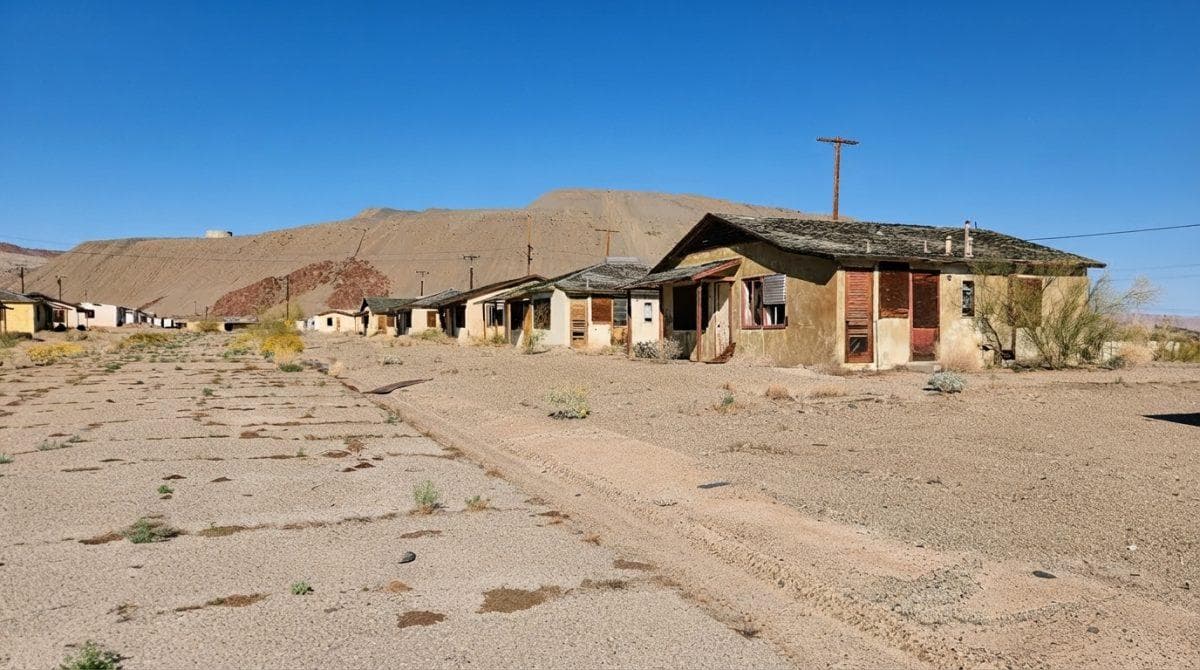
California ghost town Eagle Mountain rose across the arid Mojave Desert in California during 1948 when industrialist Henry J. Kaiser established a massive mining community to fuel postwar steel production; meanwhile, the ambitious locality grew rapidly to shelter 4,000 workers connected via a private railroad stretching over 50 mi toward the Fontana steel mill, which facilitated continuous transport of heavy minerals and raw materials throughout decades of peak operational activity.
On the other hand, local infrastructure featured more than 400 homes, schools, a shopping center, a church, a bowling alley, swimming pools, sports fields and a fully equipped hospital that laid the foundation for Kaiser Permanente, sparking deep economic analysis regarding the fleeting cycle that left empty streets across the historic mining settlement.

Industrial ruins standing in a historic California ghost town.
California ghost town expansion and massive abandoned settlement foundations
Specialists from the U.S. Department of the Interior point out that large-scale mining ventures radically reshaped regional economies during the past century, given that they generated thousands of direct jobs in harsh wilderness zones; additionally, the National Park Service stresses how a massive abandoned settlement like Eagle Mountain illustrates the vulnerability of urban survival tied entirely to a single mineral resource, though many former residents still cherish fond memories of that golden era.
Ver esta publicación en Instagram
Equally, historians recall that foreign steel competition and rising operational expenses triggered an inevitable economic downturn culminating in the permanent closure of the mine, sealing the post office and bidding farewell to the final graduating school class by the early eighties; therefore, municipal authorities constantly intensify heritage preservation efforts to safeguard fragile architectural remnants without disrupting the delicate surrounding desert ecosystem.
Urban decline and socio-economic transformation
-
Socioeconomic development experts explain that operations halting during the nineteen-eighties sparked a massive exodus, meaning that a massive abandoned settlement lost its entire population almost overnight; furthermore, analysts underscore that industrial center closures completely rewrite demographic maps across arid western territories.
-
Heritage custodians and historians maintain strict surveillance protocols around historic buildings to curb vandalism; likewise, cultural agencies advise visitors to respect established perimeter safety boundaries due to structural instability inside aging edifices, thereby mitigating inherent risks associated with modern urban exploration tourism.
-
Community organizations develop ongoing educational programs to raise tourist awareness regarding the vital importance of preserving industrial heritage enclaves; consequently, local governments reinforce directional signage along nearby access roads to prevent unfortunate accidents during expeditions undertaken by curious travelers.
Cultural legacy and future outlook for historic ruins
Tourism agencies and conservation groups responded swiftly to manage rising visitor numbers driven by fans of the apocalyptic aesthetic found throughout the location, which served as a striking cinematic backdrop for major productions like Tenet and The Island; similarly, local administrators issued clear guidelines reminding travelers of basic preservation standards when exploring a massive abandoned settlement rich in industrial archaeological value, successfully guaranteeing total protection for remaining structures.
In the same fashion, heritage experts insist that cultural outreach fosters profound public understanding regarding the cyclical boom and bust of extractive economies; following decades of complete silence, shifting desert winds continue writing the final chapter for this iconic California ghost town.
