

WATCH NOW
Watch on the app










Something strange is happening off California’s coast as exotic creatures arrive ahead of a super El Niño
-
El Niño turns beaches into an aquarium as warm ocean currents push exotic marine species northward into Southern California coastal waters during a historic climate event.
-
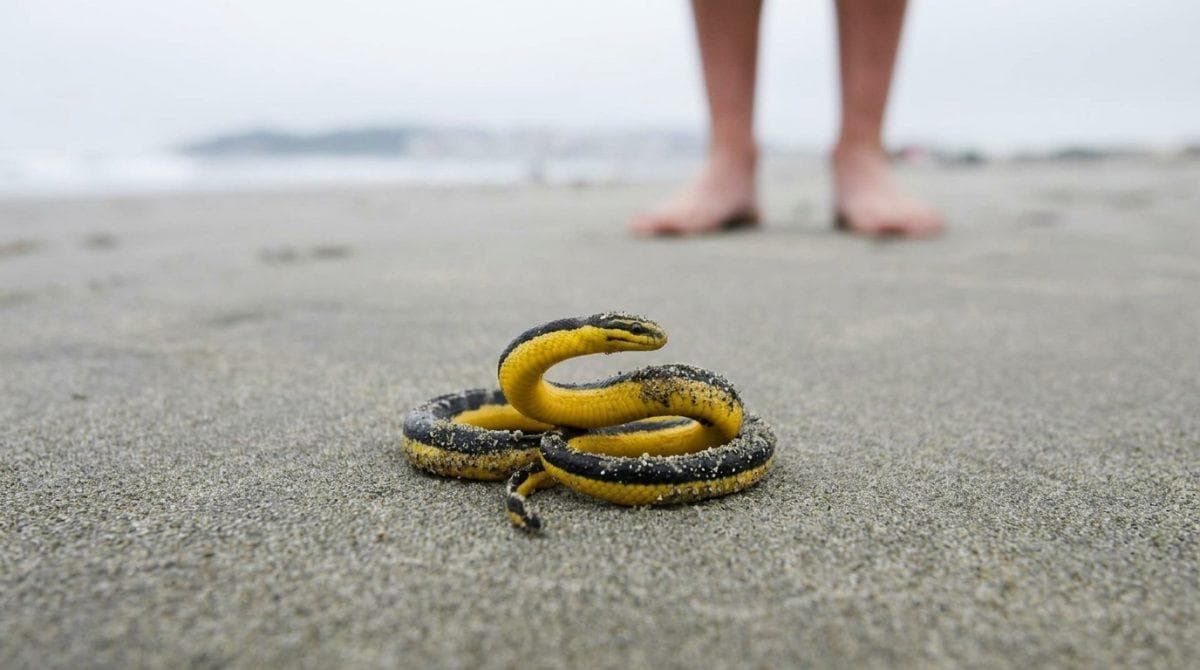
Environmental authorities urge caution after beachgoers spot highly venomous sea snakes along popular public shorelines.
-
Local fishing industries record unprecedented catch rates while marine biologists monitor long-term impacts on kelp forests.
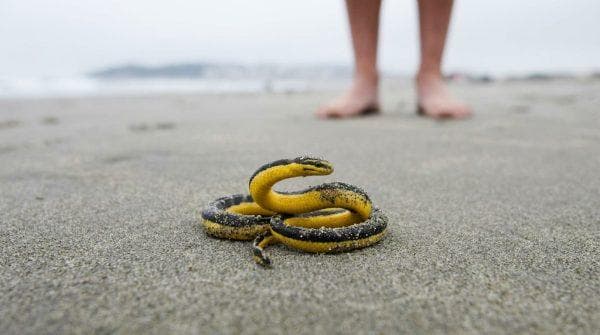
While walking with her family on the night of Sept. 11, beachgoer Jackie Aguilar spotted a weak and disoriented creature washed ashore at Crystal Cove State Park in Orange County. Unaware of the danger, she used the base of a palm frond to lift the animal and throw it back into the ocean, capturing the entire encounter on cell phone video. This viral footage perfectly condensed a broader ecological phenomenon that scientists observe with absolute astonishment, as yellow-bellied sea snakes (Hydrophis platurus) carry venom capable of causing paralysis and fatal bites across California beaches.
Furthermore, William Ludt, associate curator of ichthyology at the Natural History Museum of Los Angeles County, confirmed that this incident marks only the sixth or seventh verified appearance of the species in state history. Museum archives show that previous sightings occurred in January and November 2018 within Orange County. Indeed, researchers emphasize that shifting tropical marine life into northern Pacific waters clearly demonstrates how ocean warming alters local habitats.
Expert warnings and tropical wildlife sightings across Southern California
-
Ocean warming biodiversity: Marine naturalist Chad Steffen noted that sea snakes move clumsily on land, though experts strongly discourage handling them due to their potent venom.
-
Historic West Coast turtle nesting: Officials at NOAA registered the first West Coast turtle nests in history, finding Olive Ridley nests on Seal Beach on Sept. 16 and Huntington Beach 3 days later.
-
Exotic species on California beaches: Anglers caught a longfin bigeye at Venice Pier, alongside flying fish, manta rays and mahi-mahi across regional waters.
Consequently, Greg Pauly, a reptile specialist at the Natural History Museum of Los Angeles County, confirmed that 5 out of 6 documented yellow-bellied sea snake sightings in California coincided with major climate events. Meanwhile, commercial pilot and aerial observer Carl Sbarounis, drawing on 40 years of experience, photographed a 14 to 16 ft (about 4.2 to 4.8 m) juvenile whale shark between Santa Barbara Island and Malibu. He noted observing previous specimens near Catalina and San Clemente islands, while observers also filmed a hammerhead shark swimming less than a mile off Laguna Beach in August, proving that El Niño turns beaches into an aquarium across coastal counties.
An unusually strong El Niño has arrived off the California coast, and it is bringing company. The warm ocean water has pulled tropical species far to the north, turning Southern California waters into a strange and unexpected wildlife spectacle.
In September 2026, a highly venomous yellow-bellied sea snake washed ashore at Crystal Cove in Orange County. It was the first verified sighting of the tropical species in the state since 2018. NOAA and marine biologists confirmed that hammerhead sharks and whale sharks have ventured significantly further north into Southern California waters due to the unusually warm temperatures.
On September 16, an olive ridley sea turtle dug a nest and laid eggs near Seal Beach, followed by a second nesting event three days later near Huntington Beach. NOAA Fisheries officially verified this as the first-ever recorded natural sea turtle nesting on the U.S. West Coast.
The fishing has been unprecedented. Anglers are reporting sharp spikes in yellowfin tuna and dorado catches compared to previous years, with tropical species pushing north much earlier than usual. But there is a cost. The same warm water that brings the tropical fish is suppressing cold-water upwelling and devastating the kelp forests. Kelp thrives in cold water and provides habitat for countless species. Experts say the greatest short-term harm may be to the kelp, and the animals that depend on it.
SOURCES: Reuters | U.S. News & World Report | NOAA Fisheries | ABC7 Los Angeles | Tacoma News Tribune
— Hope Haven Foundation/Angel Haven (@haven97791) October 17, 2026
Economic surges and commercial coastal shifts
Remarkably, commercial operators observe dramatic changes in sportfishing yields throughout the region as El Niño turns beaches into an aquarium. Donna Kalez, co-owner of Dana Wharf Sportfishing & Whale Watching, reported that anglers landed 5k yellowfin tuna during 2026 compared to just 2 fish during the entire previous year. She highlighted that catching acrobatic mahi-mahi near kelp beds creates unmatched commercial excitement for sportfishing enthusiasts.
-
El Niño turns beaches into an aquarium economic surge: Rapidly growing populations of tropical game fish, including wahoo and dorado, generate unprecedented commercial activity for local charter fleets.
Simultaneously, a series of Pacific hurricanes generated strong swells and rising sea levels that damaged coastal homes and eroded sandy shores. Because of these severe conditions, the California Governor’s Office of Emergency Services declared a state of emergency to protect vulnerable coastal communities.
Ecosystem disruptions along California beaches
Nate Jaros, vice president of animal care at the Aquarium of the Pacific in Long Beach, acknowledged that a sense of excitement surrounds California beaches, noting that while fishermen thoroughly enjoy these unusual times, the marine activity fascinates researchers just as much. Furthermore, Chris Lowe, director of the Shark Lab at California State University, Long Beach, explained that while mobile ocean predators relocate easily to warmer waters, stationary organisms face extreme environmental stress.
Crucially, experts emphasize that while El Niño turns beaches into an aquarium through natural oceanographic processes predating human-driven climate change, California was already experiencing an unusual marine heatwave prior to its arrival. Specifically, marine researchers express deep concern for cold water kelp forests, which form essential habitats for native marine species. Consequently, scientists anticipate that kelp ecosystems will recover after 2027 when ocean temperatures return to normal baselines.
Conservation outlook as El Niño turns beaches into an aquarium
William Ludt warned that coastal communities have not yet experienced the full duration of this active ocean warming period, even as El Niño turns beaches into an aquarium. For this reason, wildlife protection agencies maintain active monitoring protocols across high traffic public areas.
By keeping the public informed, authorities safeguard both beachgoers and rare aquatic visitors arriving on California beaches. In this way, careful environmental monitoring guarantees safe public encounters with marine wildlife as this climate phenomenon continues.
