

WATCH NOW
Watch on the app











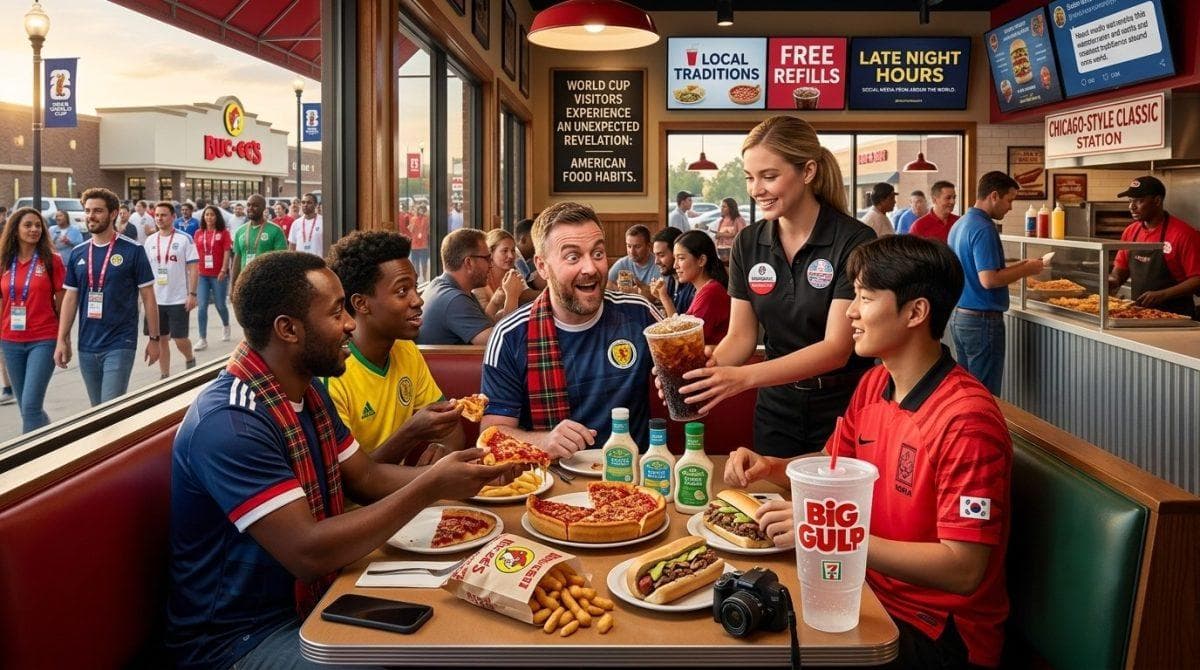
World Cup visitors are stunned by American habits locals barely notice
-
World Cup visitors are finding themselves completely mesmerized by the everyday eating habits of Americans during the 2026 tournament.
-
The local American food culture, defined by massive portion sizes and the legendary free refill, has officially gone viral across social media.
-
From the roadside glory of Buc-ee’s to the obsession with ranch dressing, international fans are documenting their wildest culinary discoveries.
World Cup visitors arriving in the United States for the FIFA 2026 tournament discover an unexpected cultural revelation as they encounter the nation’s most common eating habits; residents view these rituals as mundane daily routines, but international tourists find a series of fascinating discoveries ranging from the tangy allure of ranch dressing to the sheer volume of fountain sodas.
Furthermore, social media serves as a digital diary where travelers express genuine disbelief at the excessive portions and the constant availability of fast food; this phenomenon highlights how simple luxuries like free refills in restaurants spark authentic joy among those unaccustomed to such American excess. Navigating local establishments quickly becomes a cornerstone of the travel experience, as these moments often rival the excitement of the matches themselves inside the stadiums.
Fascination with American food culture
Moreover, roadside icons like Buc-ee’s capture the imagination of fans with a monumental scale and product variety that defies the logic of a typical highway stop; visitors from Scotland to Korea document their shock at specific items like Beaver Nuggets, cementing these massive travel centers as indispensable cultural landmarks.
On the other hand, ranch dressing triggers almost euphoric reactions among foreign followers, who often describe the flavor as addictive while expressing their desire to smuggle bottles back home; this obsession reveals a side of American life that observers rarely analyze through a formal lens, yet it deeply impacts tourists during their quest to find the best ranch in the country.
Likewise, Chicago-style classics like deep-dish pizza or Italian beef sandwiches from Portillo’s receive an enthusiastic reception from European aficionados; they celebrate the extravagance of milkshakes and the hearty consistency of local pizzas as elements that fully justify the fame of urban gastronomy. Waiting in long lines becomes a small, worthwhile sacrifice, as the vibrant atmosphere and distinct flavors easily compensate for any service delays encountered during these festive days.
American food culture traditions during the tournament
-
Fans consistently praise the late-night Waffle House experience, highlighting the friendly staff and the exceptional value of the menu.
-
The tradition of free refills generates surprise and genuine happiness, prompting viral social media commentary on the generosity of such services.
-
Carolina-style BBQ ribs, specifically those served with vinegar-based sauces, lead many visitors to declare their previous meat experiences officially ruined.
Consequently, fast-food chains like Taco Bell have solidified their status as mandatory destinations, as digital platforms describe them as near-sacred grounds that exceed all expectations; the sheer enthusiasm for Crunchwrap Supremes underscores how the simplicity of the menu resonates with global tastes during major international sporting events. These well-documented visits validate the genuine influence of fast-food chains in projecting the national brand to a worldwide audience.
Additionally, curiosity naturally gravitates toward gargantuan portions, where 7-Eleven Big Gulps serve as an ironic symbol of American scale; visitors watch with genuine wonder as these beverages surpass all standard nutritional and physical norms, transforming a simple soft drink into an experience worthy of being shared with thousands of online followers. This collective fascination effectively highlights the massive divide between European consumption norms and the reality lived throughout the tournament.
The real impact of World Cup visitors
On the other hand, the interaction between international fans and local food icons reinforces the 2026 tournament’s role as a catalyst for unexpected cultural exchanges; these anecdotes regarding local menus and service styles drive the digital conversation, momentarily overshadowing traditional geographical distinctions. The ability to find novelty in the mundane redefines, in a meaningful way, the manner in which local citizens perceive their own daily environment.
Furthermore, the success of these establishments throughout the summer highlights how American hospitality manifests through accessible service options and extended operating hours; as long as tourists continue sharing their findings on social platforms, the reputation of staples like Waffle House or Chili’s will continue to strengthen as an essential part of the national folklore. Every photo of a burger or milkshake shared online serves as a testament to a journey where local gastronomy carries just as much weight as sporting passion.
The persistence of this fascination ensures that the tournament’s legacy will not measure success solely in goals, but also in the lasting impressions left by the daily habits of the United States; the integration of World Cup visitors into this dynamic of everyday consumption changes their perspective on American food culture forever, reminding locals of the distinct value hidden within their simplest traditions.

enjoy iconic American diner hospitality.
