

WATCH NOW
Watch on the app















Why scary movies can be thrilling for some people and overwhelming for others
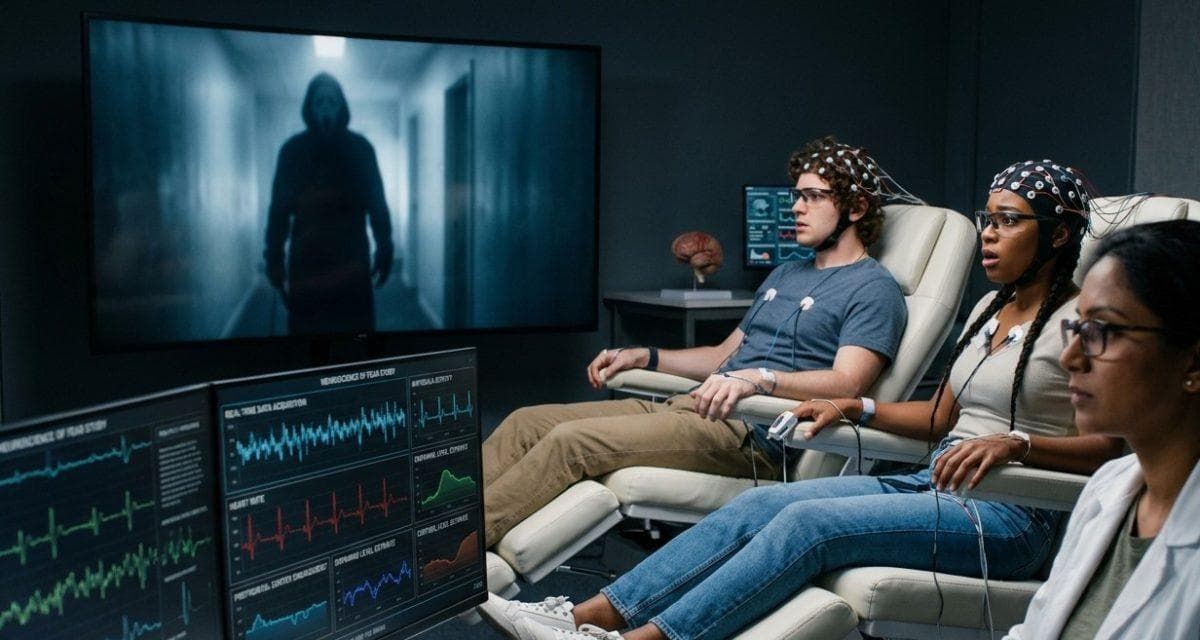
- Scary movies trigger a fierce debate between those who chase pure adrenaline thrills and those who prefer to skip the movie theater entirely.
- The brain’s response to horror stimuli dictates whether a person experiences absolute joy or deep anxiety during the screening.
- Experts explain that bodily chemical processes vary radically depending on the biological profile of each unique viewer around the world.
Scary movies curdle the blood of anyone daring enough to watch them; prime examples include the sleepover nights scheduled to witness the premiere of Scream, or the collective trauma that The Conjuring caused in theaters worldwide.
Currently, a global team of scientists and neurologists is finally revealing the biological mysteries behind these intense jumpscares through highly rigorous clinical analysis.
This ongoing research details with mathematical precision the neural processes occurring in the human mind within modern laboratories during this month of June, explaining the mystery behind our collective resistance to panic.
The impact of scary movies on the brain
The human body experiences an intense biological jolt when the big screen projects terrifying imagery, causing primitive survival mechanisms to activate instantly within the organism.
First, the brain’s amygdala detects visual threats in scary movies and triggers a massive release of stress hormones to prep muscles for imminent danger, much like what many experienced when staring at Pennywise’s face in It.
Consequently, the heart races and breathing grows shallow, creating a state of high alert that proves incredibly difficult for any theatergoer to ignore as psychological tension grips the room.
Why horror divides audiences
Certain individuals process this chemical torrent as a genuine energy boost because their brains link the stimulation of fictional danger to a pleasurable dopamine reward, an effect that fans of franchises like Saw experience during every disturbing scene.
However, those who lack this metabolic predisposition process the experience unpleasantly, turning what should be a distraction into a highly uncomfortable psychological torture reminiscent of the heaviest moments in Hereditary.
Additionally, enjoying suspense cinema depends directly on the speed with which each individual metabolizes these chemicals after a good scare on screen, meaning the outcome can swing anywhere between absolute fun and a nervous breakdown.
Adrenaline and dopamine in suspense cinema
Social environments and childhood experiences heavily influence tolerance toward gory stories, shaping the personal boundaries of every modern pop-culture fan who grew up dodging The Ring on VHS.
Individuals with high sensitivity to visual stimuli endure severe mental fatigue, ending up completely exhausted due to the sensory overload served up by these modern films and their unpredictable jumpscares.
Therefore, the decision to buy a ticket for a horror production goes way beyond a simple guilty pleasure, acting as a true reflection of each individual’s neurological wiring when facing fictional suffering.
The decisive role of the prefrontal cortex
This region of the brain is responsible for reminding the viewer that the monsters on screen are not real, allowing fun to take the wheel whenever this area efficiently processes supernatural phenomena like those in Paranormal Activity.
Conversely, when the prefrontal cortex fails to tone down the alarm signal, panic dominates the body and the experience becomes unbearable for the individual, reviving the absolute worst childhood night terrors.
For that reason, the ability to disconnect fiction from physical reality defines the audience’s comfort level during script twists, drawing a clear line between pure entertainment and actual suffering.
The verdict of modern neuroscience
Scientists at prestigious platforms like the National Institutes of Health assert that neither reaction is superior to the other, given that both responses belong to the wonderful diversity of the human mind reacting to external stimuli.
Yet, specialized medical studies compiled by Houston Methodist show that understanding how neurotransmitters work helps people make better content choices on streaming platforms, avoiding moments of genuine distress at home with unsettling titles along the lines of Midsommar.
Furthermore, neuroscientists tracking cardiovascular changes at The Scientist Magazine confirm that filmmakers will continue to push the boundaries of collective psychological endurance as long as they keep seeking fresh ways to terrify audiences with unexpected plot twists and suffocating atmospheres.
