

WATCH NOW
Watch on the app















Who Are the Wealthiest Latinas in 2025
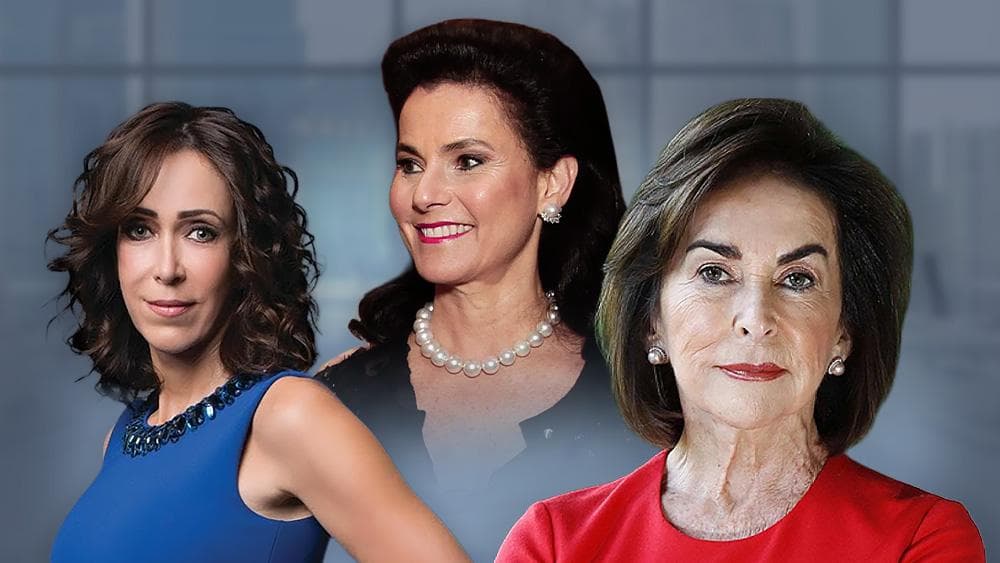
Meet the Latinas who are leading in wealth in 2025: their fortunes, industries, and how they built their empires. This ranking spotlights the women whose influence stretches across continents, and whose stories combine inheritance, strategy, expansion, and quiet but undeniable power.
1. Iris Fontbona & Family
Net Worth: $28.1 billion
Country: Chile
Industry: Mining
Iris Fontbona is the wealthiest Latina in the world and one of the most influential business figures in Latin America. Her public profile only emerged in 2005, when she took control of the Luksic Group after the death of her husband, Andrónico Luksic. Since then, she has multiplied a family inheritance into a global empire.
The Luksic powerhouse is anchored in copper, with Antofagasta Minerals ranking among the world’s top producers. This sector alone represents around 70% of the group’s business. But Fontbona’s true strategic strength lies in diversified expansion.
Ver esta publicación en Instagram
Through Quiñenco, she oversees operations in finance (Banco de Chile), maritime transport (CSAV), and consumer goods (CCU beer conglomerate). Her international footprint also includes Plava Laguna, a luxury resort group in Croatia, where she owns 84% of the shares, now one of her most valuable assets.
Despite delegating daily operations to her sons, Fontbona remains involved in top-level decisions and maintains a low profile that contrasts with the scale of her influence. She also leads five philanthropic foundations in Chile focused on education, health, and social development, reinforcing her image as a private but committed national figure.
2. Vicky Safra & Family
Net Worth: $20.7 billion
Country: Brazil
Industry: Banking
Vicky Safra became Brazil’s richest woman after inheriting the global banking empire built over nearly two centuries by the Safra family. Upon the death of her husband, Joseph Safra (once the richest banker in the world), she assumed a central role in preserving and expanding the family legacy.
The Safra story began in 1840, when the family established a financial house in Aleppo, then part of the Ottoman Empire. Over generations, the network grew across Alexandria, Istanbul, and Beirut before expanding to Europe and the Americas.
Today, Vicky stands as the family’s leader and key adviser. Under her stewardship, Safra operations expanded further into major global markets, including Hong Kong and Singapore, strengthening the group’s international presence.
View this post on Instagram
Beyond the financial sector, Vicky owns high-value real estate assets, including iconic landmarks such as the Gherkin in London and a major office complex on Madison Avenue in New York.
Her personal story spans continents: born in Greece, raised in Brazil from the age of three, and based in Switzerland for more than a decade. Despite occasional internal disputes, such as her son Alberto’s high-profile legal challenge over inheritance, Vicky has maintained the family’s characteristic discretion. She also supports numerous causes through the Vicky and Joseph Safra Philanthropic Foundation, focusing on education, culture, and health.
3. María Asunción Aramburuzabala & Family
Net Worth: $9 billion
Country: Mexico
Industry: Beer, Investments
María Asunción Aramburuzabala, today Mexico’s richest woman, has reached the peak of her career with a record increase in her net worth. She inherited her father’s stake in Grupo Modelo in 1995, becoming one of the youngest and most influential executives in the country.
Her 2025 fortune reflects not only the enduring strength of Mexico’s iconic beer empire but also the sharp performance of Tresalia Capital, the family’s investment firm. This year, Tresalia saw major gains thanks to its expansive real estate portfolio and strategic holdings across multiple industries.
Aramburuzabala’s rise coincides with a turbulent economic landscape in Mexico, where even major figures like Carlos Slim experienced significant losses. Her wealth increased by $2.7 billion in a single year, elevating her above other national tycoons.
View this post on Instagram
Tresalia Capital, founded in the 1990s by María Asunción, her mother, and her sister, has become one of Latin America’s most successful investment vehicles. Its diversified portfolio includes technology, real estate, logistics, fashion, education, and telecommunications. Among its standout ventures: KIO Networks, Abilia, Aliat Universidades, and Medistik.
Her historical ties to Grupo Modelo also continue to pay dividends. Even after the company’s 2012 sale to Anheuser-Busch InBev, Aramburuzabala retained shares and influence through a seat on the board.
Beyond her business role, she opened doors for women in Mexican enterprise. In 2003, she became the first woman to join the board of the Mexican Stock Exchange.
Today, Aramburuzabala is far more than a beer-industry heiress: she is a strategic investor whose vision reshaped her family legacy and positioned her among the most powerful women in the global corporate arena.
While these three women lead the ranking, they also represent a broader shift. Latin America’s wealthiest women are increasingly diversified, global, and deeply involved in decision-making processes traditionally dominated by male executives. Their stories reflect the future of wealth in the region, and the critical role Latina leaders continue to play in shaping it.
