

WATCH NOW
Watch on the app















Titanic treasures worth millions could disappear from the market after legal fight
-
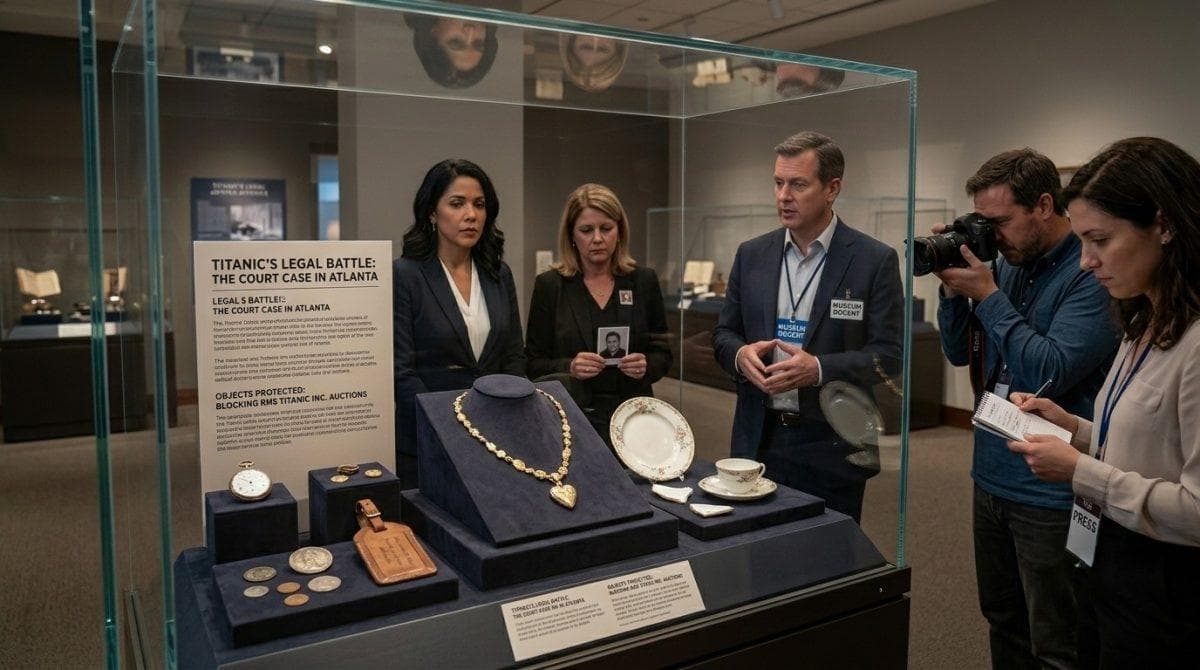
The Titanic artifacts auction is halted by an intense legal battle launched by the United States government in June 2026.
-
The historic shipwreck collection faces a decisive judicial blockade in North America to prevent the commercialization of over five thousand recovered pieces.
-
The National Oceanic and Atmospheric Administration seeks to protect the submerged heritage by preventing the private company from profiting off the objects.
The United States National Oceanic and Atmospheric Administration initiated a legal battle against the company RMS Titanic Inc. to block the sale and auction of over a hundred Titanic artifacts; this dispute seeks to prevent the Georgia-based company from profiting from the assets, breaking a prior 1990s agreement that required keeping the entire recovered collection unified.
Furthermore, this emblematic shipwreck lies at a depth of nearly four thousand meters in the North Atlantic Ocean, becoming an international sanctuary that a treaty between the United States and the United Kingdom protects to safeguard the remains of the more than one thousand five hundred people who lost their lives in 1912.
Legal conflict over the historic shipwreck collection
The RMS Titanic Inc. intends to market more than one hundred artifacts on the secondary market, additionally organizing a four-city world exhibition tour to promote them; however, the United States government, various heritage advocacy groups, and the victims’ families are fiercely opposed to these commercial plans.
The plaintiffs maintain that the objects possess invaluable historical value, demanding that the approximately five thousand pieces recovered since 1987 must remain intact and under permanent institutional protection; meanwhile, the company’s attorneys argue before a federal tribunal that the proposed auction does not infringe upon existing orders, seeking at all costs the commercialization of the assets recovered from the ocean floor.
International jurisdiction and the historic shipwreck collection
The case also directly involves the jurisdiction of France, as the company maintains that an American court lacks competence over the first extracted objects that the company took to European territory, where authorities granted them legal ownership over the historic shipwreck collection; this transatlantic complexity adds another layer to the litigation, as international maritime laws come into direct conflict with United States federal regulations concerning the preservation of historic shipwrecks.
The federal court must determine whether the company can elude the original covenants by relying on decisions that French authorities made decades ago, a scenario that could set a dangerous precedent for international maritime law.
This potential ruling threatens to weaken existing multilateral agreements, opening a legal vacuum where commercial interests leave submerged treasures at the mercy of profit above historical preservation and respect for the memory of the victims, eventually forcing superpowers to redefine their laws to more strictly protect the most emblematic wrecks in the world against modern mercantilism.
Treasures in dispute within the historic shipwreck collection
-
Personal belongings of passengers that show daily life aboard before the tragedy.
-
Ancient coins and kitchen utensils rescued from the debris submerged in the Atlantic Ocean.
-
Decorative elements and fragments of the emblematic casco, highlighting a bronze cherub.
-
A gold nugget necklace and a heart-shaped pendant found among the remains.
The resolution of this court will define the judicial and patrimonial destiny of the Titanic artifacts, marking a momentous milestone in modern maritime jurisprudence. This ruling will not only establish whether preservation covenants prevail over corporate profit, but will determine whether commercial entities can dismember and commercialize the most emblematic shipwrecks of the marine abyss as simple auction pieces, or if conversely they will remain intact as a sacred legacy for humanity.
