

WATCH NOW
Watch on the app















Beauty or self-harm? Looksmaxxing, the dangerous aesthetic trend trapping young people on TikTok
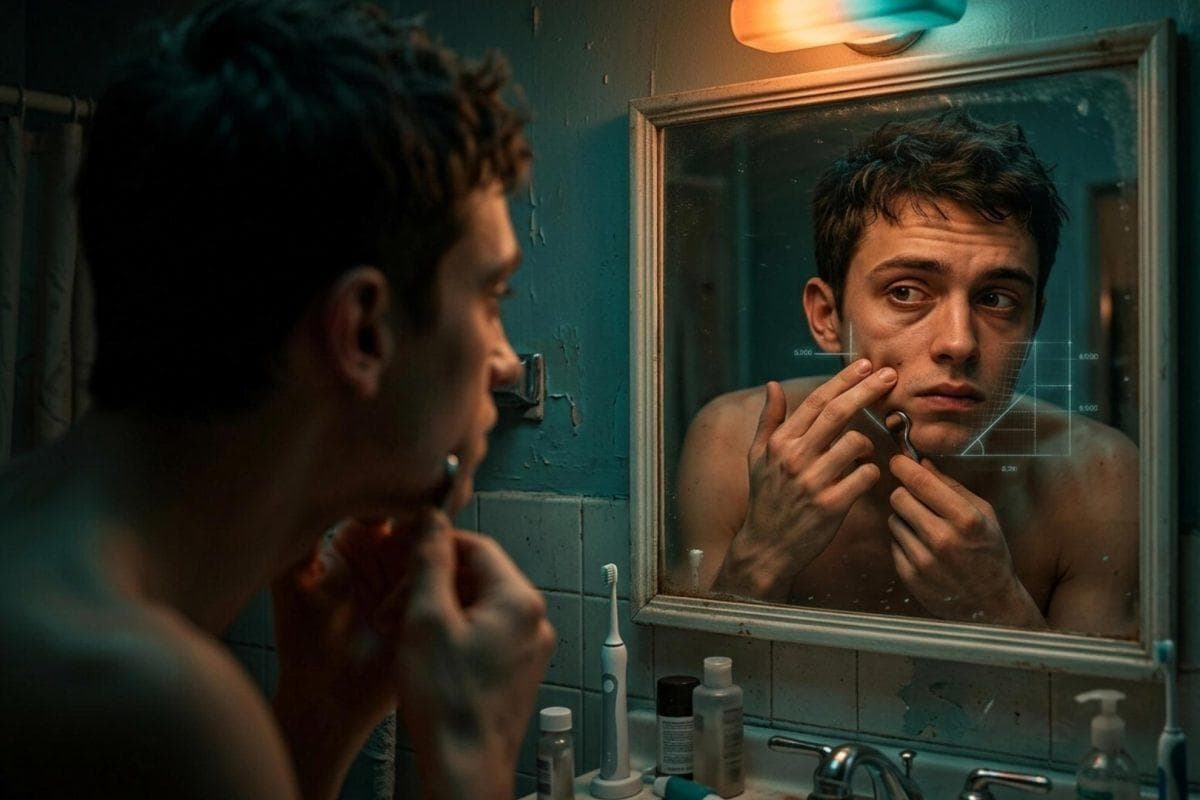
-
The looksmaxxing phenomenon is establishing itself on social media as an obsessive pursuit of physical perfection among young men and adolescents in the United States.
-
Experts warn about the division between basic care practices and extreme self harm methods known as hardmaxxing which include the deliberate fracturing of facial bones.
-
The trend is closely linked to body dysmorphic disorders and digital communities that promote unattainable beauty standards based on mathematical measurements.
The phenomenon known as “looksmaxxing” has evolved from a simple subculture confined to the darkest corners of internet forums into a central public health debate due to its explosive and worrying expansion on platforms like TikTok. This trend, which primarily affects young men and adolescents in The United States, drives users to adjust every detail of their physical appearance to extremely rigid, algorithmic and mathematical beauty standards. According to recent reports from prestigious international outlets such as NBC News and Psychology Today, 18% of young men acknowledge feeling overwhelming psychological pressure regarding their image, evidencing a profound cultural shift where personal validation and social success depend exclusively on facial symmetry and the globalized aesthetic perfection dictated by current digital trends.
From self care to the extreme risk of hardmaxxing
Within this digital community, users classify their actions into two very distinct categories: “softmaxxing,” which covers hygiene routines, skin care and facial exercises, and the dangerous “hardmaxxing.” This latter branch is what most concerns mental health and plastic surgery specialists, as it promotes aggressive cosmetic procedures and extreme physical risk practices such as “bone smashing.” This method involves deliberately striking the face with blunt objects, such as hammers or electric massagers, to cause bone microfractures under the pseudoscientific belief that the bone will heal with a more prominent and attractive shape. These self-harm behaviors go viral through detailed tutorials reaching millions of followers, normalizing irreversible physical damage in the name of artificial beauty.
Mathematical obsession and body dysmorphia
The obsession with exact metrics is the central axis of this toxic culture, where adolescents spend hours of their time measuring jaw angles, interocular distances and specific bone proportions to compare themselves against unattainable ideals. Figures from film or fashion are constantly used as templates of absolute perfection, even though these individuals have no link to the movement. This system of constant evaluation and digital comparison has caused many young people to develop serious body image disorders they did not previously suffer from, beginning to perceive their faces as “defectives” or “imperfect” in a pathological way. Male self esteem is thus reduced to a cold numerical scale created by algorithms and digital prejudices that prioritize physical appearance over any other intellectual ability or emotional well-being.
The alarming lack of male emotional support
The worrying lack of healthy spaces where men can process their physical insecurities has allowed looksmaxxing to operate as the only refuge for expressing feelings of failure related to appearance. While body positivity movements have historically helped women mitigate aesthetic pressures, men lack similar areas of mutual support. As a direct result, many prefer to resort to steroid abuse, unsupervised medical hormonal treatments, or clandestine surgeries rather than seeking professional help from a psychologist. This vulnerability is exploited by an emerging industry that markets specific supplements and products oriented exclusively towards this “maximization” of the image, perpetuating a vicious cycle of consumption, anxiety and dysmorphia that affects the younger generations worldwide.
